The air at four thousand meters tastes like cold iron and thin ash. If you stand long enough on the wind-scoured ridges of the Annapurna sanctuary, the silence begins to play tricks on your ears. You think you hear the wind shifting through the dwarf rhododendrons. You think you hear the crunch of a boot on shale. Then the sound deepens, dropping an octave into a low, metallic groan that vibrates right through the soles of your heavy wool socks.
That is the mountain speaking. And it is losing its grip.
I remember sitting in a stone tea house in Manang three autumns ago, sharing a pot of butter tea with a local lodge owner named Karma. Outside, the sky was a bruised, brilliant blue—the kind of sharp, deceptive autumn clarity that draws thousands of trekkers into the high valleys of Nepal every year. Karma didn't look at the sky. He looked up at the jagged wall of ice hanging above the valley floor, a massive tongue of pale blue frozen to the vertical rock face like a falling icicle caught in amber.
"People come for the views," Karma told me, blowing softly across the surface of his cup, his weathered thumb tracing a crack in the ceramic. "They do not see the clock."
He was talking about the hanging glaciers.
To the untrained eye, these high-altitude masses of ice are monuments of permanence. They gleam in the midday sun, defying gravity simply by virtue of being massive, ancient, and cold. But ice is not stone. Ice is a very slow, very heavy fluid. When temperatures climb—and in the Himalayas, they are climbing at nearly double the global average—that frozen river begins to sweat.
Consider what happens next on a microscopic scale. Meltwater trickles down invisible fissures, acting as a high-pressure lubricant between the glacial base and the sheer granite cliff. The ice loses its anchor. At the same time, the canyon walls flanking these glaciers—once held in a vice-grip by permafrost—are thawing out. Without frozen soil to glue the rocks together, entire cliff faces lose their structural integrity. They fracture. They slump.
Now, imagine a multi-ton slab of ice tearing loose from its high perch. It does not slide gently down a slope. It drops. It shatters against the canyon walls, transforming into a roaring avalanche of stone, ice, and pulverized dust that sweeps down into the river valleys below in a matter of seconds.
This is not a theoretical model cooked up in a university basement. This is the daily reality of the Himalaya.
Down in the valleys, the danger mutates. When these catastrophic avalanches or massive landslides crash into narrow river gorges, they act as temporary dams. They choke the arteries of the mountains, creating deep, unstable lakes held back by walls of loose rock and debris—geologists call them moraine-damned lakes. Water pools behind these barriers, swelling by the hour under the relentless pressure of melting snowfields upstream.
And then, the dam fails.
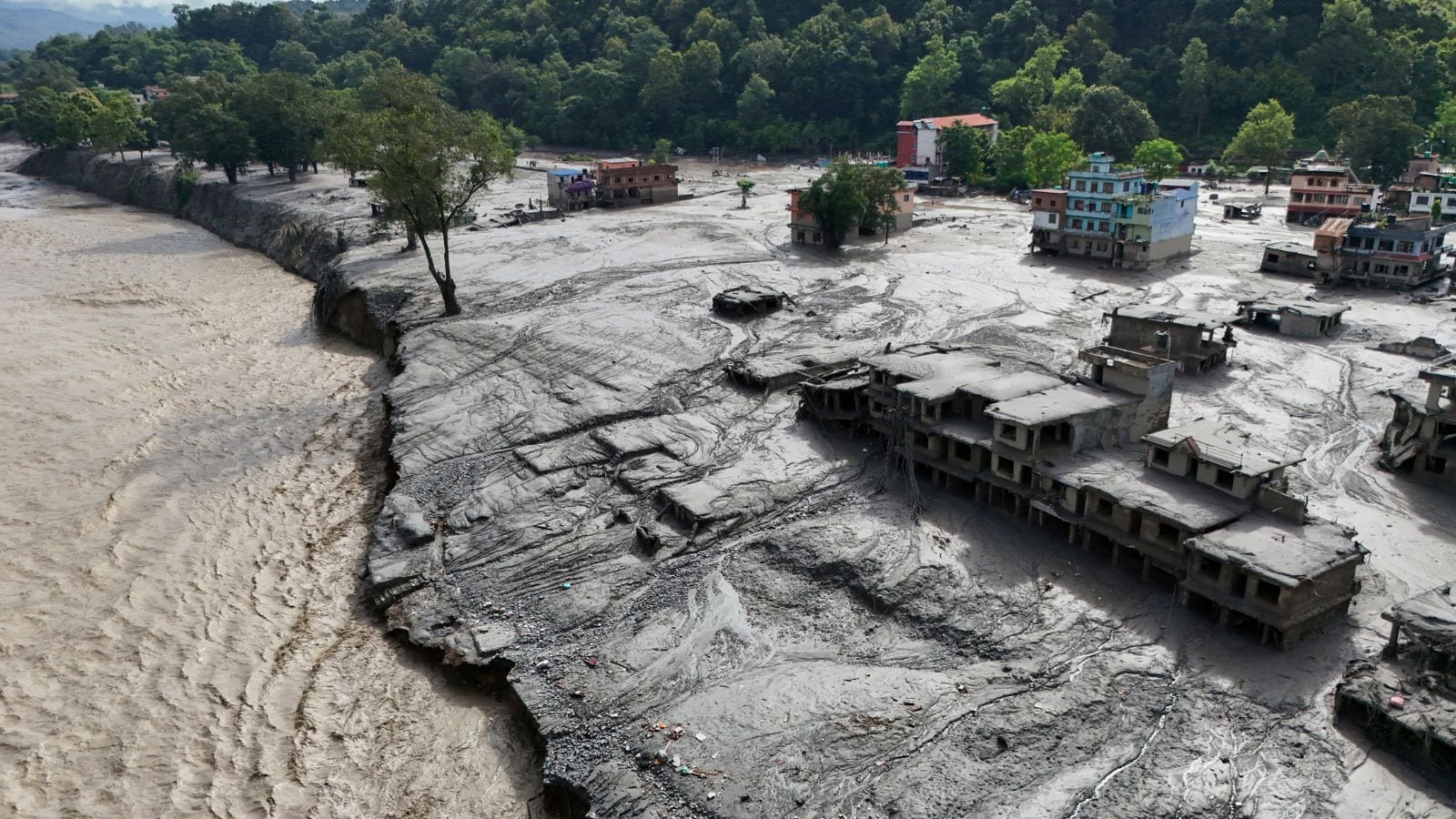
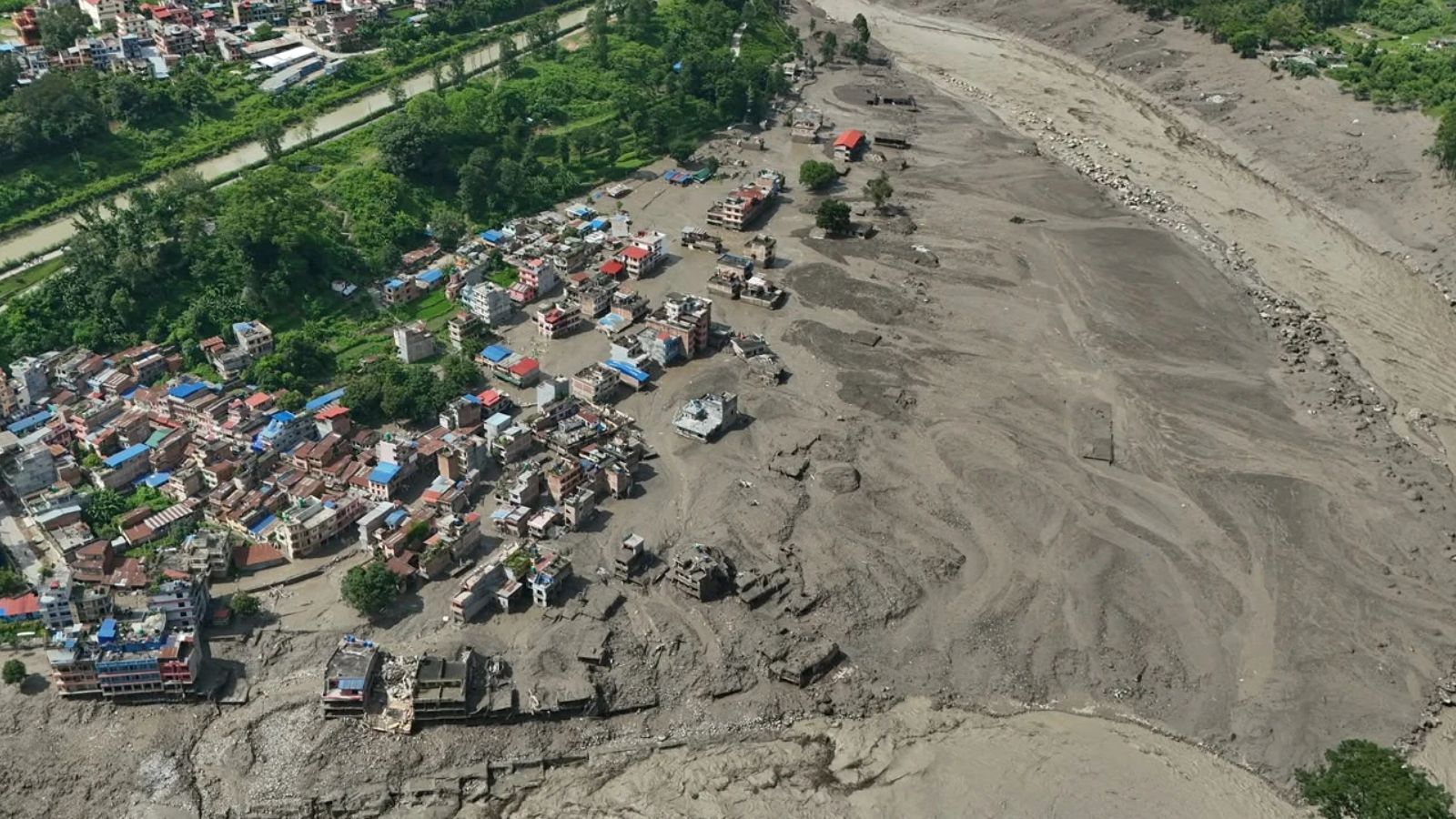
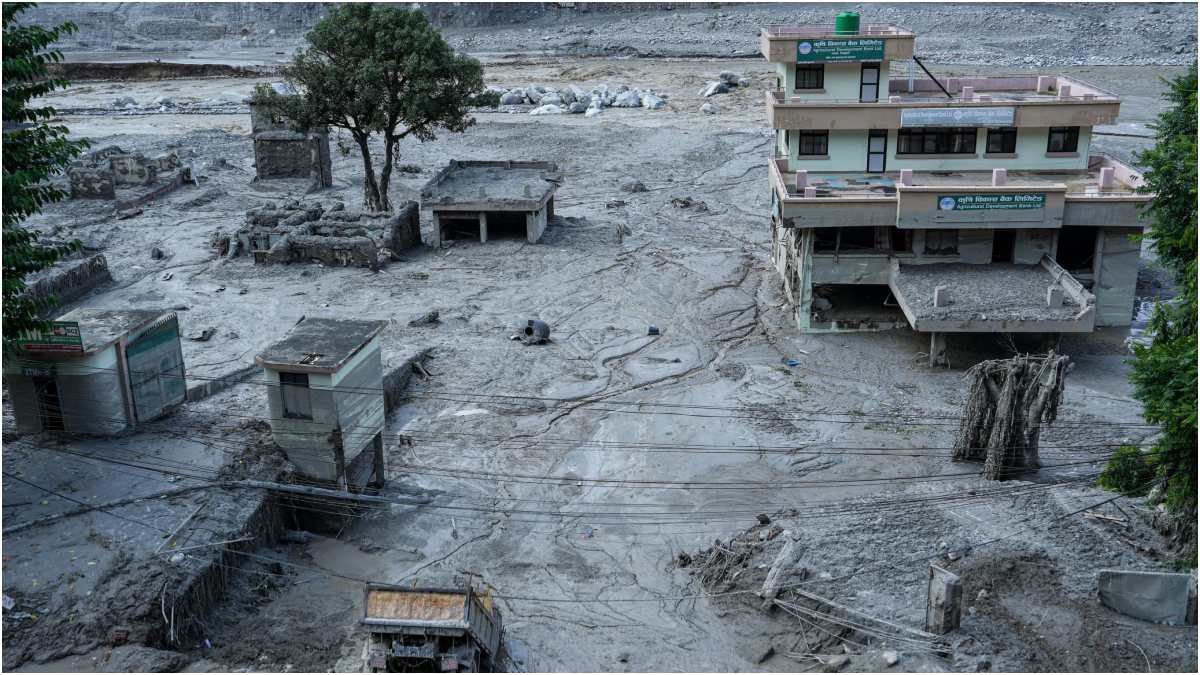
It is called a glacial lake outburst flood, or GLOF, though the clinical acronym fails to capture the sheer, chaotic violence of the event. When a moraine wall bursts, it unleashes millions of cubic meters of water in a sudden, raging wall of mud, boulders, and displaced trees. It travels down canyons like water shot from a firehose, erasing bridges, flattening villages, and tearing up centuries-old terraced fields before anyone in the path can even reach for their phone.
Karma showed me a photograph on his cracked smartphone of a riverbed near his ancestral village. In the picture, a concrete bridge spanned a modest, clear stream. In reality, that bridge was buried beneath forty feet of grey silt and automobile-sized boulders.
"The water remembers how to fall," Karma said quietly. "We just forgot how fast it happens."
The international scientific community tracks these unstable lakes with satellite telemetry and high-altitude sensors, mapping the expanding blue eyes of water high above the tree line. They monitor the Tsho Rolpa and Imja Tse lakes, installing early-warning systems, digging drainage channels, and trying to outpace a climate that is shifting faster than our engineering can adapt. Yet, technology has limits when deployed in remote, vertical terrain where batteries freeze, flash floods shear away cables, and political boundaries complicate regional disaster response.
The threat is not a distant abstraction reserved for doomsday documentaries. It is an active equation written in ice, rock, and time. Every degree Celsius the planet warms adds another ounce of pressure to the high-altitude reservoirs of Central Asia. Every delayed monsoon season alters the hydrological balance of river basins that sustain nearly two billion people downstream across South Asia.
When you walk these trails, the beauty is staggering. The prayer flags snap in the crisp air, sending mantras of peace across valleys carved by ancient ice. The peaks catch the last violet light of dusk, glowing like embers in a dying hearth.
Yet underneath that staggering beauty lies a profound vulnerability. The mountains are shifting beneath our feet. They are shedding their frozen armor, reminding anyone willing to look that even the most permanent-seeming landscapes are ephemeral.
The ice is melting. The walls are crumbling. And the water is waiting for the signal to fall.