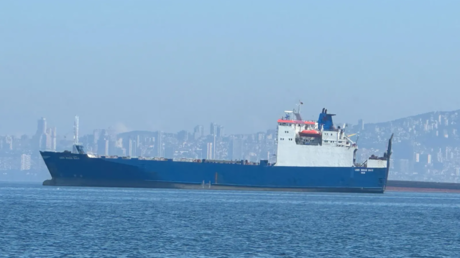
Commercial maritime corridors in the Black Sea have transitioned from stable logistical arteries into contested zones of asymmetric attrition. The recent drone strike targeting a Turkish-owned cargo vessel off the Russian port of Tuapse is not an isolated tactical anomaly. Instead, it serves as an empirical indicator of a structural shift in modern naval and commercial warfare, where civilian merchant shipping is systematically integrated into the economic calculus of regional conflict. Evaluating this event requires stripping away diplomatic rhetoric to analyze the underlying mechanics of maritime risk, insurance economics, and the geopolitical exposure of neutral intermediary states.
The Economic Mechanics of Contested Maritime Corridors
The escalation of uncrewed aerial vehicle targeting against commercial traffic operating near Russian Black Sea terminals fundamentally alters the cost function of maritime trade. When state or non-state actors project kinetic force into commercial shipping lanes, the immediate operational impact is measured across three distinct vectors: hull and machinery risk, crew retention, and logistical rerouting overhead. You might also find this connected article insightful: Why the Nepal Flood Crisis and Missing Foreigners Reveal a Much Bigger Himalayan Threat.
Maritime shipping functions on predictable continuity. Under normal operating parameters, vessel operators optimize for transit time, fuel efficiency, and port turnaround speed. The introduction of persistent aerial drone threats invalidates these optimization models. Shipowners must now account for extreme tail-risk events where total asset loss or severe structural damage occurs within internationally recognized or contested transit corridors.
The economic fallout radiates outward from the shipowner to regional exporters and state trade balances. Turkey occupies a uniquely complex structural position in this matrix. As a primary trade intermediary maintaining commercial ties with both belligerents, Turkish shipping firms absorb disproportionate exposure. When vessels flagged under foreign registries but operated by Turkish companies are struck while carrying agricultural commodities or industrial inputs to Russian ports, the financial burden splits between soaring war-risk insurance premiums and the operational paralysis of fleet assets. Major global carriers suspending regional bookings reflect a rational market reaction to unquantifiable liability. As extensively documented in latest coverage by Al Jazeera, the effects are worth noting.
Strategic Objectives Behind Commercial Targeting
To understand why civilian cargo vessels become collateral or direct targets in modern regional conflicts, one must deconstruct the strategic logic of economic coercion. Strategic analysts often categorize state-level military objectives into direct force-on-force engagement and indirect resource denial. Targeting commercial shipping servicing adversary ports represents the latter.
The campaign against Black Sea commercial traffic is designed to achieve specific systemic effects:
- Denial of Economic Velocity: Constraining the export capacity of adversary ports reduces the adversary state's fiscal inflows, exerting macroeconomic pressure over extended timelines.
- Insurance and Logistics Inflation: Forcing marine underwriters to reprice risk creates a self-enforcing blockade. Even if physical strikes do not sink a majority of the fleet, the exponential spike in insurance costs renders specific routes economically unviable.
- Diplomatic Compellence: Disrupting the commercial interests of intermediary trading nations creates diplomatic friction, compelling neutral or non-aligned states to pressure belligerents for negotiated settlements or secure transit frameworks.
However, this strategy introduces severe second-order consequences. Expanding the theater of kinetic operations to include commercial vessels flying flags of convenience or operating out of neutral ports blurs the legal boundaries established by international maritime law. This legal ambiguity triggers severe friction with regional stakeholders who find their economic sovereignty tested by the kinetic spillover of an unacknowledged maritime blockade.
The Trilemma of Intermediary Neutrality
States attempting to maintain neutrality while continuing cross-border commerce face a rigid trilemma defined by sovereignty protection, economic continuity, and security non-involvement. When commercial vessels are attacked in proximity to regional ports, the intermediary state confronts a compressed decision space with limited favorable outcomes.
+-------------------------------------------------------+
|               The Intermediary Trilemma               |
+-------------------------------------------------------+
                           |
       +-------------------+-------------------+
       |                   |                   |
       v                   v                   v
[Sovereignty]     [Economic Continuity] [Security Non-Involvement]
Protecting flag   Maintaining vital     Avoiding direct
and citizens      trade and export      military escalation
                  revenues              with belligerents
When an intermediary state seeks to resolve this tension through diplomatic channels—such as proposing new bilateral or multilateral safety agreements—it runs against the strategic imperatives of the primary combatants. Belligerents engaged in a war of attrition view commercial flows as a strategic enabler of the opposing economy. Consequently, appeals for unhindered commercial transit often stall because neither side is willing to cede a primary lever of economic pressure for the sake of neutral shipping convenience.
This dynamic exposes the structural limitations of regional chambers of commerce and industry calling for state-backed financial support or state-enforced convoy protections. Deploying military escorts for commercial vessels in a heavily contested drone environment introduces unacceptable escalation risks, transforming a trade protection problem into a potential direct military confrontation. Conversely, absorbing the losses or subsidizing skyrocketing insurance rates places a heavy fiscal burden on the intermediary state's public treasury.
Tactical Realities of Asymmetric Maritime Defense
From a strictly operational perspective, traditional commercial merchant vessels possess zero organic defense capabilities against modern uncrewed aerial systems. Designed for volumetric efficiency and cargo capacity rather than electronic countermeasures or point-defense kinetic interception, bulk carriers and general cargo ships are sitting targets.
The technological asymmetry is stark. Low-cost aerial drones guided by autonomous or semi-autonomous navigation systems can loiter, track, and strike slow-moving maritime targets with high precision. Merchant crews lack radar-guided defensive suites, active jamming equipment, or hardened command-and-control infrastructure. When multiple drones converge on a vessel, the resulting fires and structural breaches not only threaten human life but immobilize the ship, turning a routine commercial voyage into a complex search-and-rescue and salvage operation.
This operational reality forces a permanent reassessment of vessel routing. Operators are compelled to divert vessels away from high-risk coastal approaches, extend transit times, and rely on fragmented intelligence feeds regarding localized kinetic activity. Yet, because drone vectors and loitering munitions are inherently dynamic, traditional maritime routing safety margins are continually compressed.
Deploy capital reserves into dynamic risk-modeling infrastructure that integrates real-time telemetry and kinetic threat intelligence directly into fleet management software, bypassing traditional static route planning entirely.