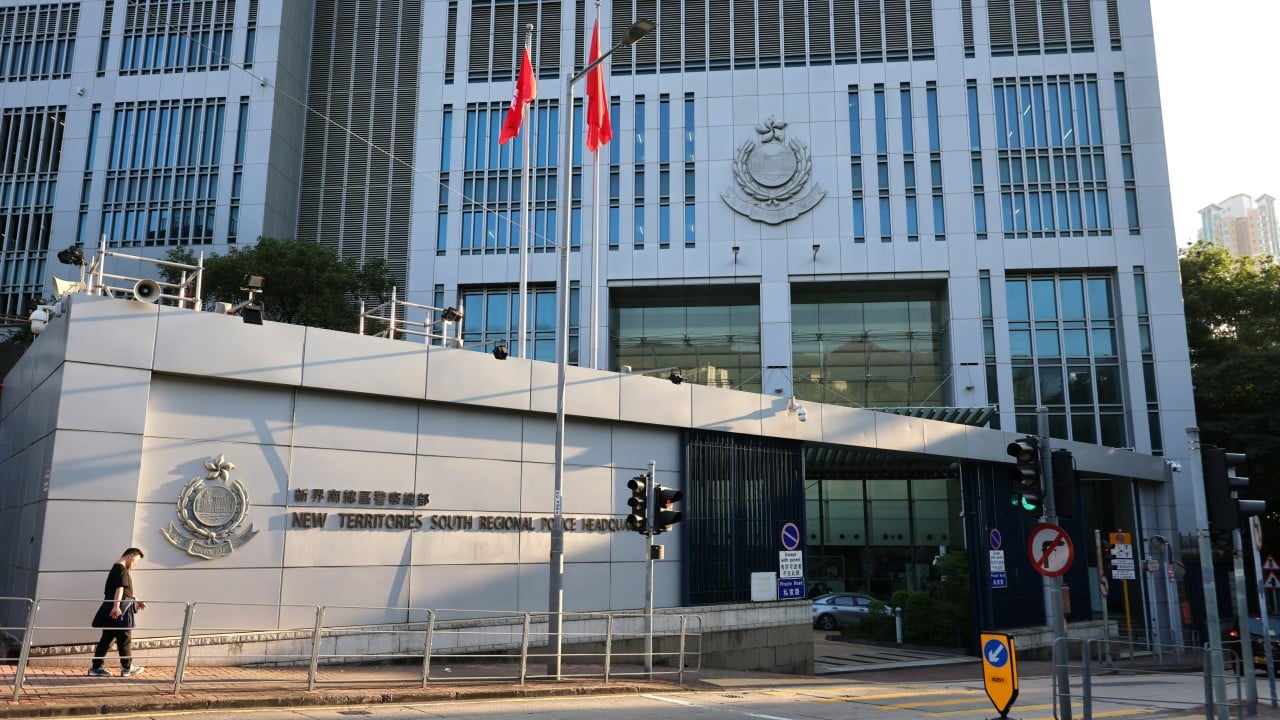
Every time a badge gets dragged through the mud for predatory messaging, abuse of power, or plain stupidity, the public script writes itself. Headlines shriek about rogue actors. Internal affairs launches a very public, very performative investigation. Pundits demand more ethics training. Everyone nods along to the comforting lie that a few bad apples spoiled an otherwise pristine barrel.
It is absolute garbage.
I spent years watching institutions self-destruct from the inside, and I can tell you right now: the rogue officer narrative is a security blanket for lazy leadership. When a Hong Kong police officer gets slapped with criminal charges for sliding into a suspect friend's direct messages with predatory intent, the mainstream media treats it as an isolated moral failure. They focus on the creepiness of the individual. They analyze the specific text messages. They ask how someone so corrupt slipped through the cracks.
They are asking the wrong question entirely.
The real question is why our organizational structures still treat authority as a personal playground rather than a strictly audited fiduciary duty.
The Myth of the Bad Apple
Let us dismantle the lazy consensus. The bad apple theory implies that the system is healthy, functioning, and occasionally contaminated by a defective individual who managed to beat the screening process.
Data tells a completely different story. When an official uses the leverage of an active investigation to pursue personal or sexual gratification, they are not improvising a rogue crime. They are exploiting the exact friction points built into high-discretion environments. They know how communication channels operate. They understand the information asymmetry between an investigator and a terrified civilian. They recognize the implicit intimidation factor of a uniform or a badge.
If your system allows a low-level operator to isolate a citizen, access their personal contact logs under the guise of an inquiry, and weaponize that access without immediate cryptographic or supervisory friction, your system is not broken. It is working exactly as designed. It prioritizes unchecked discretion for the operator over absolute protection for the vulnerable.
Imagine a scenario where every single communication between an investigator and a civilian associate required a multi-signature digital sign-off routed through an independent oversight log. The bad actors would vanish overnight because the friction of getting caught would outweigh the thrill of the abuse. But institutions hate friction. Friction slows down investigations. Friction makes supervisors do paperwork. So they choose speed and opacity, and then act shocked when someone uses that opacity to send late-night messages to a suspect's terrified friend.
Why Ethics Training is a Total Waste of Money
Let us talk about the multi-million-dollar compliance and ethics industry, because it is the biggest scam running in modern governance.
When a scandal breaks, senior leadership reacts by rolling out mandatory slide decks, sensitivity workshops, and vague codes of conduct. I have seen organizations blow millions on compliance theater that accomplishes precisely nothing.
Here is a hard truth: sociopaths do not commit misconduct because they forgot that harassment is bad. They do not need a refresher course on consent. They do it because they calculate that the probability of getting caught is near zero, and the penalty for getting caught—if it even happens—is manageable.
Ethics training is a liability shield for executives. It allows them to point to a completed attendance sheet and say, "Look, we told them not to do that." It shifts the blame from structural design flaws down to individual moral failure.
If you want to stop misconduct, stop lecturing adults on basic human decency and start re-engineering the environment. Remove the isolated communication channels. Implement mandatory dual-custody oversight for all civilian touchpoints. Make data trails immutable and randomly audited by third-party algorithms that do not care about internal politics or department morale.
Of course, my approach has a massive downside. It pisses off the workforce. Operators hate being audited. Unions scream about micromanagement. Morale dips when adults are treated like they are being tracked—because they are. That is the price of public trust. If institutions are not willing to make their honest workers slightly uncomfortable with heavy oversight, they deserve every scandal that hits the front page.
The Anatomy of Institutional Cover-Up
The media loves to focus on the crime itself, but the real rot happens in the hours and days after the behavior is flagged.
When a complaint lands on a supervisor's desk, the immediate institutional reflex is containment, not correction. The priority is protecting the brand, managing public relations, and shielding the agency from civil liability. The victim is treated as an adversary, while the perpetrator is quietly isolated, transferred, or protected behind a wall of bureaucratic silence until the news cycle moves on.
This is where the true breakdown occurs. It is not just about a stray text message or an abuse of power. It is about the ecosystem that enables it. Every time a complaint is minimized, every time a supervisor looks the other way because the offender is a high-producer, the organization trains its members to value internal loyalty over objective integrity.
Stop waiting for cultural transformation. Culture is downstream from architecture. If you design a system that rewards transparency and punishes opacity with brutal, automated certainty, the culture will follow.
Until leadership stops hiding behind the bad apple excuse and starts dismantling the opaque structures that protect predators, we are just waiting for the next headline to drop.