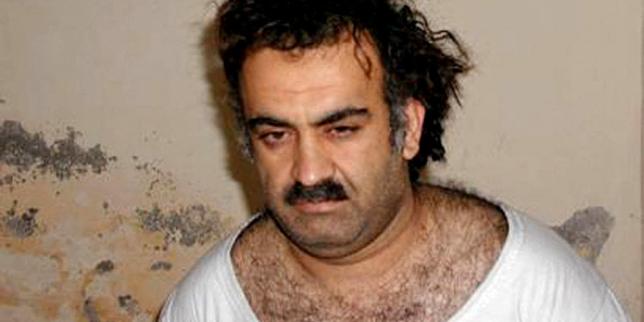
More than two decades after hijacked commercial airliners tore into the World Trade Center, the Pentagon, and a field in Shanksville, Pennsylvania, the military tribunal for the self-proclaimed mastermind of the September 11 attacks has been officially pushed to June 5, 2028. Air Force Lieutenant Colonel Michael A. Schrama issued the scheduling order from the courtroom at Guantanamo Bay, rejecting a proposed January 2027 start date brought forward by military prosecutors. For the families of the nearly 3,000 victims, the ruling is another agonizing extension in a judicial marathon defined by institutional failure, government miscalculation, and the enduring poison of the CIA's post-9/11 torture program.
Khalid Sheikh Mohammed, along with three co-defendants—Walid bin Attash, Ali Abdul Aziz Ali, and Mustafa Ahmed al-Hawsawi—faces a military commission system that has proven structurally incapable of delivering swift accountability. Schrama is the fifth judge to cycle through a docket bogged down by procedural paralysis. The extra eighteen months granted by the new scheduling order are not an arbitrary delay; they are a direct consequence of unresolved pretrial disputes regarding what evidence remains legally permissible before a jury.
The Torture Tangle and the Death of Plea Negotiations
At the absolute center of this legal obstruction lies the original sin of the American counterterrorism apparatus: the secret CIA black sites. Following his capture in Rawalpindi, Pakistan, in March 2003, Mohammed was subjected to simulated drowning, sleep deprivation, and extreme physical abuse. He was waterboarded 183 times.
Constitutional law experts have warned for years that this systematic brutality permanently compromised any legitimate path to a standard criminal trial. Confessions extracted under torture are inadmissible in American civilian courts, and while military commissions have operated under looser rules, defense attorneys have successfully argued that the physical and psychological damage inflicted on the defendants by their government captors taints every single piece of institutional evidence connected to them.
The structural impossibility of cleaning up this evidentiary mess is precisely why the prosecution and defense spent two years negotiating pretrial agreements. Those deals, struck in 2024, would have traded the death penalty for life imprisonment, sparing the country a messy, multi-year spectacle of a trial while ensuring the defendants spent the rest of their lives behind bars. Furthermore, those agreements would have mandated answers to lingering questions from victims' families.
Political cowardice dismantled that resolution. Following immediate political backlash from victims' advocacy groups and hawkish lawmakers, then-Defense Secretary Lloyd Austin abruptly revoked the plea agreements, leaving prosecutors back at square one. By torpedoing the plea deals, the federal government guaranteed that the foundational debate over torture, state secrecy, and due process would have to be litigated out in the open.
The Machinery of Bureaucratic Delay
Military commissions were designed outside the normal federal court structure precisely to bypass the rigid evidentiary protections of Article III courts. Yet, this bespoke system has created a bureaucratic monstrosity.
Because the military commissions are an ad hoc creation layered on top of changing executive branch policies, every administration brings a new legal strategy, a new interpretation of classified evidence rules, and a rotating cast of prosecutors and judges. Security protocols at Guantanamo Bay require all case files to be handled within heavily guarded SCIFs (Sensitive Compartmented Information Facilities), creating massive bottlenecks for defense lawyers who must constantly fight just to review basic documents without running afoul of military censors.
Every motion regarding the provenance of a piece of intelligence triggers months of classification reviews. Prosecutors want to introduce statements and notebooks gathered during early interrogations; defense attorneys counter that these materials are direct fruits of the poisonous tree of CIA torture. Judge Schrama’s ruling acknowledges that sorting through these foundational arguments cannot realistically happen before mid-2028.
The Toll on Accountability
The consequences extend far beyond a delayed calendar. Witnesses are aging. Attorneys cycle out of military service. Evidence degrades or gets lost in institutional memory. Most importantly, the families of those murdered are left in a state of perpetual limbo.
When a society chooses to bypass its own laws in the immediate aftermath of a tragedy, it builds a trap for its future self. The decision to employ extraordinary rendition and enhanced interrogation techniques twenty-five years ago did not yield quick intelligence; instead, it created an impenetrable legal shield that has protected the architects of mass murder from ever facing a definitive verdict. June 5, 2028, is now on the docket, but given the history of the military commissions, whether that date will hold remains entirely uncertain.



