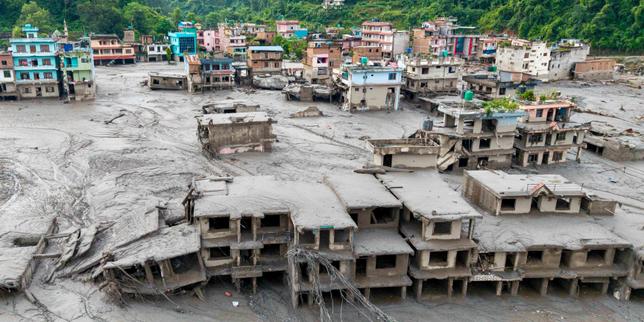
Every single monsoon season, the media reaches for the exact same script. A wall of water tears through valleys in Nepal and Tibet, villages vanish, bridges snap like matchsticks, and the headlines roll in with predictable uniformity. The lazy consensus points the finger upward. We hear about catastrophic glacial lake outburst floods, melting ice packs, and sudden avalanches stripping mountainsides bare.
The narrative is clean, dramatic, and fundamentally wrong.
When you blame the glacier, you absolve the humans who spent decades turning fragile high-altitude river basins into unmitigated engineering disaster zones. I have walked those valleys, interviewed hydrologists tracking sediment yields, and watched infrastructure projects rammed through active floodplains without a shred of baseline ecological assessment. The mountain did not betray these communities. Poor policy did.
The Anatomy of a Manufactured Catastrophe
Look at the mechanics of these disasters. When heavy monsoon precipitation hits the Himalayas, water volumes spike. That is physics. But water turns into a catastrophic debris flow only when it finds something to carry.
The standard media narrative claims a massive ice mass collapsed, sending a billion tons of water down the gorge. Geomorphological surveys tell a completely different story. Most of these events originate from marginal moraine destabilization mixed with massive slope failures in saturated soils. The ice is often a secondary actor or entirely absent from the initial trigger.
Infrastructure on Borrowed Time
Drive up any major corridor in the Himalayan region and you will see the root cause lining the riverbanks. Hydropower projects, poorly planned bypass roads, and concrete embankments have constricted natural river channels.
When a river is forced into a concrete straitjacket, its velocity increases exponentially.
- Natural sediment transport is disrupted, causing riverbeds to rise through aggradation.
- Road construction undercuts steep mountain slopes, creating thousands of artificial landslide scars waiting for a heavy rain event.
- Encroachment on historical floodplains puts high-density settlements directly in the path of inevitable seasonal swell cycles.
When the monsoon hits saturation point, these pinch points fail. The resulting surge is blamed on a sudden act of climate anger, ignoring the fact that engineers built a literal kinetic weapon upstream and forgot to account for basic fluid dynamics.
Why the Climate Narrative Masks Local Failures
Shifting 100 percent of the blame to global climate change is a convenient political shield. It lets local ministries, regional developers, and international funding bodies off the hook. If the disaster is purely a symptom of planetary warming, then nobody in Kathmandu or Beijing needs to answer for issuing construction permits on unstable alluvial fans.
Climate change acts as a force multiplier, not the primary architect. It shifts rainfall intensities and lengthens weathering cycles. However, heavy rain does not automatically equal a deadly flash flood unless the landscape has been pre-conditioned for failure by human intervention.
What We Should Be Fixing Right Now
Stop funding reactive disaster relief while ignoring proactive structural reform. Real mitigation requires painful political choices.
- Ban heavy civil engineering within dynamic river corridors immediately.
- Implement mandatory LiDAR mapping for all upstream slope stability before greenlighting any commercial infrastructure.
- Relocate downstream settlements out of historical debris-flow fans instead of building taller concrete walls that only create a false sense of security.
The next time a wall of mud and water sweeps through the roof of the world, do not look at the sky. Look at the permits signed by bureaucrats who thought they could outsmart gravity with a concrete mixer.



