The map of the Middle East is shifting again and almost nobody outside the region is paying attention. Years of fragile self-governance built by local factions in northeastern Syria are collapsing under the weight of geopolitical realignments. If you think the fate of Kurdish autonomy in Syria is just a localized border dispute, you're missing the entire board.
Decades of conflict hollowed out state institutions across the region, creating a vacuum. Into that vacuum stepped local militias and administrative councils, backed by international powers, trying to forge a new political reality. They wanted decentralized democracy. Damascus wanted total centralization. Guess who usually wins that fight when foreign patrons shift their priorities?
Let's look at what actually happened on the ground. The Syrian Democratic Forces, known widely as the SDF, served as the primary administrative and military backbone for the Autonomous Administration of North and East Syria. They secured territory, fought extremists, and ran local governance. But they also sat on Syria's oil fields and breadbasket. Damascus never accepted that arrangement. Neither did neighboring Turkey, which viewed the entire project as an existential threat tied to domestic insurgencies.
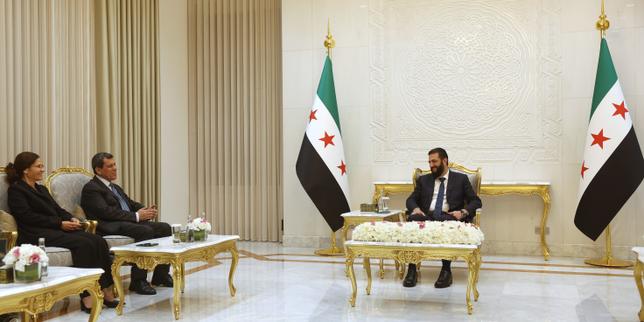
When international security guarantees dry up, regional actors move fast. That is precisely what triggered the current dissolution of the SDF's autonomous structures. It wasn't a sudden surprise. It was the predictable outcome of a long squeeze involving military pressure, economic blockades, and shifting diplomatic winds.
The Myth of Permanent Protection
People love to assume that alliances with global superpowers offer permanent security. They don't. History is littered with local groups that trusted outside protection only to find themselves abandoned when geopolitical winds changed.
The security architecture in northeastern Syria relied heavily on an uneasy partnership with Western intelligence and military advisors. That partnership kept major adversaries at bay for years. Yet, policy priorities in Washington and European capitals change with every election cycle. Once the immediate existential threat of extremist groups receded in the eyes of Western strategists, long-term political commitments to local democratic experimentation evaporated.
You cannot build a sovereign political entity on borrowed time and foreign grace. The moment external actors decided normalization with Damascus or appeasing regional partners took precedence, the writing was on the wall. The SDF faced a brutal math problem. Fight a multi-front war against a rebuilt Syrian state backed by regional powerhouses, or negotiate an integration deal that strips away autonomy to save civilian lives.
They chose survival over total destruction. But survival on Damascus's terms means the dissolution of independent military structures and the surrender of civil administration back to the central government.
What the Disintegration of Self-Governance Means for Daily Life
It is easy to talk about geopolitics in abstract terms, but the human cost of this transition is staggering. Millions of residents in places like Qamishli, Hasakah, and Raqqa now face an uncertain future under a returning central authority that has a long history of marginalizing minority populations.
Local councils that experimented with pluralistic governance, gender equality, and minority rights are being dismantled or absorbed. Schools that taught in local languages face replacement by standard state curricula. For the average resident, the end of autonomy translates directly into economic hardship, security crackdowns, and a return to the heavy-handed bureaucratic control that sparked the civil conflict in the first place.
Security dynamics are shifting overnight. Prisons holding former combatants and camps housing displaced families are changing hands. If the central government cannot effectively secure these facilities, the risk of a resurgence by underground extremist cells spikes dramatically.
Why This Reshapes Regional Power Balances
Turkey views the dismantlement of autonomous structures along its southern border as a massive strategic victory. For years, Ankara pushed for the complete elimination of any governance model led by groups linked to Kurdish political movements. With Damascus reclaiming authority over the border regions, a new security arrangement between Syria and Turkey becomes possible, one brokered or tolerated by other regional heavyweights like Russia and Iran.
This development alters the calculus for every minority group watching from the sidelines. It sends a chilling message to other localized movements across the Middle East. If you challenge central authority, time is not on your side. Eventually, the state returns.
We are watching the definitive closing chapter of the decentralized experiment in Syria. The centralized state is back, bruised and battered, but determined to reassert control over every inch of territory.
Watch the borders closely over the next few months. The integration process will be violent, messy, and plagued by local resistance. Track how regional trade routes open or close, and pay attention to how displaced populations respond to administrative changes. That is where the real story unfolds.