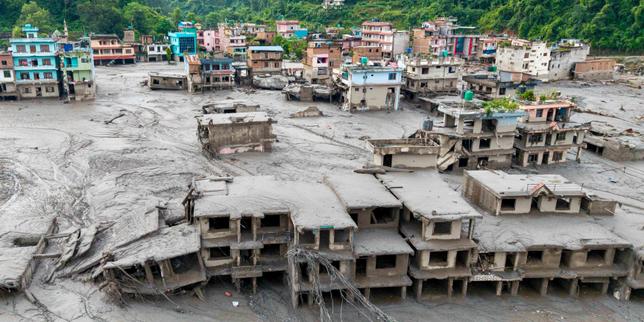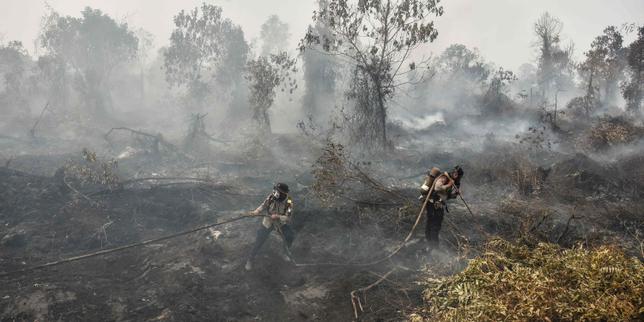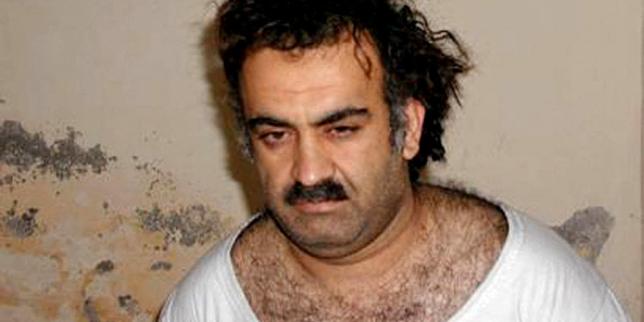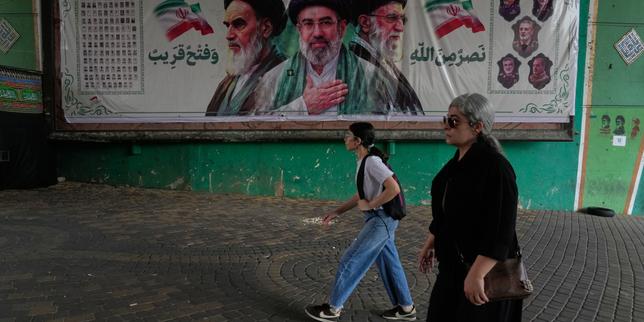
The map of the Middle East is drawn twice.
Once with ink, tracing borders agreed upon in smoke-filled rooms a century ago, and once with friction, updated daily by the hum of centrifuges, the stutter of cyberattacks, and the quiet whisper of intelligence officers trading secrets in darkened cafes. If you stand on the hills overlooking Jerusalem just as the dust settles over the valleys, you can almost feel the tectonic plates shifting beneath your feet. For decades, the confrontation between Israel and Iran played out in the shadows. It was a war of proxy militias, tankers burning in the Persian Gulf, and anonymous explosions in desert laboratories. But shadows have a way of retreating when the sun finally breaks through.
Today, that strategy has evolved into something far more structural. It is an architectural project. The blueprint is clear: isolate the Iranian state, choke its economic lifelines, fracture its regional alliances, and let the immense pressure from within do the rest.
To understand this strategy, you have to look past the missile interceptors and the fiery rhetoric broadcast on state television. You have to look at a small merchant shop in Tehran.
Imagine a man named Reza. For twenty-five years, Reza has imported specialty machine parts through the port of Bandar Abbas. He does not care much for geopolitics. He cares about the price of flour, the school fees for his daughter, and the agonizing climb of the exchange rate on his phone screen. Every morning, Reza refreshes his browser and watches his purchasing power evaporate. He is not defeated by a bomb or an invading army. He is defeated by math.
This is the frontline of modern statecraft. When sanctions tighten, when shipping insurance spikes, when foreign banks refuse to process transactions, the state begins to suffocate from the inside out.
Israel’s strategic doctrine regarding Tehran has undergone a profound metamorphosis. For a long time, the primary objective was containment. Delay the nuclear program. Blunt the reach of the Islamic Revolutionary Guard Corps. Keep the fires burning somewhere else, anywhere else, so long as they remained outside Israel’s immediate horizon. But containment is a defensive posture. It is a waiting game, and in a game of endurance, time favors the side with vast geography and oil reserves.
The new calculus abandons patience. The objective is now kinetic and diplomatic encirclement.
Look at the diplomatic board. For decades, Tehran relied on a simple formula: keep the Palestinian issue at the center of Arab politics, paint itself as the sole defender of the resistance, and isolate Israel within its own neighborhood. That formula worked brilliantly until it didn't. The Abraham Accords were not merely trade agreements or photo opportunities on the White House lawn; they were the concrete foundations of a regional counter-architecture. They signaled to Tehran that the Arab world was charting a new course, one where shared economic survival and technological integration superseded ancient grievances.
When nations begin trading microchips instead of shelling points, the calculus of war changes.
Yet, isolating a regime of this magnitude is a terrifyingly delicate enterprise. Empires and authoritarian states do not simply vanish because their ledgers are red. When cornered, they lash out. They activate sleeper cells. They accelerate the very programs meant to be suppressed. They tighten the internal grip on their own citizens, transforming every street corner into a checkpoint, every university lecture into a loyalty test.
This is where the human cost becomes staggering.
Back in Tehran, Reza listens to the young students chanting in the courtyards. They are demanding a normal life. They want to listen to music without looking over their shoulders, to travel without suspicion, to participate in the global economy rather than watching it accelerate past them through a cracked window. They bear the brunt of the sanctions designed to weaken their oppressors. History is rarely neat. The hammer swung from the outside to crack the vault often bruises the fingers of the very people trying to pry it open from within.
There is also the profound risk of miscalculation. When two adversaries are locked in an escalating spiral of deterrence, a single misread signal can ignite a regional conflagration. Every strike on a proxy commander, every sabotage operation on a deeply buried facility, pushes the needle closer to the red line. Both capitals know the cost of total war. Both capitals are betting that the other will blink first.
This is the invisible architecture of our current era. It is built out of invisible code, financial blockades, secret diplomatic channels, and the quiet desperation of millions of ordinary people caught in the crossfire of titans.
The regime in Tehran remains defiant, projecting an image of unshakeable ideological purity. Yet beneath the granite facade, the concrete is cracking. The economic engine sputters. The youth have lost their fear. And in Jerusalem, the planners measure success not in territory gained, but in the widening gap between a government clinging to power and a population desperate to live beyond the shadow of war.
The map continues to shift. The ink is still wet. And somewhere in the dark, the next move is already being calculated.