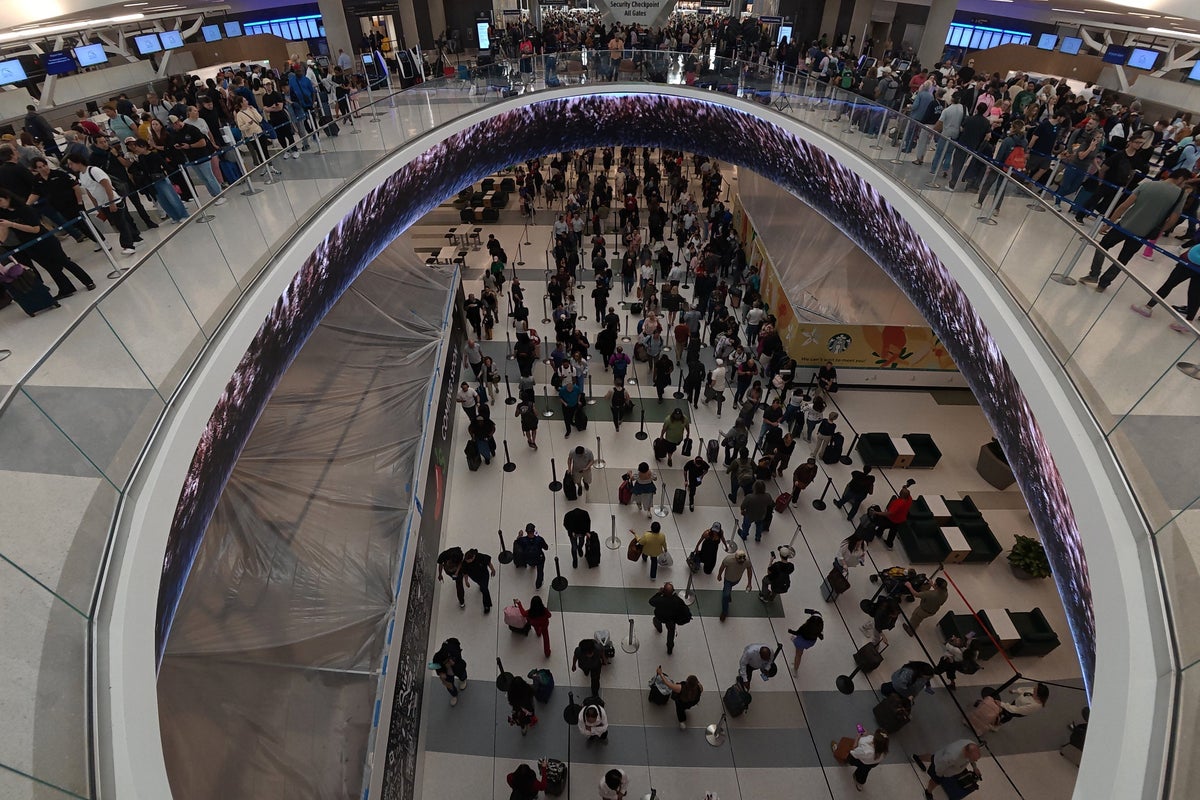
Congress just performed its favorite magic trick. They passed a funding bill that keeps the lights on at the TSA and "most" of Homeland Security while pointedly starving immigration enforcement. The media is calling this a "compromise." I call it a managed decline.
If you think this is about fiscal responsibility or legislative gridlock, you’ve been reading the wrong briefings. This isn't a failure of the system; it’s the system working exactly as intended. By decoupling the "customer-facing" security—the TSA agents who make you take your shoes off—from the "sovereignty-facing" security of the border, Washington has successfully prioritized optics over actual national stability.
The Security Theater Budget
We are obsessed with the wrong metrics. The competitor headlines scream about "funding gaps" in immigration enforcement as if an extra billion dollars would magically seal a sieve. It won’t. The fundamental misunderstanding here is that the Department of Homeland Security (DHS) is a singular, cohesive unit. It’s not. It’s a bloated conglomerate of agencies with diametrically opposed incentives.
The TSA is the crown jewel of Washington’s PR machine. It’s visible. It’s at every airport. If the TSA shuts down, the donor class can’t fly to Davos or Aspen. That is why their funding is never truly on the chopping block for long. On the flip side, Immigration and Customs Enforcement (ICE) and Customs and Border Protection (CBP) are the political footballs used to rile up bases and fundraise.
Keeping the TSA funded while starving immigration enforcement is a deliberate choice to maintain the feeling of safety while ignoring the mechanics of it.
The False Choice of Selective Funding
The "lazy consensus" suggests that we have to choose between keeping airports running and enforcing the border. This is a manufactured crisis.
- The TSA Fallacy: We spend billions on an agency that famously fails undercover "red team" tests at an alarming rate. Yet, we treat their funding as a non-negotiable pillar of national security.
- The ICE Boogeyman: Both sides of the aisle benefit from ICE being underfunded. For one side, it’s a victory for "humane" policy; for the other, it’s a perennial grievance to run on in November.
I’ve spent two decades watching these budget cycles. When you fund the administrative parts of DHS but leave the enforcement arms in a state of perpetual "continuing resolution" limbo, you aren't saving money. You are increasing the long-term cost of every single deportation, every asylum hearing, and every border patrol hour.
Imagine a scenario where a shipping company decides to fund its front-desk receptionists and marketing team but refuses to pay the mechanics who fix the trucks. The company doesn't "save" money. It just ensures the eventual crash is more expensive and catastrophic. That is the current state of US border policy.
Why Immigration Enforcement is the New "Invisible Debt"
Economists talk about "technical debt" in software—the cost of choosing an easy, messy solution now instead of a hard, correct one. Washington is currently racking up "enforcement debt."
By refusing to fund the beds, the judges, and the removal flights today, Congress is guaranteeing a massive surge in downstream costs. We are talking about the social services of cities like New York and Chicago, the strain on the legal system, and the eventual necessity of a massive, multi-billion-dollar "emergency" surge when the system finally snaps.
The "nuance" the mainstream media misses is that underfunding isn't a form of restraint. It's an interest-only loan on a crisis that we will have to pay back with a massive premium later.
Dismantling the "Gridlock" Narrative
Stop calling it gridlock. Gridlock implies two parties trying to move in opposite directions. This is a static equilibrium.
- The Corporate Incentive: Low enforcement keeps a steady flow of off-the-books labor available, which depresses wages in construction, hospitality, and agriculture.
- The Political Incentive: A solved border is a dead campaign issue. If the border were actually secure and the immigration system actually functioned—meaning fast approvals for the skilled and fast removals for the ineligible—half the talking heads on cable news would be out of a job.
The decision to fund the TSA—the part of the DHS that keeps the travel industry humming—while ignoring the border is a pro-corporate, pro-status-quo move disguised as a budget compromise.
The Harsh Reality of Border Logistics
Let’s get technical. Immigration enforcement isn't just "men with guns." It is a massive logistics and data operation.
- Detention Capacity: When you don't fund beds, you get "catch and release" by default. It isn't a policy choice; it's a math problem. If you have 10,000 people and 500 beds, 9,500 people are going somewhere else.
- Judicial Backlog: We have millions of cases pending. Funding "most of Homeland Security" but skipping the legal infrastructure is like building a massive intake pipe that leads into a thimble.
The "contrarian" take here isn't that we need "more" money. It’s that we need a total divorce from the current DHS structure. The TSA should be privatized or moved under the Department of Transportation. Border enforcement should be its own cabinet-level priority with a dedicated, non-discretionary budget.
Until you stop grouping "airport convenience" with "national sovereignty," you will continue to see these half-baked bills that satisfy no one and solve nothing.
What No One Tells You About "Essential Services"
During these funding fights, the term "essential services" gets thrown around like a holy relic. The TSA is deemed essential. Border processing is often deemed essential. But border enforcement is treated as a luxury.
This distinction is the height of bureaucratic cynicism. It says that processing people into the country is a core function of the state, but ensuring the integrity of who enters is an optional add-on.
I have seen federal agencies burn through hundreds of millions in "unobligated funds" at the end of a fiscal year on office furniture and software upgrades while agents on the ground are told there’s no budget for basic tech. The problem isn't a lack of dollars; it's the weaponization of where those dollars go.
The Actionable Truth
If you want to understand the next decade of American politics, stop looking at the top-line numbers of these bills. Look at the ratios.
When the ratio of "service" funding (processing, TSA, administration) to "enforcement" funding (removals, detention, physical security) shifts toward service, the border effectively ceases to exist. We are currently witnessing the final stages of that shift.
Don't be fooled by the "victory" of avoiding a shutdown. A government that only funds the parts of itself that provide the illusion of security while abandoning its actual borders is a government in a state of functional bankruptcy.
The next time you hear a politician brag about "funding our brave TSA agents" while silent on the lack of immigration enforcement, know that they aren't protecting you. They’re just making sure your flight isn't delayed while the house burns down.
Fixing this doesn't require a "bipartisan commission." It requires the cold, hard realization that you cannot run a nation-state like a boutique hotel where the only goal is to keep the guests from complaining.
Stop asking when the border will be "fixed." It’s not broken. It’s being liquidated.