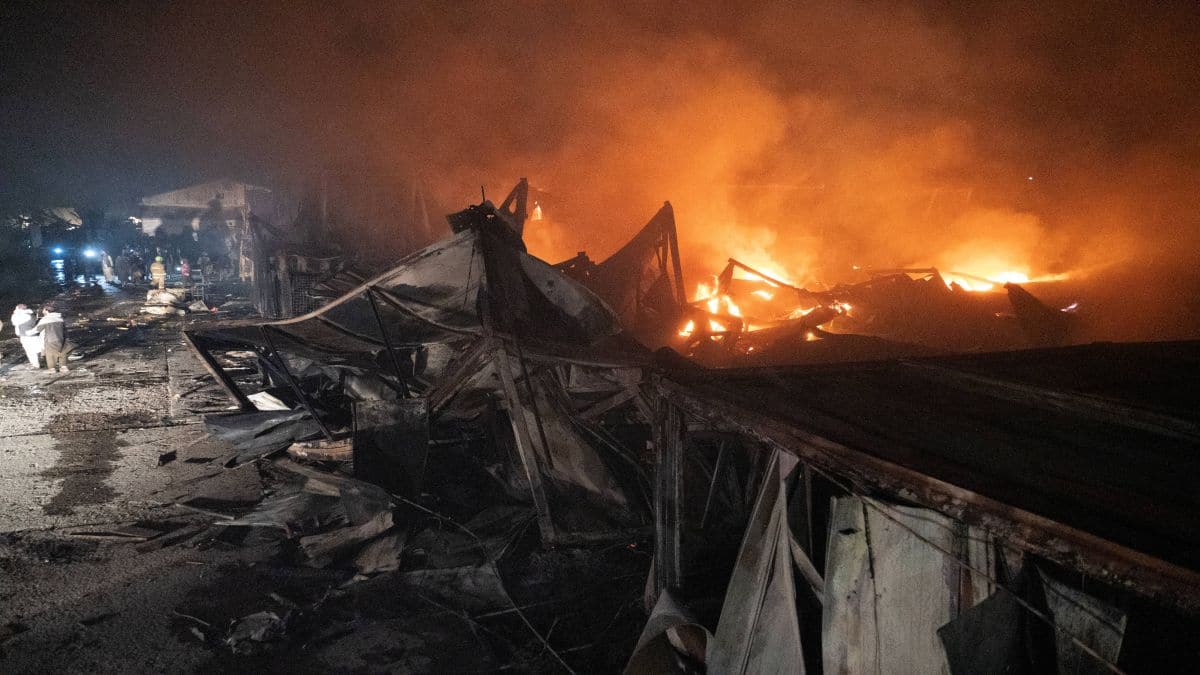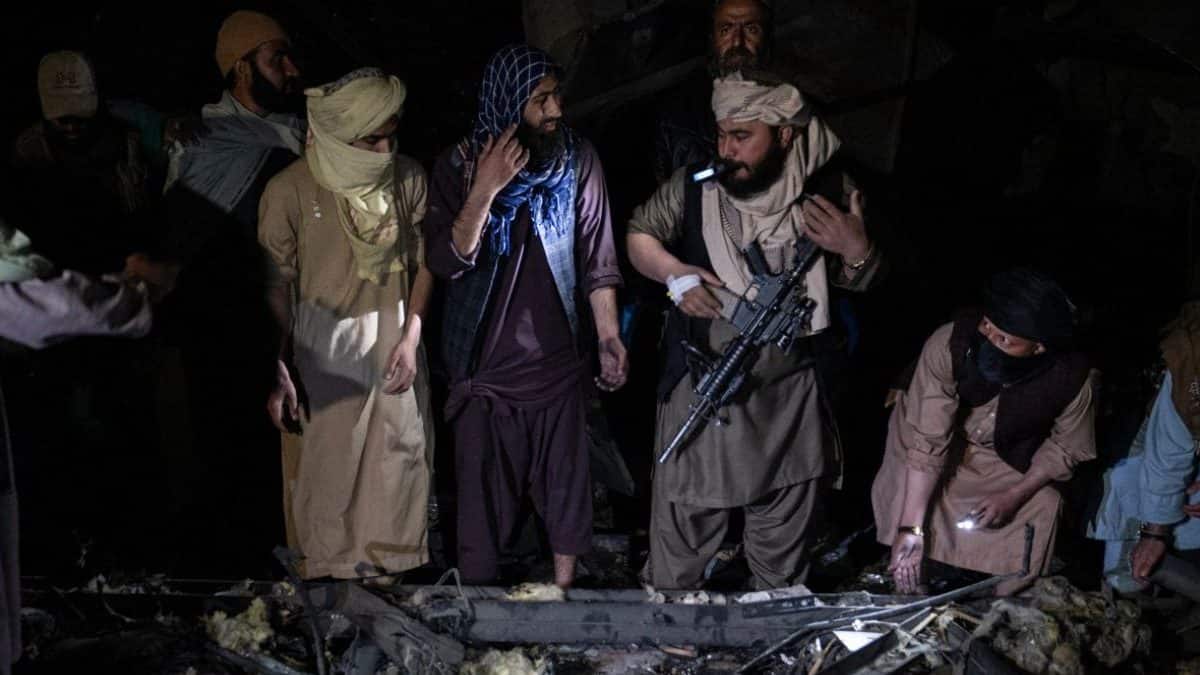
The moon had no business being that bright over Khost and Paktika. In the rugged folds of the borderlands where Afghanistan meets Pakistan, the silence is usually a heavy, physical thing, broken only by the rhythmic bell of a stray goat or the low whistle of wind through the Hindu Kush. Then came the roar. Not the organic rumble of a landslide, but the sharp, mechanical scream of a jet engine tearing through the thin mountain air.
When the missiles hit, they didn't just strike physical structures. They tore through the fragile, unspoken truce that keeps families on both sides of an invisible line from falling into the abyss. Don't forget to check out our recent post on this related article.
The Geography of a Grudge
To an outsider, the Durand Line is a squiggle on a map, a colonial leftover from 1893 that neither side truly respects but both sides die for. To the people living in the border provinces of Khost and Paktika, it is even less than that. It is a scar across their backyard. Families have breakfast in Afghanistan and walk five hundred yards to tend a field in Pakistan.
But on this particular Monday, the line became a wall of fire. If you want more about the background of this, Reuters offers an excellent summary.
Pakistan’s military launched air strikes into Afghan territory, targeting what they claimed were hideouts for the Tehreek-e-Taliban Pakistan (TTP). This group, often called the Pakistani Taliban, has been a thorn in Islamabad’s side for years, launching increasingly brazen attacks from across the border. For Pakistan, these strikes were an act of self-defense, a "robust" response to the killing of seven of its soldiers in a previous insurgent raid.
The Afghan perspective, voiced with startling venom from Kabul, painted a different picture. The Taliban government didn't just call it a violation of sovereignty. They compared the strikes to "Zionist regime" crimes, a rhetorical hand grenade designed to ignite the deepest passions of the Islamic world.
A Tale of Two Rooms
To understand why a few missiles can threaten to set a whole region on fire, you have to look into two different rooms.
In the first room, in Islamabad, sits a military strategist. He looks at a map pinned with red dots. Each dot represents a funeral for a Pakistani soldier. He sees a neighbor in Kabul that he helped put in power, yet that neighbor now refuses to reel in the militants who cross the border to kill his men. He feels betrayed. To him, the air strikes are a necessary language. If the Taliban won’t stop the TTP, Pakistan will.
In the second room, a mud-walled home in a village in Khost, a father sits in the dust. The roof of his neighbor’s house is gone. He doesn't know about the TTP or the complex geopolitics of the "Strategic Depth" doctrine. He only knows that his children are screaming and that the planes came from the east.
When Kabul uses words like "Zionist," they are speaking directly to that father. They are framing Pakistan—once the Taliban’s greatest patron—as an outsider, an occupier, an enemy of the faith. It is a scorched-earth PR strategy.
The Ghosts of the TTP
The real tragedy of this escalation is that both sides are telling a version of the truth that excludes the other.
Pakistan is right to be terrified. The TTP is not a ghost; it is a lethal, organized insurgency that has regained its footing since the Taliban took Kabul in 2021. The statistics are grim. Since the border opened back up under Taliban rule, militant attacks in Pakistan have surged by over 70 percent. Islamabad’s frustration is a pressure cooker that finally blew its lid.
Yet, the Taliban are also trapped by their own history. The TTP helped them fight the Americans for twenty years. You cannot ask a guerrilla movement to suddenly arrest the brothers who bled in the same trenches. For the Taliban, handing over TTP leaders to Pakistan would be a betrayal of their own "jihadi" credentials. It would risk a mutiny within their own ranks.
So, they stall. They deny. They deflect. And while they do, the border burns.
The Cost of the Invisible War
Consider the logistics of a border shut down by spite. Thousands of trucks laden with rotting fruit and wilting vegetables sit idle at the Torkham and Chaman crossings. These aren't just "trade disruptions." These are the life savings of a farmer in Kandahar turning into compost in the heat. These are the life-saving medicines for a grandmother in Jalalabad that will never arrive because the "gate is closed for security."
The rhetoric from Kabul is getting sharper. They warned that Pakistan should not "test the patience" of the Afghan people. It’s a chilling phrase from a group that spent two decades outlasting the world’s most advanced military.
Pakistan, meanwhile, is grappling with an internal economic crisis so severe that it can barely afford the fuel for the jets it just used. It is a fight between two neighbors who are both broke, both angry, and both armed to the teeth.
The Breaking of the Brotherhood
For decades, the narrative was that Pakistan and the Taliban were two sides of the same coin. Pakistan provided the sanctuary; the Taliban provided the boots on the ground. That marriage of convenience is now in a violent divorce court.
The "Zionist" comparison is the ultimate divorce paper. By using that specific language, the Taliban are effectively excommunicating Pakistan from the "Islamic brotherhood" narrative they once shared. It is a way of saying: You are no longer our protector. You are an oppressor.
This shift creates a vacuum. If Pakistan is no longer the primary influencer in Kabul, who is? China is watching from the wings, interested in minerals but terrified of instability. Iran is watching its own restive border. And the common people, the ones who actually live on the Durand Line, are left to wonder if the next sound they hear will be the wind or another missile.
The air strikes didn't kill the TTP. Groups like that are like water; they just flow into a different crack in the rock. What the strikes did kill was the last shred of deniability. The two nations are now in an open, simmering conflict that ignores the fact that they are physically, culturally, and economically inseparable.
A bridge between two cliffs doesn't need to be made of steel to be strong; it just needs the two sides to stop pulling in opposite directions. Right now, the rope is fraying. The fibers are snapping one by one under the weight of pride and old blood.
In the villages of Paktika, the smoke has cleared, but the air remains acrid. People are digging through the rubble, not just for belongings, but for a sense of what comes next. There is no "back to normal" when your neighbor’s jet has visited your ceiling.
The moon is still bright over the Hindu Kush. It illuminates the jagged peaks and the deep valleys, indifferent to the lines humans draw in the dirt. Below, the fires are out, but the embers are being fanned by words that are harder to put out than any blaze.
Somewhere in the dark, a truck driver leans against his stalled rig, looking at the closed border gate. He lights a cigarette. The glow is a tiny, solitary point of light in a landscape that feels like it’s waiting for the sun to never rise again. He doesn't care about the press releases. He just wants to go home. But home is now a place where the sky can fall at any moment, and the people who are supposed to protect you are the ones calling in the coordinates.
The silence has returned to the mountains, but it is no longer the silence of peace. It is the silence of a held breath.