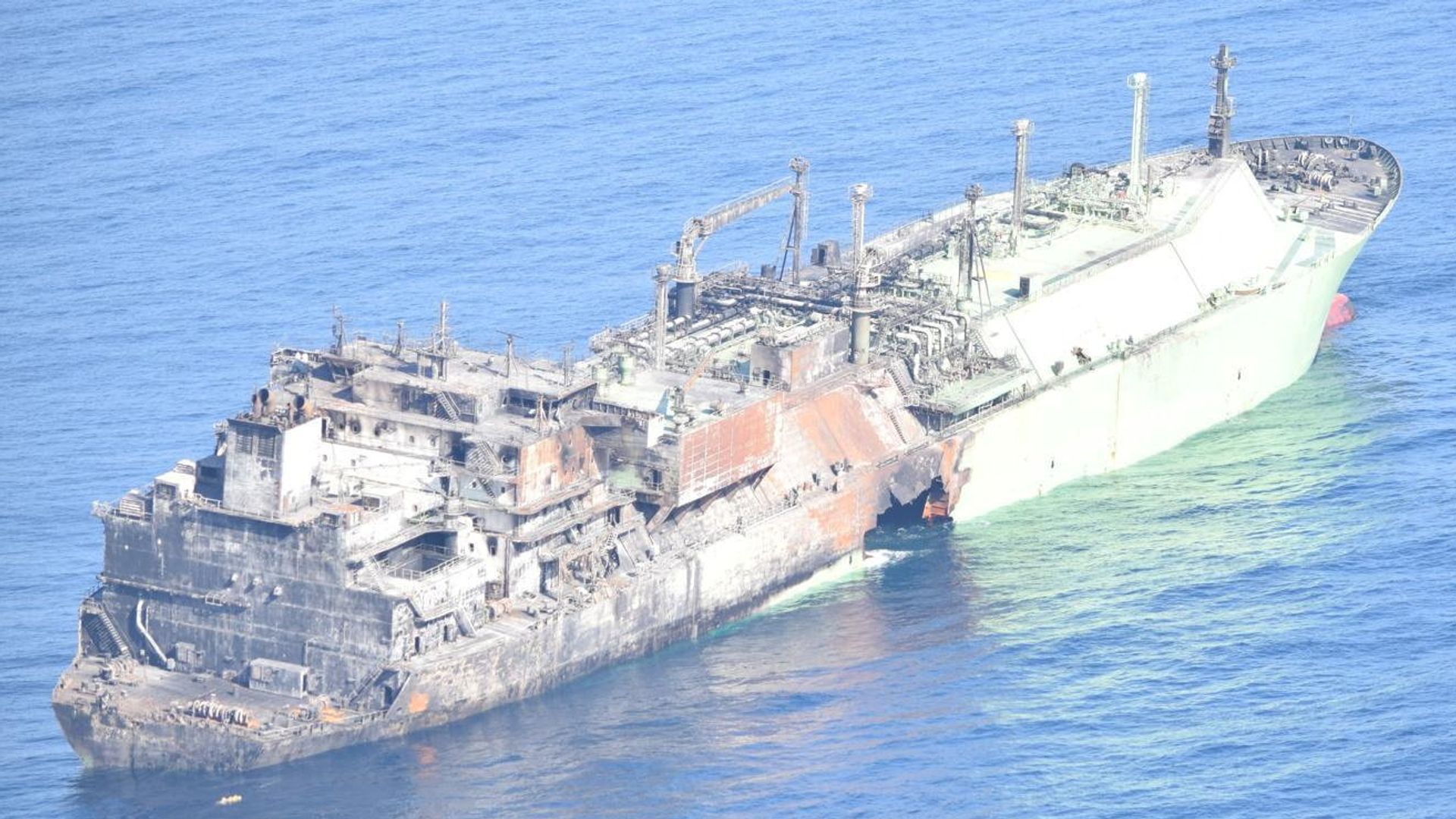
A rusted, 20-year-old Aframax tanker sits dead in the water just outside Maltese territorial waters, carrying enough crude oil to devastate the Mediterranean coastline for a generation. It is not just a mechanical failure. This drifting steel shell is the physical manifestation of a "shadow fleet" designed to bypass Western sanctions, and it represents a calculated gamble by Moscow that is now failing in plain sight.
EU member states are currently locked in a standoff over who bears the liability for a vessel that officially does not exist in the traditional insurance market. While the ship—the Andromeda Star—drifts, the technical reality is grim. If the hull breaches, the environmental damage would bankrupt local tourism and fishing industries from Sicily to Tripoli. Yet, the geopolitical reality is even grimmer. This vessel is part of a dark pipeline of aging tankers, often lacking proper P&I (Protection and Indemnity) insurance, operated by shell companies in jurisdictions like Dubai or Hong Kong that vanish the moment a lawyer knocks on the door.
The immediate crisis involves a total loss of propulsion. In standard shipping, a tug would be dispatched, the vessel would be towed to a dry dock, and the bill would be settled by reputable London or Scandinavian insurers. But the Andromeda Star is radioactive in a financial sense. Salvage companies are hesitant to touch a ship that might trigger secondary sanctions or, worse, leave them with a multi-million-dollar towing bill that no one intends to pay.
The Architecture of a Ghost Fleet
To understand why this tanker is currently a floating pariah, you have to look at the "Great Re-flagging" of 2022 and 2023. When the G7 imposed the $60-per-barrel price cap on Russian oil, the goal was to squeeze the Kremlin’s margins while keeping global supply stable. The unintended consequence was the birth of a massive, unregulated secondary market for maritime scrap.
Russia didn't stop selling oil. They simply bought the ships that were headed for the breakers in Alang or Chittagong. These are vessels that have reached the end of their economic life. They are tired. Their engines are held together by cannibalized parts and hope. By moving these ships under flags of convenience—Gabon, Cook Islands, or Palau—the operators move outside the reach of the maritime authorities that typically enforce safety standards.
The Insurance Void
Traditional shipping relies on the International Group of P&I Clubs. They cover roughly 90% of the world’s ocean-going tonnage. When an Exxon or a Maersk ship has trouble, the money is there to fix it. The shadow fleet operates on "sovereign guarantees" from Russia or murky, undercapitalized insurers based in Moscow.
These insurance papers are often not worth the digital ink they are printed on. If the Andromeda Star hits a reef or another vessel, there is no pool of billions to clean up the mess. The Mediterranean states—Greece, Italy, and Malta—know this. They are staring at a potential multi-billion-euro cleanup cost that their taxpayers will inevitably shoulder. This isn't a hypothetical risk. It is a mathematical certainty given enough time and enough old ships.
Why the Mediterranean is the Perfect Trap
The geography of the Mediterranean makes it a preferred transit point for Russian oil heading toward the Suez Canal and onward to India or China. It is also a narrow, crowded waterway with treacherous currents and sensitive ecosystems.
Ship to Ship Transfers
One of the most dangerous tactics used by this ghost fleet is the mid-ocean Ship-to-Ship (STS) transfer. Tankers pull alongside each other in international waters to move oil, hiding the cargo's true origin. They do this with their AIS (Automatic Identification System) transponders turned off.
Imagine two 100,000-ton objects bumping against each other in heavy swells without tug assistance or professional oversight. It is a recipe for a catastrophic spill. The current drifting tanker is likely a victim of this high-stress operating environment. Constant engine idling, frequent maneuvers for STS transfers, and a lack of scheduled maintenance in European ports have pushed the machinery past the breaking point.
The Sovereignty Loophole
International law, specifically the UN Convention on the Law of the Sea (UNCLOS), limits what a coastal state can do to a ship in international waters. Even if a ship is a clear environmental threat, "innocent passage" and jurisdictional hurdles make it difficult to seize or board a vessel against the captain's will.
Malta and Italy are currently watching the radar, hoping the wind blows the problem into someone else’s Search and Rescue (SAR) zone. It is a high-stakes game of hot potato played with a million barrels of oil.
The Economic Mirage of Sanctions
We are told the sanctions are working because the Russian treasury is taking a hit. This is true on paper. However, the externalized cost of these sanctions is being dumped directly into the oceans. By forcing Russian oil into the shadow market, the West has traded financial leverage for environmental vulnerability.
The Cost of Salvage
A standard salvage operation for a tanker of this size can cost upwards of $5 million just for the tow and stabilization. If the cargo needs to be offloaded (lightering), the price triples.
- Vessel Age: 20+ years (End of life)
- Cargo Value: Approx. $60-70 million
- Cleanup Liability: $1 billion to $5 billion (Estimated)
No private company will step in without a guarantee of payment. The Russian owners are silent. The flag state has no assets to seize. The EU is left with a choice: pay for the salvage themselves and effectively subsidize the Russian oil trade, or wait for the ship to break apart and spend a thousand times more on the cleanup.
Technical Decay and the Human Element
The crews on these ships are often the most overlooked part of the crisis. These aren't high-salaried officers from elite maritime academies. They are often sailors from developing nations who are desperate enough to work on ships with questionable paperwork and failing life-support systems.
When a ship loses power, it’s not just the propellers that stop. The "hotel load"—the electricity for lights, cooking, and water desalination—eventually fails. A drifting tanker is a miserable, dangerous prison for the twenty or so people on board. Fatigue leads to bad decisions. If the crew abandons the ship because they have run out of food or water, the Andromeda Star becomes a "dead ship"—a massive unguided missile drifting toward the coast of Sicily.
The Failure of Port State Control
In a healthy maritime ecosystem, Port State Control (PSC) inspectors board ships and detain those with "code 30" deficiencies—major safety flaws. But the shadow fleet doesn't pull into Marseille or Barcelona. They stay in the "grey zones" of the Mediterranean, refueling from other shadow tankers and changing crews via small launches from friendly or indifferent ports. They have effectively built a parallel maritime universe that ignores a century of safety regulations.
The Fragility of the Mediterranean Ecosystem
The Mediterranean is a semi-enclosed sea. It takes roughly a century for the water in this basin to completely exchange with the Atlantic through the Strait of Gibraltar. An oil spill here doesn't wash away. It stays, coating the beaches of Greece, the turquoise waters of the Balearic Islands, and the vital seagrass meadows that act as the sea's lungs.
If the Andromeda Star ruptures, the oil will follow the prevailing currents. In the current season, that likely means a trajectory toward the southern coast of Italy or the North African shoreline. Neither region is prepared for a Tier 3 oil spill. The equipment required to contain a spill of this magnitude—miles of boom, specialized skimmers, and thousands of trained personnel—simply isn't available on short notice in the central Mediterranean.
The "Sovereign" Insurance Myth
Russia has attempted to create its own insurance entities to bypass the need for Western P&I clubs. However, these entities lack the global reinsurance backing necessary to handle a catastrophic claim. In the insurance world, you are only as good as your reinsurers. If the Moscow-based insurer can’t access the global dollar or euro markets, they cannot pay out for a billion-euro cleanup. It is a financial dead end.
Strategic Indifference as a Weapon
There is a darker interpretation of this crisis. Some analysts suggest that the Kremlin is perfectly aware of the risk and views it as a form of "hybrid pressure." By allowing a derelict tanker to drift toward EU waters, they force European governments to deal with a logistical and environmental nightmare. It diverts resources, creates internal friction between EU states over who should pay, and serves as a reminder that Russian energy cannot be easily or cleanly excised from the world.
The Mediterranean is now a testing ground for this new era of maritime lawlessness. If the Andromeda Star is allowed to sink or leak without a forceful response, it signals to every other shadow operator that they can continue to use the Mediterranean as a high-risk shortcut with zero accountability.
The Lack of a Unified Response
Brussels has been vocal about the "environmental threat," but action has been stalled by the very laws designed to protect free trade. You cannot simply seize a ship in international waters because it looks rusty. You need proof of an "imminent" discharge, a legal definition that is often debated until the oil is already in the water.
The current strategy of "wait and see" is a gamble with the Mediterranean's future. The vessel's structural integrity degrades with every hour it spends rolling in the swells without steerage. Metal fatigue is real. The stresses on the hull of a loaded tanker at rest are different from one under way.
Breaking the Ghost Pipeline
The solution isn't found in more strongly worded statements from maritime authorities. It requires a fundamental shift in how "ghost ships" are treated under international law.
If a vessel cannot prove it carries valid, third-party insurance from a recognized provider, it should be treated as a navigational hazard rather than a merchant vessel. This would allow coastal states to intervene much earlier, boarding the ship and towing it to a secure location at the owner's expense—or seizing the cargo to cover the costs.
Until the cost of operating a shadow tanker exceeds the profit from the oil it carries, the Mediterranean will remain a graveyard for aging steel and a staging ground for the next great environmental disaster. The Andromeda Star is not an isolated incident. It is a warning. The next ship might not be so polite as to break down in calm weather. It might lose power in a Force 10 gale, five miles off the coast of Malta, with no tugs in sight and a crew that has already vanished.
The Mediterranean states must decide if they are willing to seize the ship now or pay for the cleanup for the next thirty years. There is no middle ground when the hull starts to groan. Use the Navy, seize the cargo, and send the bill to the shell company's registered address, even if you know it's a vacant lot in Dubai. Anything less is an invitation for the rest of the ghost fleet to follow.