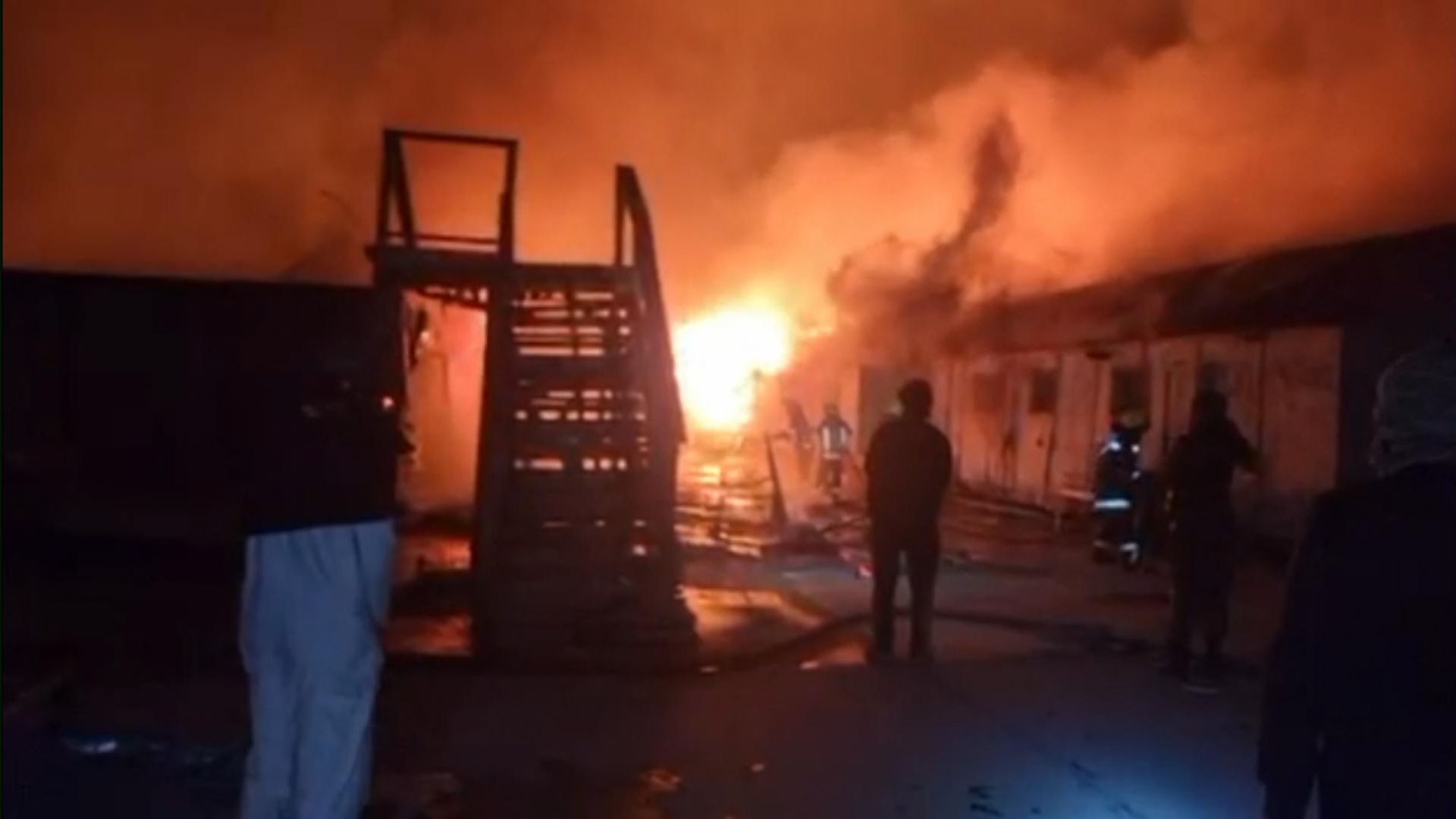
The headlines are screaming about a massacre. 400 dead. A drug treatment center in Kabul leveled by Pakistani air assets. The international community is already dusting off its templates for "deep concern" and "grave escalation." Most analysts are busy debating whether the casualty count is inflated by the Taliban or if Islamabad has finally lost its mind.
They are all missing the point.
The body count is a tragedy, but the tactical reality is a funeral for the West’s belief in a stable Central Asian order. This wasn't a "mistake" or a "rogue operation." It was a brutal, calculated signal that the border between these two nations no longer exists in any functional capacity. If you’re looking at this through the lens of human rights alone, you’ve already lost the plot.
The Myth of the "Treatment Center"
Let’s be honest about the geography of modern insurgency. In a failed state, a "drug treatment hospital" is rarely just a place for recovery. I’ve spent enough time tracking illicit flows in conflict zones to know that large-scale infrastructure in Kabul serves multiple masters.
The Taliban uses these facilities for two things: laundering their image and sheltering high-value assets under the guise of "humanitarian" protection. Pakistan knows this. Their intelligence services, the ISI, literally wrote the manual on how to use civilian architecture as a shield. When they strike a target like this, they aren't aiming at patients. They are aiming at the command-and-control nodes hiding behind the IV drips.
The "lazy consensus" says Pakistan is reckless. The truth is worse: Pakistan is desperate. They are watching the monster they helped create—the Taliban—provide sanctuary to the TTP (Tehrik-i-Taliban Pakistan), which is currently tearing Pakistan apart from the inside. This strike was an admission of total failure. It was Islamabad admitting they can no longer control their own proxies through diplomacy, so they’ve turned to the butcher’s knife.
Why the Casualty Numbers are a Distraction
Every news outlet is hyper-fixated on the number 400. Was it 400? Was it 40?
It doesn't matter.
If you focus on the math, you ignore the mechanics. The Taliban’s immediate release of high casualty figures is a classic information warfare play. They need the "victim" narrative to secure regional sympathy and perhaps some much-needed humanitarian aid that they can divert to their fighters.
On the flip side, Pakistan’s silence or eventual "denial of intent" is a calculated ambiguity. They want the Taliban to know they are willing to kill anyone, anywhere, to stop the cross-border raids.
We are witnessing the "Middle-East-ification" of the Durand Line. Think of it like the Israeli-Lebanon dynamic. A sovereign border that exists on paper but is ignored in practice whenever "security interests" dictate a midnight bombing run. The difference? Neither side here has the iron dome or the precision-guided PR machine to clean up the mess.
The Economic Pipeline of Violence
You can’t talk about Kabul without talking about the opium trade and the burgeoning meth industry. The competitor's article ignores the money.
- Fact: Afghanistan is pivoting from poppy to ephedra (meth).
- Fact: The labs are often embedded in urban centers to avoid drone detection.
- Fact: The revenue from these "hospitals" (which often double as distribution hubs) pays for the very militants Pakistan is trying to kill.
This isn't a war of religion or even a war of borders. It’s a war over who controls the black-market arteries of Central Asia. When Pakistan hits a "hospital," they are often hitting a bank.
The Failure of the "Buffer State" Logic
For twenty years, the geopolitical elite told us that a managed Afghanistan was a safe Pakistan. That paradigm is dead.
Islamabad is realizing that the "strategic depth" they sought by supporting the Taliban has become a strategic grave. The TTP is using Afghan soil to launch attacks that have killed thousands of Pakistani civilians and soldiers over the last year.
Imagine a scenario where Mexico sheltered a rebel group that regularly bombed Dallas and Houston, and the US government just issued "stern warnings" for three years. Eventually, the drones would cross the border. That is what we saw in Kabul. It’s not "aggression" in the traditional sense; it’s an act of panicked self-preservation by a nuclear-armed state that feels its borders dissolving.
Stop Asking if it Was Legal
International law in the Hindu Kush is a fairy tale. People ask, "Is this a war crime?"
Of course it is. But asking that question is like asking if a shark is being "unfair" to a seal. It’s a category error.
The real question—the one the media is too scared to touch—is: Does Pakistan have any other choice? If the Taliban refuses to deport TTP leaders, and the TTP continues to bleed Pakistan dry, Islamabad has two options:
- Collapse internally.
- Bring the war to Kabul.
They chose option two. It’s ugly. It’s bloody. It’s a PR nightmare. But from the perspective of a Pakistani general in Rawalpindi, those 400 lives (or however many it actually was) are a cheap price to pay for sending a message to the Taliban leadership: Your capital is no longer a sanctuary.
The Actionable Reality for the West
The West needs to stop pretending we can "influence" this through sanctions or strongly worded letters at the UN. We have zero leverage.
The only players that matter now are China and Russia. China wants the mineral wealth (lithium, copper) and needs stability for their Belt and Road projects. Russia wants to keep the extremism from leaking into the "Stans" (Tajikistan, Uzbekistan).
Both of these powers are watching Pakistan’s strike with a mix of horror and quiet observation. They are seeing if the Taliban will fold or fight back. If the Taliban retaliates with terror attacks inside Islamabad, we aren't looking at a "border skirmish." We are looking at a regional conflagration involving two of the world's most unstable, heavily armed actors.
What You Should Be Watching Instead of the Death Toll:
- The Currency Fluctuation: Watch the Pakistani Rupee. If it dives, the military is gearing up for a prolonged campaign.
- Diplomatic Recalls: If the Taliban pulls their "ambassadors" from Islamabad, the gloves are off.
- China’s Silence: The longer Beijing stays quiet, the more they are implicitly green-lighting Pakistan’s "cleansing" of the border zones.
The Brutal Truth
We love a simple story. Good guys vs. Bad guys. Pakistan vs. The Taliban.
The reality is a circle of fire. Pakistan created the Taliban. The Taliban empowered the TTP. The TTP is now killing Pakistanis. Pakistan is now killing Afghans.
The strike on the Kabul hospital wasn't a departure from the norm. It was the logical conclusion of thirty years of disastrous proxy warfare. Every time an "insider" tells you this is a "surprising escalation," realize they haven't been paying attention to the last three decades.
This isn't a news story. It's an autopsy.
The hospital is gone, the patients are dead, and the border is a memory. If you’re still waiting for a "diplomatic solution," you’re the one who needs a reality check.
Pakistan didn't just bomb a building; they bombed the remaining shreds of the post-2021 regional order. There is no going back to the status quo. The only thing left to see is who burns next.
Go ahead and tweet your outrage. It won't change the fact that in the mountains of the Hindu Kush, power is the only language that doesn't require a translator, and Pakistan just screamed at the top of its lungs.