The sirens start long before the explosions shake the concrete foundations of Kyiv. When a combined barrage of ballistic, cruise, and hypersonic missiles tears through the night sky, the margin between survival and disaster is measured in fractions of a second.
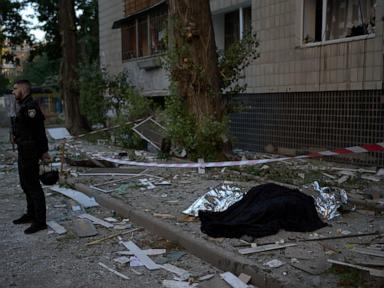
Recent overnight bombardments have killed at least 15 people in the Ukrainian capital and surrounding regions, laying bare an uncomfortable operational reality. Kyiv's air defense architecture is straining under an asymmetric exhaustion strategy. Moscow is not simply launching munitions. It is executing a calculated mathematical attrition campaign designed to drain remaining stockpiles of high-end Western interceptor missiles faster than international supply chains can replenish them. Learn more on a connected issue: this related article.
The Mathematics of Interception
To understand why recent attacks extract such a heavy human toll, look closely at the physics of modern missile defense. When the air force fires a U.S.-made Patriot battery or a comparable tier-one surface-to-air missile, it expends a scarce, multi-million-dollar asset against incoming projectiles travelling at Mach speeds.
Russia has adapted its aerial assault patterns to exploit this dynamic. By mixing low-cost decoy drones, jet-powered loitering munitions, and conventional cruise missiles with rapid salvoes of ballistic threats like the Iskander or North Korean-supplied KN-23, attacking forces force local commanders into impossible triage decisions. More analysis by Al Jazeera delves into comparable perspectives on the subject.
Save the interceptors for the high-trajectory ballistic threats, and the swarm of cheaper drones slips past to strike civilian infrastructure. Prioritize the swarm, and a supersonic ballistic missile hits a residential apartment block unchecked.
This is the core vulnerability of a reactive defense model. Ukraine's military planners operate with finite inventories. Western production lines, despite expansions, face structural bottlenecks in specialized rocket motor manufacturing, guidance chips, and solid propellants. Every night the air raid sirens wail across the Darnytskyi and Solomianskyi districts, another layer of that thin inventory vanishes into the night sky.
Industrial Capacity Versus Strategic Urgency
Diplomatic communiques often frame the crisis in Kyiv as a failure of political will. The ground reality is far more mundane and brutal: industrial output.
Modern air defense systems are not off-the-shelf consumer goods. They require years of precision engineering, highly purified chemical components, and secure supply chains that span multiple continents. When international partners pledge new defense packages, the timeline from announcement to physical deployment on the outskirts of Kyiv involves grueling logistical hurdles.
Meanwhile, defense factories in the opposing camp have transitioned to multi-shift, wartime manufacturing baselines. They are churning out simplified, mass-produced ballistic and cruise variants that bypass sophisticated microchip dependencies by utilizing alternative gray-market electronics.
The resulting imbalance means the attacker can sustain high-tempo saturation raids with mathematical predictability. They can afford to fire dozens of heavy missiles in a single night because the cost equation favors the launcher over the defender. Kyiv, by contrast, must weigh the tactical value of every single tube remaining on its launchers.
The Civilian Toll in the Neighborhoods
Statistics obscure the daily degradation of urban life under constant aerial assault. In neighborhoods like Solomianskyi, upper floors of multi-story residential blocks have been sheared away completely by direct impacts, leaving jagged rebar exposed to the elements. Schools, medical clinics, and warehouses absorb the collateral kinetic energy of intercepted debris falling from the stratosphere.
Families spend hours sheltering in damp basements and underground metro stations, weighing the safety of concrete bunkers against the psychological fatigue of chronic sleep deprivation. Municipal repair crews work with astonishing speed to restore ruptured water mains and shattered electrical grids before winter frost sets in, but the recovery window shrinks with each successive wave of destruction.
The strategic objective behind these urban strikes extends beyond immediate physical damage. By targeting the capital's residential core and logistics hubs, the campaign aims to fracture public resilience and compel defensive repositioning, forcing air defense batteries to pull back closer to municipal centers and away from front-line positions where they might otherwise blunt tactical advances.
The Narrowing Window for Adaptation
Kyiv's commanders are acutely aware that traditional resupply models cannot scale quickly enough to match the intensity of ongoing bombardments. Solutions require decentralization, electronic warfare integration, and localized manufacturing initiatives.
Efforts to build shared regional shields and secure manufacturing licenses for interceptor components represent necessary long-term adjustments. Yet, policy shifts in capitals thousands of miles away take months to materialize on factory floors.
Until industrial output catches up with operational consumption rates, the city remains vulnerable to the grim math of the midnight sirens. The defense holds when the interceptors are there, and fractures when the tubes are empty.