The reported deaths of 400 individuals following Pakistani kinetic strikes in Afghan territory represents a systemic failure of the Doha Agreement’s containment logic and a fundamental recalibration of South Asian border security. This escalation is not merely a retaliatory gesture but a calculated shift from "strategic depth" to "active deterrence," where the cost of hosting non-state actors is intended to outweigh the ideological benefits of the Taliban’s current sanctuary policy. To understand the mechanics of this shift, one must analyze the three structural pillars currently collapsing: the sanctity of the Durand Line, the internal security equilibrium of the Pakistani state, and the Taliban’s transition from an insurgency to a Westphalian administrator.
The Mechanics of Sovereignty Erosion
Kinetic operations across an internationally disputed but functionally active border function as a stress test for state legitimacy. When Pakistan utilizes aerial or long-range artillery assets against targets in Khost and Paktika, it creates a "sovereignty vacuum." The Afghan interim government faces a binary choice: escalate militarily and risk a conventional conflict they cannot sustain, or remain passive and lose the domestic credibility essential to their "iron-fisted" governance model. Expanding on this theme, you can find more in: Why the Green Party Victory in Manchester is a Disaster for Keir Starmer.
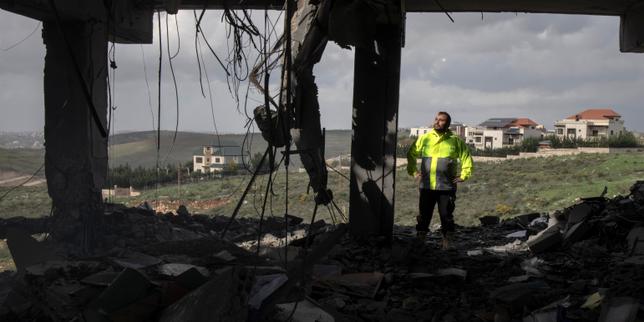
The reported casualty count—400—if verified, suggests a transition from precision counter-terrorism to area-denial targeting. In the logic of regional attrition, such numbers are designed to create a displacement effect. By making the border regions uninhabitable for civilian and militant populations alike, the striking power attempts to establish a "cordon sanitaire" through sheer kinetic volume. This mechanism relies on the assumption that the Taliban’s internal cohesion will fracture under the weight of humanitarian and tribal pressure from the affected provinces.
The Cost Function of Transnational Militancy
The relationship between the Tehrik-i-Taliban Pakistan (TTP) and the Afghan Taliban is governed by an informal cost-benefit framework. For the Afghan Taliban, providing sanctuary to the TTP is a matter of ideological consistency and historical debt. However, the Pakistani state is now attempting to forcibly rewrite this cost function. Analysts at Al Jazeera have also weighed in on this trend.
- The Economic Penalty: Cross-border strikes inevitably lead to the closure of key trade arteries like Torkham and Chaman. For a cash-strapped Afghan administration, the loss of transit fees and import duties represents a direct hit to their primary revenue streams.
- The Diplomatic Bottleneck: Kinetic escalations signal to the international community—specifically regional powers like China and Russia—that the Taliban cannot fulfill the primary requirement of the 2020 Doha Agreement: ensuring Afghan soil is not used for external attacks. This stalls any momentum toward formal recognition.
- The Tribal Feedback Loop: Strikes in Paktika and Khost disturb the delicate balance of Pashtun tribal loyalties. If the Afghan Taliban cannot protect these populations, the resulting vacuum is often filled by even more radical elements, such as IS-K, which benefits from the chaos of a weakened central authority.
Tactical Asymmetry and the Failure of Intelligence-Led Operations
The reliance on high-casualty strikes often indicates a degradation of ground-level human intelligence (HUMINT). When a state cannot precisely extract high-value targets, it resorts to mass kinetic events. This creates a feedback loop of radicalization. The primary mechanism of failure in this strategy is the "martyrdom multiplier," where the collateral damage of a strike provides the precise grievances necessary for the TTP to recruit among the survivors.
The technical breakdown of such an operation typically follows a three-stage sequence:
- Target Identification: Identification of suspected training camps or housing clusters via signals intelligence (SIGINT) or aerial surveillance.
- Kinetic Execution: The use of standoff weapons (drones or jets) to minimize the risk to the striking state's personnel.
- Damage Assessment: Evaluating the impact, which in this case, has led to a massive discrepancy between military claims and civilian reports.
The ambiguity of the "400 killed" figure is a feature, not a bug, of modern psychological warfare. For the Afghan officials, highlighting high numbers serves to paint the neighbor as a ruthless aggressor to gain international sympathy. For the Pakistani side, the lack of denial or specific clarification serves as a "loud" deterrent, signaling a willingness to accept high levels of international condemnation in exchange for a perceived reduction in domestic terror threats.
The Strategic Buffer Collapse
Historically, the border regions served as a buffer where low-level skirmishes were tolerated as part of a managed conflict. That management has ended. The current environment is defined by a "zero-sum" security perception. Pakistan views the TTP’s presence in Afghanistan as an existential threat to its CPEC (China-Pakistan Economic Corridor) investments and domestic stability. Conversely, the Afghan Taliban view any concession on the TTP as a betrayal of their fundamentalist core, which could lead to mass defections to more extreme groups.
This creates a bottleneck in negotiations. There is no middle ground when one side demands the total expulsion of a group that the other side considers brothers-in-arms. The result is a cycle of periodic, high-intensity kinetic events.
Quantitative Limitations of Kinetic Deterrence
Data from similar conflict zones suggests that kinetic strikes without a corresponding political or economic strategy rarely achieve long-term security goals. The "attrition rate" of militant leadership is often outpaced by the "recruitment rate" fueled by civilian casualties.
- The Replacement Variable: In highly decentralized militant structures, the death of mid-level commanders leads to rapid, often more aggressive, replacement.
- The Geography Factor: The mountainous terrain of the Hindu Kush renders traditional "search and destroy" missions nearly impossible without a massive boots-on-the-ground presence, which neither side can currently afford.
- The Diplomatic Friction: Every strike deepens the rift between Islamabad and Kabul, pushing the latter closer to other regional rivals, thereby complicating the very security environment the strikes were intended to simplify.
The move toward these high-casualty events marks the end of the "diplomatic first" era of border management. We are entering a phase of "permanent friction" where the border is no longer a line on a map but a dynamic, violent theater of operations. The immediate strategic requirement for regional observers is to prepare for a sustained humanitarian crisis in the eastern Afghan provinces, which will inevitably spill over into broader regional instability.
Future security architecture in this region cannot rely on the 20th-century model of border posts and occasional patrols. It requires a fundamental renegotiation of the Doha tenets, likely involving a third-party mediator capable of offering the Afghan Taliban economic incentives that outweigh their ideological ties to the TTP. Without this, the kinetic volume will only increase, turning the border provinces into a graveyard of failed deterrence.
The most probable trajectory involves Pakistan intensifying its "intelligence-led" operations into more frequent, high-impact strikes if TTP activity within its own borders does not see a 20-30% reduction in the next fiscal quarter. Stakeholders must pivot from monitoring individual incidents to mapping the systemic displacement of populations, as the "400 killed" benchmark suggests a shift toward scorched-earth tactics that will redefine regional migration patterns for the next decade.