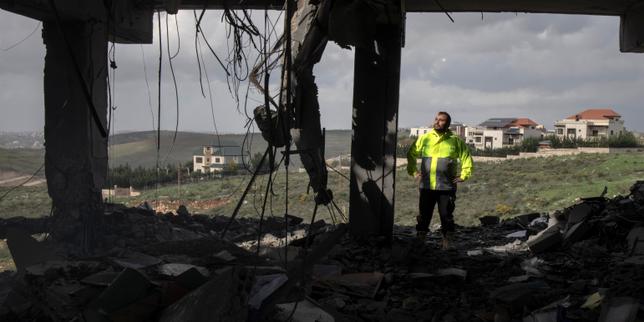
The headlines are as predictable as they are tragic. A health center in South Lebanon is hit. An ambulance is charred. A spokesperson from a global NGO goes on camera to declare that international humanitarian law (IHL) is dead, or worse, that it never existed for one specific actor.
But here is the reality that nobody in the donor-funded "humanitarian industrial complex" wants to admit: The traditional concept of a "safe zone" for medical professionals is an 18th-century relic being forced to operate in a 21st-century meat grinder. In related news, take a look at: The Sabotage of the Sultans.
We are not witnessing the "failure" of law. We are witnessing the total obsolescence of the Geneva Convention’s physical assumptions. If you think the tragedy in Lebanon is simply a matter of one side "refusing to respect" the rules, you are missing the much more terrifying structural collapse of modern combat.
The Shield is a Target: The Death of Visual Deconfliction
The Geneva Conventions were written for a world of Napoleonic clarity. You had two armies in distinct uniforms. You had a field hospital with a giant red cross or crescent on the roof. The pilot of a propeller plane looked down, saw the symbol, and steered his stick the other way. BBC News has provided coverage on this important issue in extensive detail.
Today, we operate in an era of Signal-to-Noise Warfare.
In the dense, urbanized terrain of Southern Lebanon, the distinction between a civilian ambulance and a logistics vehicle for an armed group has been reduced to a few pixels on a thermal sensor. When Hezbollah or any non-state actor integrates their defense infrastructure into the civilian grid—a tactical reality even their supporters don't deny—the "medical" label becomes a statistical probability rather than a legal certainty.
I’ve seen this play out in various theaters of conflict over the last decade. Command centers aren't always under hospitals because of "human shields" in the cinematic sense; they are there because that is where the fiber-optic cables, the generators, and the basement reinforcements are.
By the time an AI-driven targeting system like Israel's Lavender or Gospel flags a high-value target, the presence of a stethoscope in the building is treated as a secondary variable in a "proportionality" equation. The law hasn't been ignored; it has been mathematically absorbed into the collateral damage threshold.
The Proportionality Trap
Most people screaming about "war crimes" don't actually know what the term means in a legal framework. They use it as a synonym for "something terrible happened."
In IHL, the Principle of Proportionality does not forbid killing civilians or hitting medical facilities. It forbids doing so if the "incidental loss of civilian life" is "excessive in relation to the concrete and direct military advantage anticipated."
Read that again.
The law literally allows for the destruction of a clinic if the military advantage is high enough. This is the dark, cold heart of the rules of war that human rights groups rarely mention in their fundraising emails. When a state actor argues that a specific paramedic was also a mid-level commander, the clinic’s immunity evaporates instantly under Article 19 of the Fourth Geneva Convention.
The "nuance" the media misses is that modern warfare has turned every paramedic into a Schrödinger’s Combatant. Until the rubble is cleared and the intelligence is declassified (which it never is), they are simultaneously a protected medic and a legitimate target.
The Myth of the Neutral Observer
The competitor’s narrative leans heavily on the idea of the "neutral" health professional. It’s a beautiful sentiment. It’s also largely a fantasy in the Levant.
In many regions of Lebanon, the health system is the political system. If a hospital is funded, staffed, and secured by a political party that also happens to have a paramilitary wing, "neutrality" is a logistical impossibility.
When an IDF drone pilot sees a "medical" team operating in a sector that has been ordered evacuated, they don't see a doctor. They see a logistical support element for the enemy’s stay-behind force. This isn't just "malice." It’s a fundamental disagreement on the definition of a combatant.
If a medic moves a radio, are they a combatant? If they provide first aid to a fighter and then that fighter returns to the line, have they provided "material support"? Under a strict interpretation of Direct Participation in Hostilities (DPH), the line is paper-thin and moving constantly.
Why "Fixing" the Law is the Wrong Answer
Whenever these tragedies happen, the "lazy consensus" calls for more treaties, more observers, and more UN resolutions.
This is useless.
You cannot "fix" the law of war when the technology of war has moved beyond the law’s ability to categorize it. We are fighting with 2026 tech using 1949 ethics.
- Drones don't see intent. They see heat signatures and movement patterns.
- Precision weapons are too precise. They allow planners to justify strikes on "edges" of medical facilities, assuming the shockwave won't kill the patients. It often does.
- The PR War is the Real War. Both sides benefit from the death of a doctor. For one, it’s a neutralized logistical node. For the other, it’s a goldmine of international sympathy.
If you want to actually protect health workers, you have to stop pretending that a red vest is a magical force field. It’s a fluorescent bullseye.
The Brutal Path Forward
Stop asking if Israel "respects" IHL. They do—in the most cynical, legalistic, and "proportional" way possible. They have a room full of lawyers vetting these strikes to ensure they meet the bare minimum of international "reasonableness."
The real question is: Why are we still using a legal framework that treats an ambulance in a dense urban insurgency the same way it treats a hospital ship in the middle of the Atlantic?
If you are a medical professional in Lebanon, the "protection" promised to you by the UN is a lie. It is a paper shield.
The only way to survive the "urbanization of the battlefield" is to decouple medical infrastructure entirely from the civilian and political grid. This means no shared generators, no shared basements, and no shared personnel with political movements. But in Lebanon, that would mean having no health system at all.
That is the paradox. We have built a world where the only way to provide care is to become a target.
Stop crying for the "death of international law." It didn't die in Lebanon. It's doing exactly what it was designed to do: provide a vocabulary for states to justify the inevitable.
If you’re waiting for the "international community" to save the next clinic in Nabatieh, you aren't just naive. You're a casualty in waiting. The "rules" aren't being broken; they've been upgraded, and you weren't invited to the briefing.
Get out of the basement. The red cross on the roof isn't a roof anymore—it’s a coordinate.