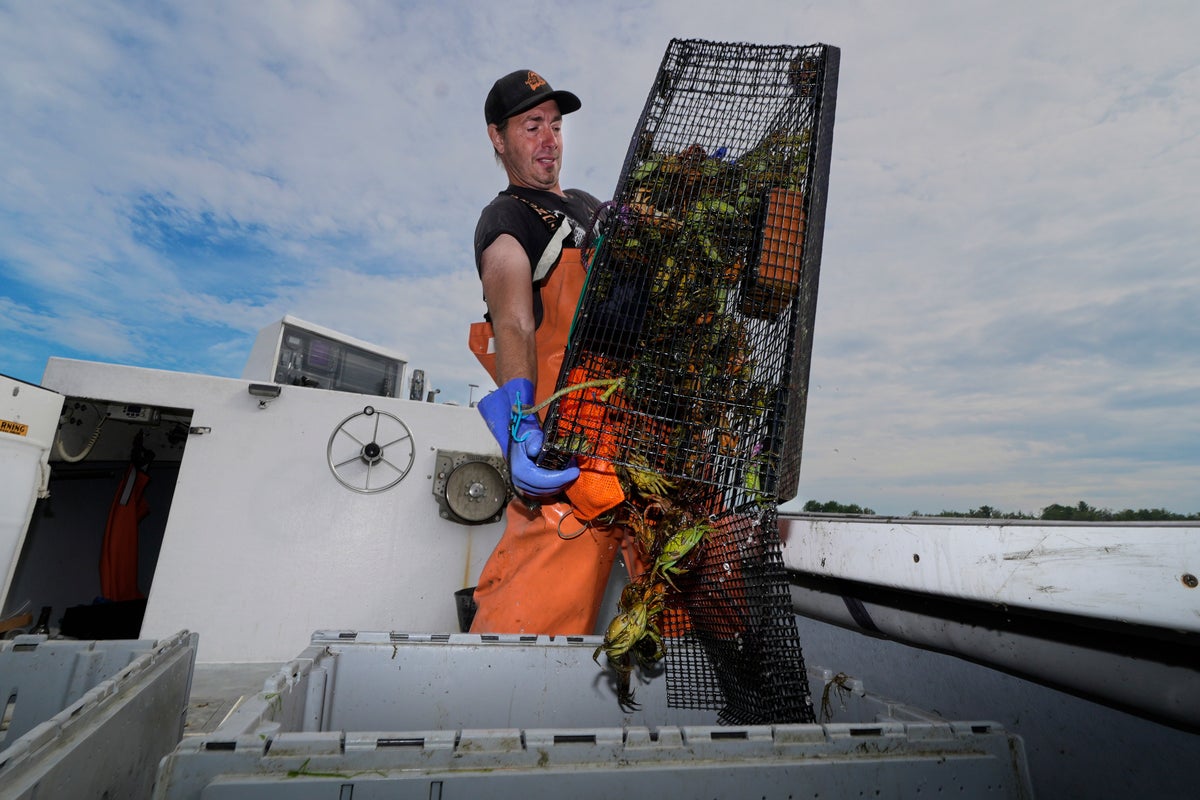
Invasive species management typically relies on a fundamental market intuition: if a population is unwanted, commercializing it should create the financial incentive necessary to drive down its numbers. When applied to marine bio-invasions, this logic manifests as culinary campaigns. Conservationists, chefs, and local fisheries attempt to eat their way through an ecological crisis. The conceptual framework suggests that establishing consumer demand will generate fishing pressure, harvest the biomass, and restore native equilibrium.
This model collapses under rigorous ecological and economic scrutiny. European green crabs (Carcinus maenas), which currently devastate New England shellfisheries, marshes, and eelgrass beds, serve as a primary case study in the failure of the harvest-for-eradication model. Transforming an invasive organism into a fine dining delicacy does not control the population. It creates perverse economic incentives, scales inefficiently against biological reproduction rates, and fundamentally misunderstands the cost function of artisanal versus industrial harvesting.
The Biological Asymmetry
Managing a marine invasion requires outpacing the intrinsic rate of population increase. European green crabs possess reproductive characteristics that render them immune to localized, high-value culinary pressure. A single female can produce up to 185,000 eggs per spawn, and larvae spend up to ninety days in the water column dispersed by ocean currents. This pelagic larval duration guarantees high geographic distribution independent of localized adult removal.
Fine dining markets demand consistency, size, and specific organoleptic qualities. Green crabs are remarkably small. Unlike blue crabs (Callinectes sapidus) or Dungeness crabs (Metacarcinus magister), the meat-to-shell ratio of Carcinus maenas is unfavorable for industrial processing. The carapace yields minimal salvageable muscle mass, primarily located in the walking legs and small claws, requiring intensive manual labor to extract.
When a restaurant menu features green crab stock, bisque, or soft-shell variants harvested prematurely during molt, it consumes a tiny fraction of the standing stock.
- Reproductive Capacity: Adult removal rates must exceed the natural mortality plus recruitment rate. Artisan harvesting removes the largest, most visible individuals, leaving younger cohorts untouched.
- Size Selectivity: Culinary demand focuses on specific size classes, whereas ecological damage is driven by total numerical abundance across all life stages.
- Byproduct Dynamics: Harvesting mature crabs often reduces intra-guild predation. Large green crabs consume smaller conspecifics and juvenile predators. Removing the largest adults can paradoxically decrease juvenile mortality, accelerating population rebound.
The Economic Paradox of Culinary Demand
Introducing a commercial value to an invasive species fundamentally alters the stakeholder incentives in ways that counteract ecological goals. Economists term this the Cobra Effect: rewarding the capture of a pest creates an economy dependent on the pest's sustained existence.
If a restaurateur builds a signature dish around green crab bisque, or a distributor contracts local fishermen to supply daily quotas, a supply chain emerges. This supply chain requires predictable inputs. If the eradication campaign succeeds and green crab populations decline, the supply chain breaks. Fixed investments in marketing, processing infrastructure, and restaurant supply contracts face immediate asset depreciation.
[Culinary Demand Rises]
       │
       ▼
[Supply Chain Capital Invested]
       │
       ▼
[Commercial Stakeholder Dependency on Pest Biomass]
       │
       ▼
[Incentive to Maintain Population Baseline > Eradication Threshold]
This structural tension prevents commercial actors from pursuing true eradication. Fishermen operating within a market framework optimize for revenue, not ecological restoration. When catch-per-unit-effort (CPUE) drops—indicating that population control measures are actually working—fishermen will shift effort to more abundant grounds or species, abandoning the eradication effort long before the threshold of ecological recovery is reached.
The Cost Function of Artisanal Extraction
Scaling harvest pressure to match ecological scale requires overcoming steep logistical barriers. Green crabs occupy intertidal and subtidal zones, burrowing into mudflats, hiding in rocky crevices, and inhabiting salt marshes. They are remarkably resilient, surviving out of water for extended periods and tolerating wide salinity and temperature ranges.
Commercial harvesting methods designed for high-value species fail economically when applied to low-value green crabs. Traps must be baited, deployed, hauled, and sorted. The labor cost per pound of harvested biomass far exceeds the market price a restaurant is willing to pay for an invasive novelty ingredient.
Artisanal harvesting relies on manual labor, small boats, and decentralized distribution. These operations function efficiently only when the resource concentration is high and localized. As harvesting reduces the density of the population, the cost per unit of removal increases exponentially. Fishermen experience diminishing returns as search time per crab rises. Without substantial public subsidies or direct government-funded bounties, private capital retreats from the fishery as soon as marginal costs exceed marginal revenue.
Alternative Pathways and Systemic Limitations
Governments and academic institutions frequently turn to culinary promotion because physical removal options are severely constrained. Chemical controls, such as broad-spectrum biocides, are legally and ecologically untenable in delicate estuarine ecosystems where they would destroy native bivalves, finfish, and macroalgae. Biological controls, such as introducing specialized parasites like the rhizocephalan barnacle Sacculina carcini, carry catastrophic systemic risks of host-switching and unpredictable trophic cascades.
Physical trapping remains the only viable containment mechanism, yet its efficacy depends entirely on continuous, unyielding application of capital with no expectation of financial return. Trapping must be treated as public infrastructure maintenance, akin to dredging a shipping channel or repairing a seawall, rather than as a profit-generating enterprise.
The transition of green crabs into fine dining represents an interesting public relations strategy and a minor localized novelty, but it fails the test of systemic scale. A restaurant kitchen cannot process the millions of individuals inhabiting a single New England estuary. Relying on market forces to solve an ecological externality misdiagnoses the fundamental drivers of biological invasion.
To transition from passive observation to active containment, management frameworks must abandon the fantasy of self-funding eradication. Public entities must absorb the negative cost function of extraction. Contracts should be structured around total biomass removal quotas rather than market-driven supply chains, decoupling the harvester's revenue from the culinary desirability of the pest. Until removal is financed as an environmental sanitation service rather than a culinary trend, the invasive crab will continue to outpace the kitchen.

.jpg?width=1200&auto=webp&trim=0%2C0%2C0%2C0)