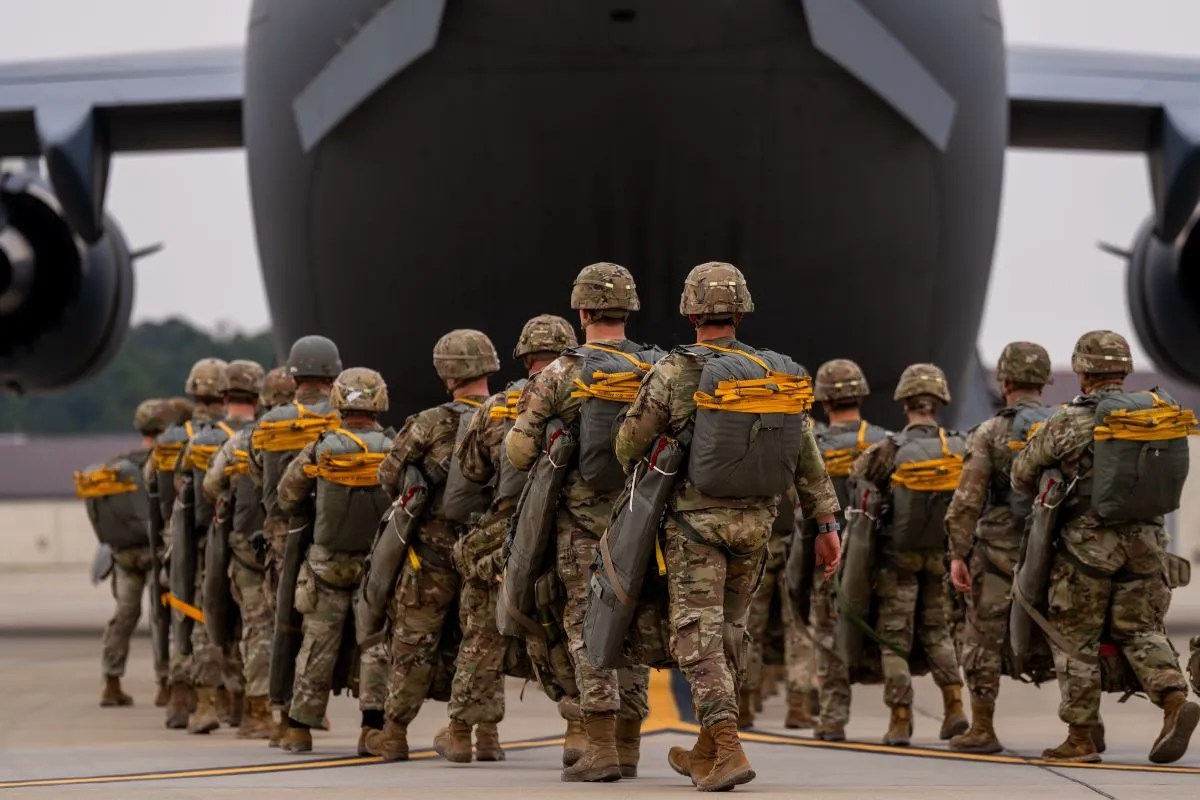
The headlines are screaming about 10,000 American boots hitting the ground. They are obsessed with Kharg Island. They are painting a picture of a conventional, mid-20th-century land invasion led by a returning Trump administration. It is a comforting narrative for those who still believe war is won with bayonets and maps spread across a mahogany table.
It is also completely wrong. You might also find this related article insightful: Strategic Asymmetry and the Kinetic Deconstruction of Iranian Integrated Air Defense.
If you are tracking troop counts to predict the next shift in the Middle East, you are looking at the wrong ledger. The competitor's focus on a "10,000-soldier deployment" is the ultimate red herring. In the current era of asymmetric leverage, 10,000 soldiers are either too many for a surgical strike or far too few for a meaningful occupation. It is a number designed for a press release, not a victory.
The Kharg Island Obsession is a Financial Fantasy
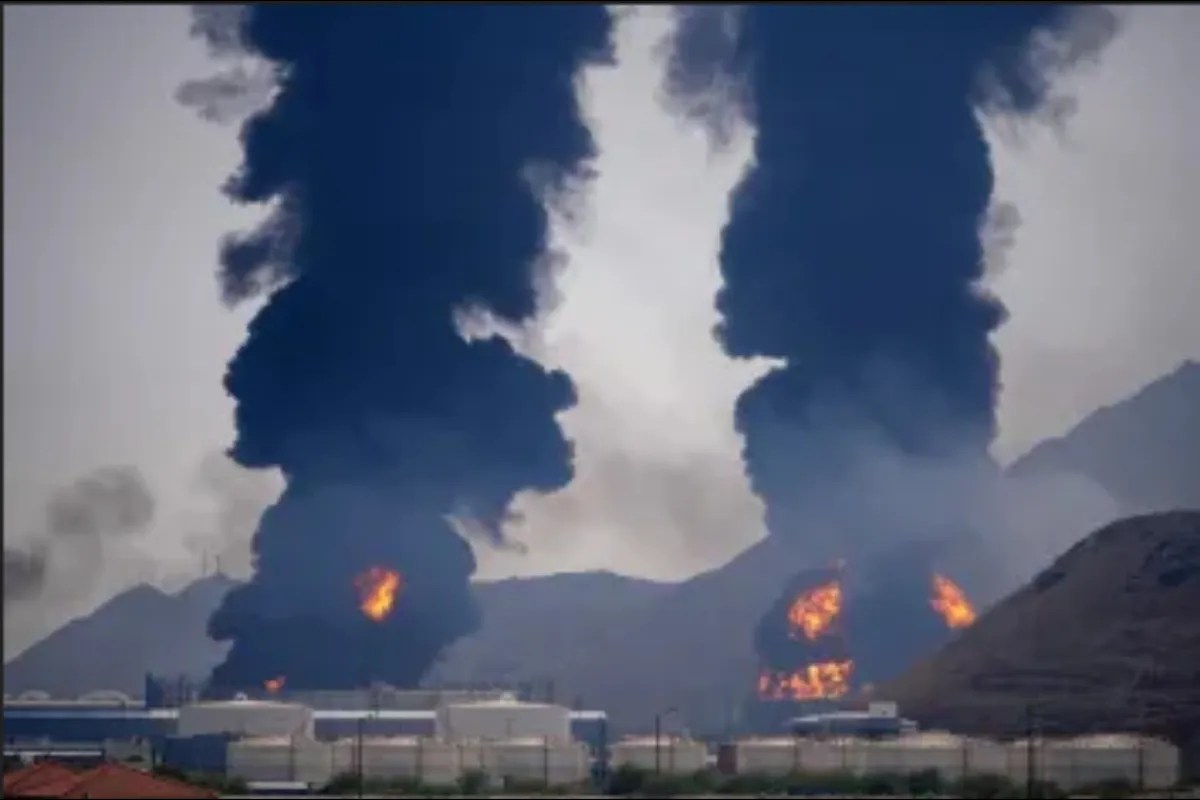
The media loves to point at Kharg Island because it is the jugular of Iranian oil exports. They argue that by seizing or blockading this specific patch of land, the U.S. can "turn off the lights" on the Iranian economy. As reported in recent articles by BBC News, the results are widespread.
This ignores the fundamental reality of the 2026 energy market. We are no longer in a world where physical control of a single terminal dictates global prices. We are in a world of "shadow fleets," decentralized STS (ship-to-ship) transfers, and digital currency bypasses.
If the U.S. puts 10,000 soldiers on Kharg, they aren't "securing" oil; they are becoming 10,000 stationary targets for high-precision, low-cost drone swarms. I have watched defense contractors burn through billions trying to solve the "cheap drone" problem, and the math still favors the attacker. Sending a massive conventional force to a fixed geographical point in 2026 is like bringing a cavalry charge to a sniper fight.
The Logic of the "Lethal Ghost" Force
The "lazy consensus" assumes that Trump’s strategy involves a massive buildup. History suggests the opposite. The goal isn't presence; it's the threat of absence followed by extreme, localized violence.
Instead of 10,000 soldiers sitting in the sand waiting for an IED to go off, the actual shift will be toward "Kinetic Decoupling." This means:
- Zero-Footprint Blockades: Using autonomous sub-surface vessels to mine or monitor exit points without a single sailor in harm's way.
- Financial Siege: Using the SWIFT system and secondary sanctions as a more effective weapon than any M1 Abrams tank.
- Proxy Pressure: Letting regional players take the physical risks while the U.S. provides the intelligence layer.
The 10,000 soldiers mentioned in mainstream reports are likely logistical support for technical assets—not frontline infantry. If you think Trump wants a repeat of the Iraq occupation, you haven't been paying attention to his "America First" aversion to nation-building. He doesn't want to own Kharg Island; he wants it to be irrelevant.
Why the "Invasion" Narrative Fails the Data Test
Let’s look at the numbers. To effectively occupy and secure an area of that strategic complexity against a motivated domestic force, the "Soldier-to-Civilian" ratio required is roughly 20 per 1,000 residents. Iran’s military capacity, combined with its paramilitary IRGC, makes 10,000 troops a drop in the bucket.
$$Force\ Ratio = \frac{Deployable\ Troops}{Target\ Population + Enemy\ Combatants}$$
If the denominator includes a nationalistic defense force and a hostile geography, 10,000 is a suicide mission. The Pentagon knows this. The State Department knows this. The only people who don't seem to know this are the ones writing clickbait about "preparing for the battlefield."
The Real Target is the Strait, Not the Soil
The focus on "occupying" territory is a relic. The real game is the Strait of Hormuz.
If you control the flow, you don't need to stand on the ground. A single "10,000 soldier" headline distracts from the quiet deployment of Aegis-equipped destroyers and the expansion of the "Task Force 59" drone fleet. That is where the actual war will be fought—in the gaps between the islands, managed by operators sitting in Nevada or Qatar.
The Risks No One Mentions
The contrarian truth is that the biggest threat to this "10,000 soldier" plan isn't Iran. It’s the domestic American economy.
Deploying a division-sized element to a hot zone in an election cycle—or the wake of one—triggers a massive inflationary spike in logistics costs. Fuel, insurance premiums for tankers, and global shipping rates would quadruple overnight. Trump's primary mandate is economic stability. You cannot "Make America Great Again" if you are paying $12 a gallon for gas because you decided to play 19th-century colonialist on an Iranian oil dock.
Every dollar spent on a soldier's boots in Kharg is a dollar stolen from the American infrastructure project. The "insider" view is that this troop movement talk is 90% psychological warfare and 10% logistical repositioning of existing assets.
Stop Asking "When?" and Start Asking "Why?"
People keep asking: "When will the 10,000 soldiers arrive?"
The better question is: "Why would we send them when we can achieve 90% of the objective with 0% of the casualties?"
We are witnessing the death of the "Big Army" doctrine. The competitor's article is a eulogy for a way of war that died a decade ago. If you see 10,000 soldiers moving, it’s a distraction. Look at the cyber-attacks on the Iranian central bank. Look at the drone corridors being mapped over the Persian Gulf. Look at the back-channel deals with regional rivals.
That is where the war is being won. The soldiers are just the stage dressing for a play that has already reached its final act.
If you are waiting for a traditional invasion, you are waiting for a ghost. The 10,000-man army is a 20th-century answer to a 21st-century problem. It is inefficient, it is expensive, and it is a tactical dead end.
The real power move isn't landing on the beach; it's making the beach irrelevant before the first boat even hits the water.