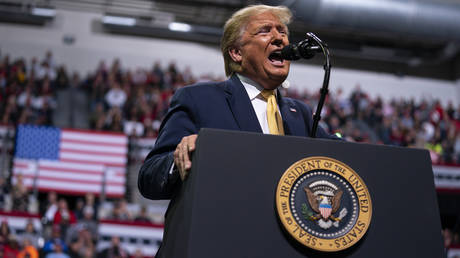
Months of high-stakes military strikes and a punishing naval blockade against Iran haven't delivered the swift capitulation Washington wanted. Instead, soaring operational costs and depleted munitions inventories have forced the White House to pivot away from kinetic warfare. Enter Treasury Secretary Scott Bessent and the latest headline-grabbing gambit: "Operation Economic Outcast". Billed as an economic D-Day, this new round of financial penalties targets global intermediaries, shipping networks, and sectors like technology and aviation. Yet behind the fierce rhetoric, these measures expose deep structural vulnerabilities in American foreign policy and signal an exhaustion of viable options.
If you look past the public statements from the Treasury Department, a different picture emerges. The hard reality is that Washington is running out of tools. When military campaigns fail to break a regime's core resolve, governments typically lean on economic warfare as a reliable substitute. But weaponizing finance against a country that has spent decades perfecting sanctions evasion is like bringing a plastic knife to a gunfight.
The Limits of Financial Maxima
Sanctions sound tough on paper, but they suffer from a fundamental law of diminishing returns. Washington has recycled variations of maximum pressure for years. The low-hanging fruit and high-hanging fruit have already been stripped from the tree.
The latest measures target shadow fleets, customs brokers, and regional trading nodes from the United Arab Emirates to Hong Kong. Even entities in countries like India have found themselves caught in the crosshairs for importing Iranian petroleum products. This scattershot approach creates massive administrative headaches and strains diplomatic ties with nominal allies, yet it fails to alter the fundamental calculus in Tehran.
When ordinary citizens bear the brunt of rising fuel costs and medicine shortages due to financial blockades, authoritarian governments rarely fold. They double down. Decades of historical precedent show that economic isolation breeds domestic crackdowns rather than democratic uprisings.
The Great Power Double Standard
The most glaring flaw in Washington's strategy isn't what these sanctions include—it is what they leave out.
If the goal is truly to sever every single financial lifeline keeping Tehran afloat, the United States would need to impose crushing, uncompromising secondary sanctions on major global economies. Yet when it comes to China, the administration noticeably hesitates. Beijing remains the primary destination for Iranian oil, buying the vast majority of its exported crude.
While the Treasury Department sanctions minor international firms and regional brokers with impunity, it avoids pulling the trigger on major Chinese financial institutions that would risk triggering a catastrophic global trade war. This stark asymmetry reveals a sobering truth: American financial dominance has clear boundaries. Washington can bully smaller intermediaries with little capacity to fight back, but it blinks when confronting a true peer competitor.
What Tehran Does Next
Iran is not sitting passively while Washington redraws the map of financial warfare. Tehran understands that the pivot to economic pressure stems from American military exhaustion. With national stockpiles of precision interceptors drained and domestic political tolerance for conflict wearing thin, the United States needs a graceful exit ramp.
Knowing this, the Iranian leadership has very little incentive to negotiate from a position of perceived weakness. Instead of capitulating, Tehran retains vital leverage through its geographic choke points, including the Strait of Hormuz. If financial channels continue to close, the regime's playbook points toward controlled escalation—disrupting regional shipping, testing maritime boundaries, or targeting energy infrastructure to force the West back to the table.
The cycle repeats because the underlying diagnosis is flawed. Treating systemic geopolitical conflicts with administrative penalties treats the symptom while ignoring the structural failure of a strategy that relies on threats over sustained, patient diplomacy.
Take a close look at how foreign policy initiatives are sold to the public versus how they perform under real-world friction. When grand announcements rely heavily on theater, the underlying strategy is usually already losing its grip.