Vietnam is pulling off a diplomatic tightrope walk that shouldn't work on paper. They’re conducting joint naval patrols with China in the Gulf of Tonkin while simultaneously upgrading their "Comprehensive Strategic Partnership" with the United States. It looks like a contradiction. It looks like they’re playing with fire. But if you look closer at the 2024 and 2025 maritime shifts, it’s actually a masterclass in survival.
Hanoi doesn't have the luxury of picking a side. When you share a land border with a superpower like China and a history of conflict that stretches back a thousand years, you don't just "pivot" to the West. You hedge. You balance. You make sure neither side feels entirely secure in your loyalty, but both feel you’re too important to lose. These joint patrols aren't about deep friendship. They're about managing a giant that’s right on your doorstep.
Why the Gulf of Tonkin Patrols are a Calculated Move
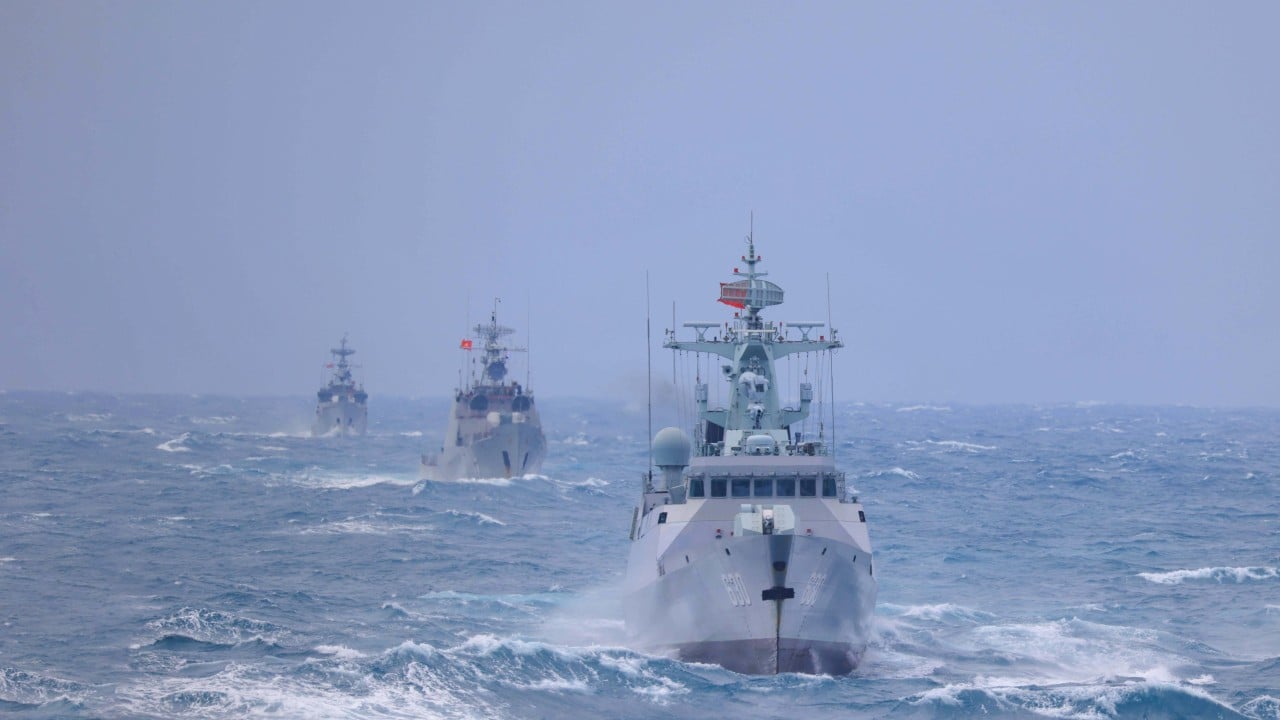
The 37th joint patrol between the Vietnam People’s Navy and the People’s Liberation Army Navy (PLAN) isn't a sign of Vietnam caving. It's a communication tool. By engaging in these scheduled, highly visible maneuvers, Hanoi signals to Beijing that it respects the 2000 agreement on the Delimitation of the Gulf of Tonkin.
It’s basically a way to say, "We can be reasonable neighbors," which buys them breathing room elsewhere. While they’re shaking hands in the Gulf of Tonkin, they’re quietly dumping sand on reefs in the Spratly Islands to expand their outposts. China knows this. Vietnam knows China knows. The patrols are the polite theater that prevents the underlying friction from turning into a full-blown shooting war.
If Vietnam stopped these patrols, the narrative in Beijing would shift instantly from "difficult neighbor" to "American puppet." That’s a dangerous label to carry when China is your largest trading partner. Vietnam’s economy relies on Chinese raw materials to feed the factories that export goods to the U.S. and Europe. You don't bite the hand that feeds your supply chain, even if that hand occasionally tries to grab your oil and gas fields.
The Bamboo Diplomacy Strategy in Action
You might’ve heard the term "Bamboo Diplomacy." It’s the official doctrine of the late Nguyen Phu Trong, and it’s still the play today. Think of a bamboo tree: strong roots, but a trunk that bends in the wind.
In late 2023 and throughout 2024, Vietnam hosted both Joe Biden and Xi Jinping within weeks of each other. That wasn't an accident. They gave both leaders the highest level of diplomatic status. To the Americans, they offered a piece of the semiconductor pie and a partner against Chinese maritime overreach. To the Chinese, they offered "a community with a shared future."
The genius is in the ambiguity. By participating in joint patrols with China, Vietnam makes it harder for Beijing to justify aggressive "gray zone" tactics in the short term. It creates a predictable environment in the Gulf of Tonkin so Hanoi can focus its limited naval resources on the more contested Paracel and Spratly Islands.
What the West Often Misses About Vietnamese Intentions
Western analysts love to frame this as Vietnam slowly "sliding" toward the U.S. orbit. That’s a massive oversimplification. Vietnam’s "Four Noes" policy is still very much alive: no military alliances, no siding with one country against another, no foreign bases, and no using force in international relations.
They don't want to be the next Philippines. While Manila under Marcos Jr. has gone all-in on the U.S. alliance—opening up more bases and engaging in high-stakes shouting matches with the Chinese Coast Guard—Vietnam prefers the quiet approach. They’ve seen what happens when China decides to punish a neighbor economically. They watched the Philippine banana industry and tourism sector take hits years ago, and they want no part of that.
Hanoi’s strategy is built on the reality of 2026. The U.S. is a distant security partner; China is a permanent geographic reality. If a conflict breaks out, the U.S. Seventh Fleet has to sail across the Pacific. The Chinese Southern Theater Command is already there.
Friction Points That Patrols Can’t Fix
Don't let the photos of sailors exchanging gifts fool you. The tension is real. China’s "nine-dash line" still overlaps with Vietnam’s continental shelf. The Vanguard Bank remains a flashpoint where Chinese survey vessels and coast guard ships regularly harass Vietnamese oil and gas operations.
In these areas, the "joint patrol" spirit evaporates. Vietnam has been rapidly professionalizing its Coast Guard, buying cutters from the U.S., Japan, and even India. They’re building a multi-layered defense.
- Diplomatic layering: Engaging in high-level talks and joint patrols to lower the temperature.
- Economic entanglement: Making it too expensive for China to bully them.
- Physical presence: Building up those islands and increasing the frequency of their own independent patrols.
It’s a gritty, unglamorous way to run a foreign policy. It requires constant recalibration. One day you’re signed onto a new trade deal with Washington; the next, you’re sending your admirals to toast with their Chinese counterparts in Zhanjiang.
The Economic Reality Behind the Naval Posturing
Vietnam’s GDP growth is the envy of Southeast Asia, but it’s fragile. It depends on stability. Any maritime conflict would spike insurance rates for shipping and scare off the foreign direct investment (FDI) that Vietnam desperately needs to move up the value chain.
The joint patrols serve as a "stability certificate" for investors. It tells Samsung, Apple, and Intel that the waters near Vietnam’s major ports aren't about to become a war zone. It’s a pragmatic insurance policy. They’re essentially paying a diplomatic premium to keep the trade routes open.
China also benefits from this. By engaging with Vietnam, they can claim to the rest of the world that they’re capable of resolving disputes through dialogue, even as they militarize man-made islands just a few hundred miles away. It’s a cynical game on both sides, but it’s a game that keeps the peace.
How to Read the Signs Moving Forward
Watch the frequency and location of these patrols. If they expand beyond the Gulf of Tonkin, that’s a sign China is successfully pulling Vietnam closer. If they stay limited while Vietnam increases its military drills with the U.S. or Japan, then the balancing act is holding steady.
You should also keep an eye on the undersea cable projects and the "Digital Silk Road." Vietnam is increasingly wary of Chinese tech in its core infrastructure, even as it conducts naval drills with them. This "selectivity" is the hallmark of a state that knows exactly who it’s dealing with.
If you’re looking for a clear winner or a definitive "side" in this relationship, you’re going to be disappointed. Vietnam isn't looking for a savior in Washington or a master in Beijing. They’re looking out for Vietnam.
The next time you see a headline about Vietnam and China shaking hands at sea, don't assume they’ve forgotten their grievances. Assume they’re just being smart enough to keep their enemies close and their trade routes open. For a mid-sized power in a dangerous neighborhood, that isn't just a strategy—it’s the only way to thrive.
Start tracking the specific ship types involved in these Gulf of Tonkin patrols. When China sends its newer Type 054A frigates, it’s a show of force disguised as cooperation. When Vietnam responds by sending its Russian-built Gepard-class frigates, it’s a reminder that they have teeth too. The maritime balance is a language, and right now, both sides are still talking instead of shooting. Keep your eyes on the Vanguard Bank and the expansion of the Nam Du and Hon Khoai port projects for the real story of Vietnam's maritime future.