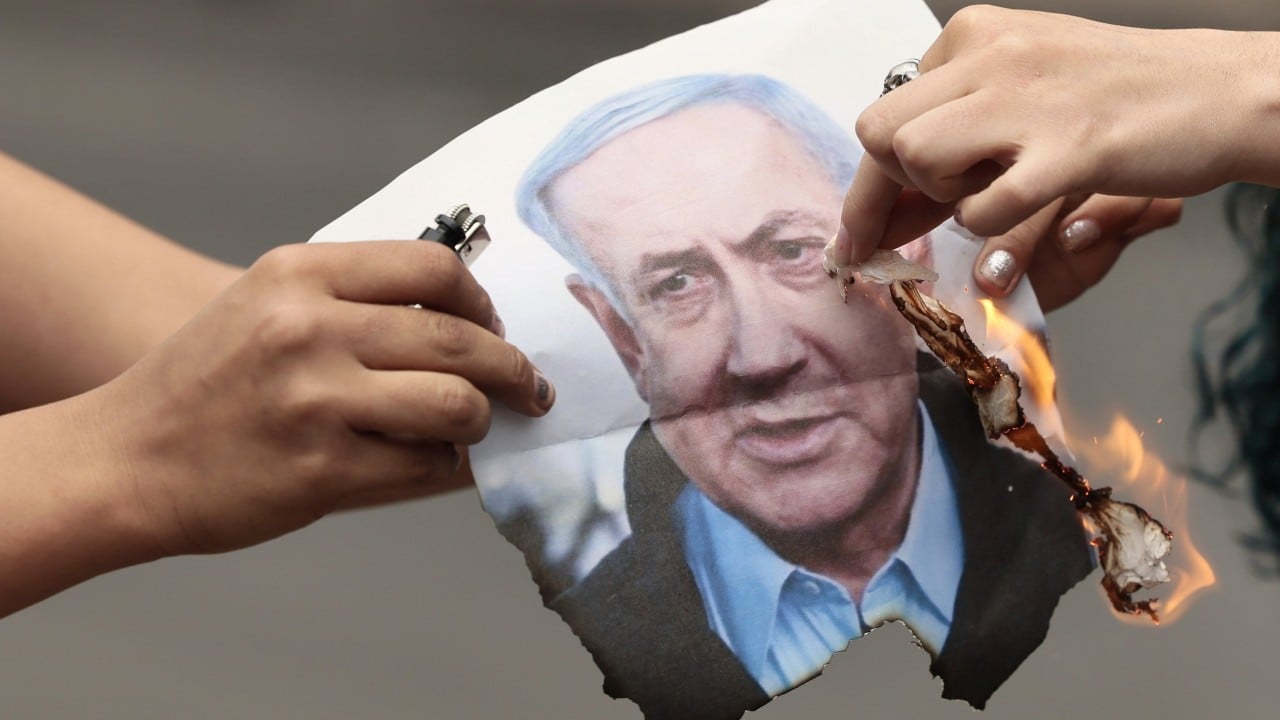
The headlines are screaming about death threats again. The Islamic Revolutionary Guard Corps (IRGC) issues a statement, the Western press picks it up with predictable franticness, and the cycle of performative outrage continues. You are being fed a narrative of existential bloodlust. You are told that Tehran’s primary goal is the physical liquidation of Benjamin Netanyahu.
It is a lie. Not because the IRGC has developed a sudden affinity for Israeli Likudniks, but because in the cold, hard logic of Middle Eastern power dynamics, Netanyahu is the IRGC’s most valuable asset.
If you believe the IRGC actually wants Netanyahu dead, you don’t understand how the "Axis of Resistance" functions. They don’t want a martyr or a more competent successor. They want a bogeyman who validates their entire defensive posture and keeps the regional temperature at a perfect, manageable boil.
The Symbiotic Theater of "Total War"
The media treats the relationship between Iran and Israel as a zero-sum game of survival. This is the "lazy consensus." In reality, it is a high-stakes ecosystem where both leaderships rely on the other’s perceived villainy to maintain domestic control and regional relevance.
When the IRGC issues a death threat against Netanyahu, they aren't planning a hit. They are conducting marketing.
For the IRGC, Netanyahu is the perfect foil. He is polarizing, internationally isolated, and deeply unpopular with half of his own country. Why would Tehran want to trade him for a centrist Israeli leader who could potentially repair Israel's diplomatic standing or, worse, actually move toward a two-state solution? A two-state solution is the IRGC’s worst nightmare. It removes the primary justification for their billions in "proxy" spending.
Netanyahu’s presence ensures that the Palestinian wound stays open. An open wound is where the IRGC thrives. By threatening him, they signal to their regional proxies—Hezbollah, the Houthis, and various Iraqi militias—that they remain the vanguard of the struggle. It’s about internal branding, not external assassination.
The Competence Trap
Let’s run a thought experiment. Imagine a scenario where a Mossad-led coup or a sudden change in government brings a technocratic, diplomatically savvy general to the Prime Minister’s office in Jerusalem.
This new leader stops the inflammatory rhetoric. They begin back-channeling with Riyadh and Cairo more effectively. They rebuild the bridge with Washington that Netanyahu has spent years setting on fire.
In this scenario, Iran loses. Their narrative that Israel is an unhinged, expansionist "Zionist entity" that can only be met with force begins to crumble. The IRGC needs Netanyahu’s specific brand of defiance because it makes their own extremism look like a necessary reaction.
I’ve watched analysts for a decade treat these threats as tactical military objectives. They aren't. They are rhetorical anchors. In the intelligence world, we call this "threat inflation for domestic consumption." The IRGC has a massive budget to justify. If the enemy isn't terrifying and if the enemy isn't personified by a singular "evil" figure, the budget shrinks.
The Mythology of the "Proxy"
The common misconception is that Iran controls its proxies like a puppet master controls strings. The reality is much messier. The IRGC manages a franchise model. Like any franchise, the headquarters needs to prove its value to the local owners.
By targeting Netanyahu specifically, Tehran is speaking the language of the street. They are addressing the "People Also Ask" query of Why doesn't Iran just attack? with a resounding, "We are coming for the head of the snake."
It’s a release valve. It provides the illusion of momentum without the catastrophic cost of direct state-on-state warfare. Direct war with Israel would likely end the current Iranian regime. They know this. Netanyahu knows this. Therefore, they both retreat into the comfort of shadow wars and verbal escalations.
The Mechanics of Rhetorical Escalation
- The Proclamation: A senior IRGC commander mentions "the end of the Zionist regime" or names a specific leader.
- The Amplification: Western media outlets, hungry for clicks, frame this as an imminent security breach.
- The Consolidation: Netanyahu uses the threat to silence domestic critics, labeling dissent as "weakness in the face of terror."
- The Stalemate: Both sides return to the status quo, their respective bases energized, while the actual strategic map remains unchanged.
This isn't a "game-changer." It’s the game itself.
Why the Death Threat is a Defensive Move
When you see a headline about an IRGC death threat, look at what is happening inside Iran. Usually, it’s a distraction from a failing economy, currency devaluation, or internal dissent.
The IRGC isn't a monolith of religious zealots; it’s a massive corporate conglomerate that happens to own a military. They own telecommunications, construction firms, and oil interests. Their primary goal isn't the apocalypse; it’s the preservation of their balance sheet.
War is bad for business. Constant threat of war is excellent for business. It allows for the bypass of standard bidding processes under the guise of "national security." It justifies the crackdowns on labor unions and student protesters.
Netanyahu provides the IRGC with the "external threat" necessary to maintain their internal monopoly. If Netanyahu were to disappear, the IRGC would have to invent him.
The Folly of the "Grand Strategy"
Stop looking for a chess match. This is professional wrestling. The punches are pulled, the blood is often theatrical, and the winners and losers are determined by who can keep the audience coming back for the next pay-per-view.
The "experts" who tell you we are on the brink of a massive Iranian assassination plot are the same people who thought the JCPOA would solve the regional power struggle. They miss the nuance of self-preservation.
The IRGC doesn't want to kill Netanyahu. They want to keep him in power forever. He is the best recruiter they’ve ever had. Every time he expands a settlement or rebuffs a Western diplomat, a new cell of the "Axis of Resistance" finds its purpose.
The Reality of the "Red Line"
If Iran truly wanted to escalate to the point of assassinating a sitting head of state, they wouldn't announce it in a press release. They would do it through the same covert channels they used to target dissidents in Europe or ship components to Russia.
Announcing a death threat is the international relations equivalent of "holding me back." It’s designed to be stopped. It’s designed to be analyzed. It’s designed to keep the status quo frozen in a state of permanent, profitable tension.
Stop reading the headlines and start following the money. The IRGC and the Israeli hard-right are two sides of the same coin, each feeding the other the oxygen they need to survive.
The threat isn't a precursor to an event. The threat is the event.
Understand the theater, or remain a spectator in someone else's marketing campaign.
Go back and look at every "imminent" threat issued by the IRGC over the last five years. Compare it to the actual kinetic actions taken. The gap between the two is where the truth lives. They bark so they don't have to bite. And they bark at Netanyahu because they know he’ll bark back, keeping the cycle of profitable fear alive for another generation.
Ignore the noise. Watch the money. The threat is the product.
Stop asking if Iran will kill Netanyahu and start asking why they need him to stay alive.