The detention of Dr. Adnan al-Bursh was not an isolated incident of wartime chaos. It was a data point in a systemic dismantling of the Gazan healthcare leadership. When United Nations experts recently demanded the release of prominent Palestinian physicians, they weren't just filing a human rights complaint. They were documenting the terminal breath of the principle of medical neutrality in modern conflict. The disappearance of hospital directors and senior surgeons into a shadowy detention system has moved from a tactical necessity of war to a strategic erasure of the Gaza Strip’s social infrastructure.
For months, reports of "severe torture" and "inhumane treatment" regarding detained medical professionals have trickled out of Israeli detention centers like Sde Teiman. The Israeli Defense Forces (IDF) maintain these detentions are necessary to root out integrated Hamas infrastructure. However, the lack of formal charges against the majority of these high-profile detainees suggests a different reality. We are witnessing the criminalization of presence. In a zone where every basement is a potential bunker and every tunnel a potential command center, the act of staying behind to treat the wounded has been redefined by the military apparatus as an act of complicity.
The Systematic Removal of the Medical Elite
To understand why the UN is sounding the alarm now, one must look at the names being taken. These are not street-level combatants. They are the administrators, the lead surgeons, and the institutional memory of the Palestinian health system. When a hospital director is removed, the building doesn't just lose a doctor; the entire logistics chain of the facility breaks. Oxygen supplies fail. Triage protocols dissolve. The staff that remains operates under a cloud of paralyzing fear, knowing that their professional dedication provides no shield against "administrative detention."
The case of Dr. al-Bursh, the head of orthopedics at Al-Shifa Hospital, serves as the grim blueprint. Witnesses and released detainees describe a process of interrogation that transcends the search for intelligence. They describe a deliberate attempt to break the spirit of the professional class. If you break the doctor, you break the community's belief in its own survival. This isn't just about one man in a cell. It is about the message sent to every remaining medical worker in the enclave: your scrubs are not a uniform of neutrality, but a target of suspicion.
The Legal Void of Sde Teiman
The facility at Sde Teiman has become the focal point of international outrage for a reason. It operates outside the standard judicial framework of the Israeli prison system. It is a military holding pen where the "Unlawful Combatants Law" allows for prolonged detention without access to a lawyer or a judge. This legal black hole is where the expert-led medical corps of Gaza is currently being held.
Evidence suggests that the conditions inside involve prolonged shackling, sensory deprivation, and physical abuse that UN rapporteurs have classified as potential war crimes. The defense for these actions usually rests on the claim that Hamas uses hospitals as human shields. While the use of civilian infrastructure by militants is a documented reality of urban warfare, the international legal response requires a surgical precision that is nowhere to be found in the current dragnet. Instead, the net is cast so wide that it has snared the very people responsible for keeping the civilian population alive.
The Myth of Modern Medical Neutrality
We grew up believing in the sanctity of the Red Cross and the Red Crescent. That era is over. The war in Gaza has effectively ended the unspoken agreement that hospitals are off-limits. By labeling the entire medical staff of a facility as a potential "support network" for an insurgency, a military force can bypass the Geneva Conventions with a shrug of "operational necessity."
This shift has terrifying implications for future conflicts. If the international community accepts the detention and alleged torture of hospital directors today, it sets a precedent for every authoritarian regime and insurgent group tomorrow. The "why" behind the detention of these doctors isn't just about finding tunnels; it is about the total control of the environment. By controlling who lives and who dies in a hospital, a military force exerts the ultimate form of sovereignty over a population.
The Silence of the Global Medical Community
While the UN has been vocal, the silence from many Western medical associations has been deafening. Usually quick to issue statements on global health equity, many organizations have hesitated to condemn the treatment of their Palestinian colleagues, citing the "complex political situation." This hesitation is a failure of professional solidarity. Medical ethics are supposed to be universal, not conditional on the geopolitical alignment of the practitioner.
When a surgeon is pulled from an operating theater and placed in a stress position for seventy-two hours, the "complexity" of the conflict becomes an irrelevant abstraction. The fact remains that a specialized human resource, trained over decades to save lives, is being physically and mentally destroyed. This is a permanent loss to the world, regardless of one's stance on the borders of the Middle East.
The Long-Term Cost of Institutional Erasure
Gaza’s healthcare system will not "bounce back" after the ceasefire. You can rebuild a wing of a hospital with international aid money and enough concrete. You cannot rebuild a neurosurgery department when the only people capable of running it are dead or suffering from profound PTSD following months of detention. The expertise is being drained out of the territory, likely by design.
The strategy of detaining the intelligentsia ensures that even if the bombs stop falling, the society remains crippled. A population without doctors is a population that cannot sustain itself. It is a population that remains perpetually dependent on external aid and, by extension, external control. This is the "how" of modern siege warfare: you don't just destroy the walls; you destroy the people who know how to maintain the life inside them.
Accountability and the International Criminal Court
The UN experts’ demand for release is the first step toward a broader legal reckoning. The International Criminal Court (ICC) is already looking at the conduct of both sides in this conflict. The treatment of detainees, particularly those protected by medical status, occupies a high-priority slot in those investigations. Proving "severe torture" requires more than just testimony; it requires a paper trail of orders and a physical record of the injuries.
The irony is that the more the IDF detains these professionals, the more witnesses it creates. Every doctor who survives Sde Teiman and is eventually released becomes a high-credibility witness for future tribunals. They are trained observers. They know how to document trauma. They understand the mechanics of the human body and can describe exactly what was done to them in clinical detail. The very expertise that made them targets will eventually make them the most dangerous enemies of the state in a courtroom.
The Reality of the "Tunnels" Defense
The standard counter-argument from Israeli officials is that hospitals like Al-Shifa were being used as command-and-control centers. They provide videos of weapons caches and tunnel shafts as proof. Even if we accept this evidence at face value, the jump from "there is a tunnel under the hospital" to "we must torture the head of orthopedics" is a logical and moral chasm.
Individual culpability must be proven, not assumed by proximity. If a doctor is found to be an active, gun-toting member of a militant group, their medical status is forfeit. But the current trend is the detention of the entire administrative layer of the health ministry. This suggests a policy of collective responsibility. It is a blunt instrument used in a situation that requires a scalpel, and the result is a bloody mess that the international community can no longer ignore.
The Immediate Necessity
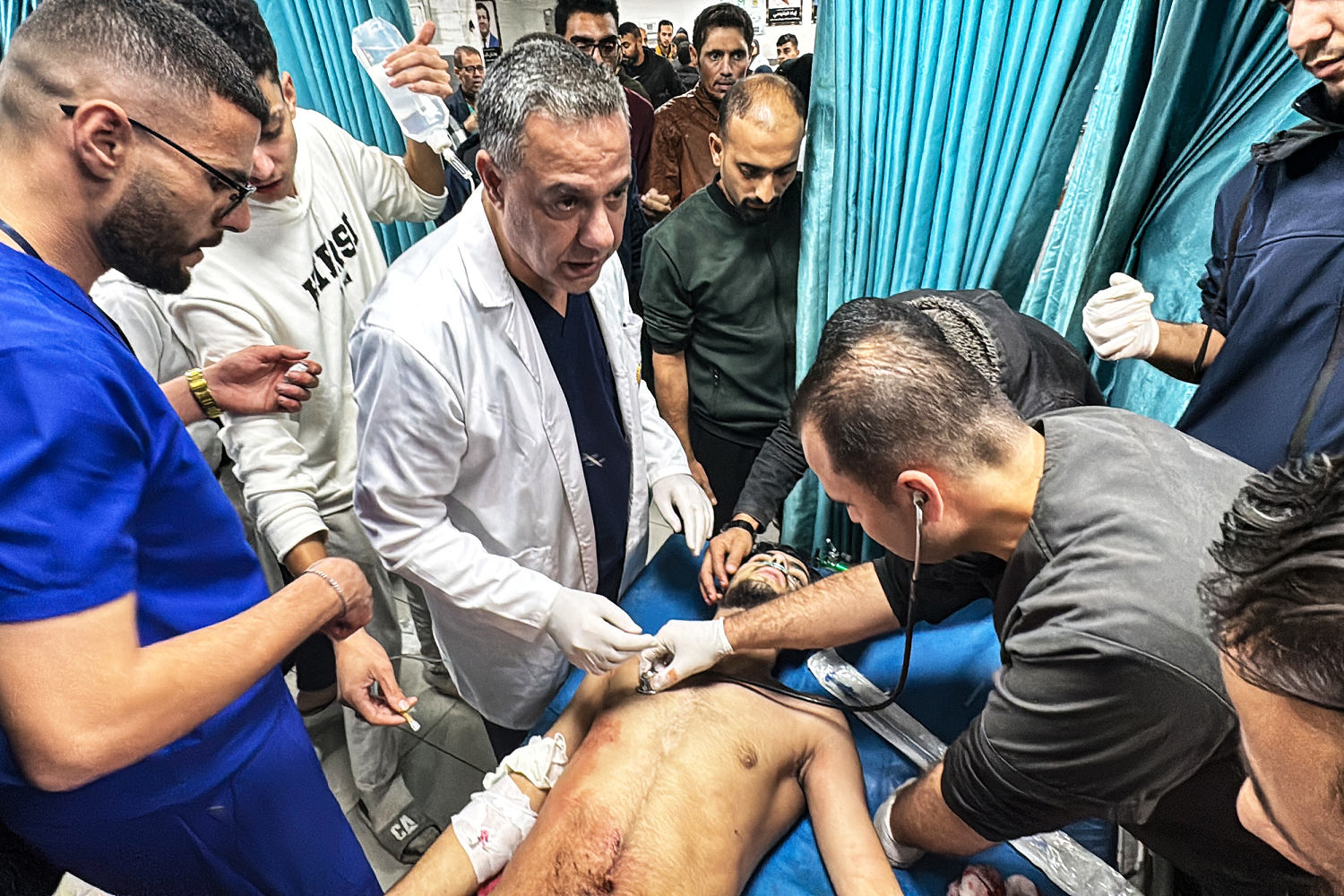
The demand for the release of these doctors isn't just a matter of human rights; it is a matter of immediate public health. Gaza is currently a breeding ground for polio, hepatitis, and infected wounds that lead to unnecessary amputations. Every hour that a skilled clinician spends in a detention cell is an hour that dozens of civilians die from preventable causes.
The international community needs to move beyond "demanding" and start imposing consequences for the mistreatment of medical personnel. This could include targeted sanctions on the specific commanders of detention centers or the suspension of medical exchange programs with institutions that remain silent on these abuses. If the title "Doctor" no longer offers protection, then the rules of war have officially regressed to the medieval.
Check the registries of the missing. Look at the names of the men and women who stayed behind when the tanks rolled in. They are not ghosts; they are professionals being held in a system designed to make them disappear. The fight for their release is the fight for the last shred of human decency in a conflict that has discarded almost everything else.
Go to the official UN Rapporteur reports on the occupied Palestinian territories and read the specific testimonies of the released staff. Compare their accounts. Look for the patterns of interrogation. Document the names of the facilities and the dates of disappearances. The evidence is being gathered in real-time, and the window for credible denial is closing.