Jeffrey Epstein didn't just slip through the cracks of the American justice system. He fell through a canyon-sized hole created by incompetence, laziness, and a series of "accidental" failures that still defy logic years later. If you've spent any time reading the official reports or the leaked internal memos from the Metropolitan Correctional Center (MCC), you know the story isn't just about a high-profile inmate's death. It’s about how a federal facility became a playground for negligence.
People still argue about what happened in Cell 1 of Tiers 9 South. Was it a conspiracy? Was it a massive bureaucratic blunder? While the internet loves a good mystery, the documented facts of those final hours are actually more damning than many of the theories. They show a man who was essentially given the tools and the privacy to end his life despite being the most watched prisoner in the world. For a closer look into this area, we suggest: this related article.
A Google Search and a Flash of Orange
Epstein’s final day wasn't spent in a catatonic state. He was active. He was calculating. Records show he spent a significant chunk of his last afternoon meeting with his lawyers. This wasn't just a standard legal check-in. It lasted for hours. When he returned to his cell, he wasn't the image of a broken man. He was someone who had just spent his final moments of freedom in a room with people who weren't guards.
Then there's the "flash of orange." For additional information on this topic, detailed reporting can also be found on The New York Times.
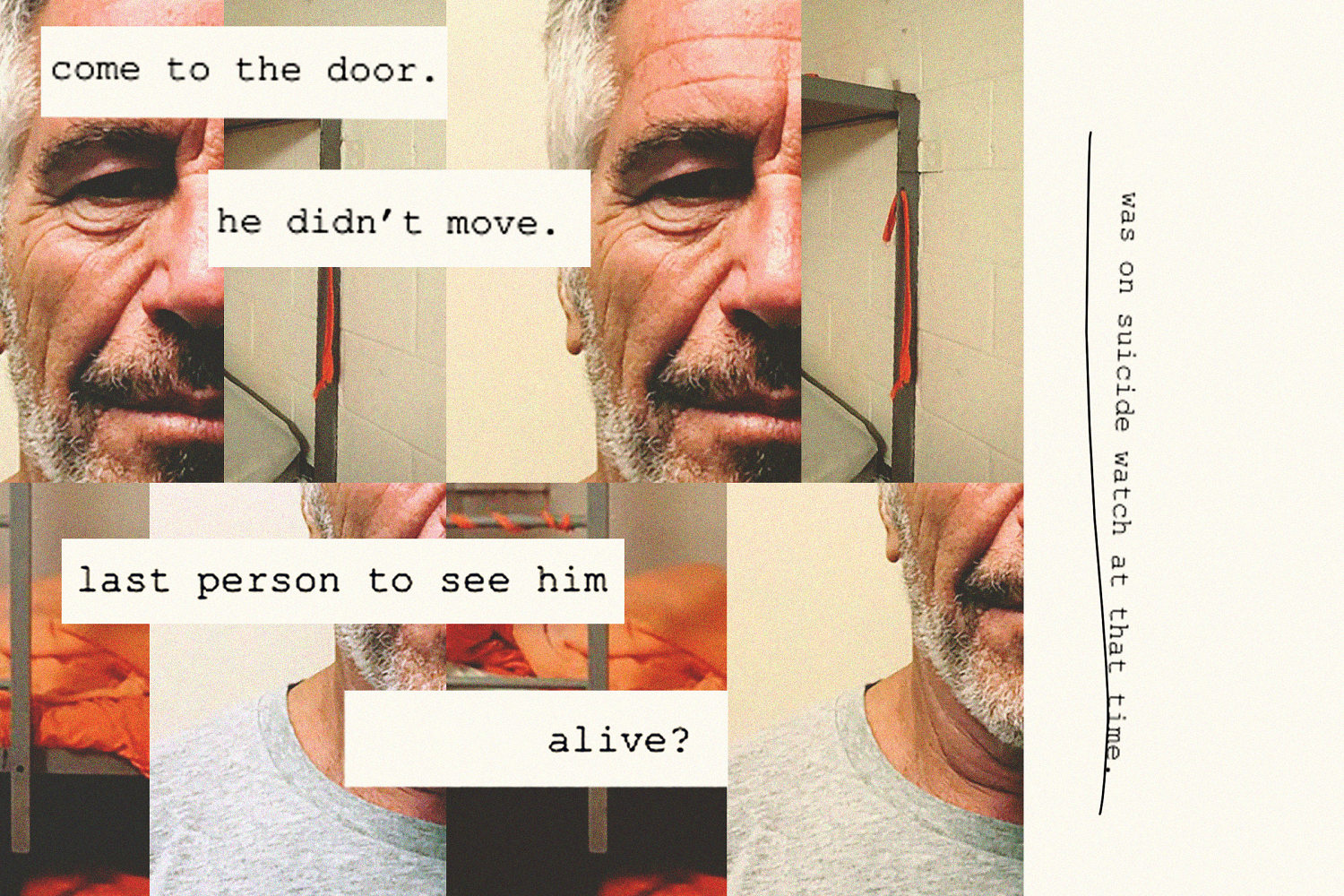
One of the most chilling details from the Department of Justice investigation involves a fellow inmate’s account. This inmate claimed to see a "flash of orange" near Epstein’s cell door during the night. In the drab, gray-and-beige world of a SHU (Special Housing Unit), orange is the color of the jumpsuits. It was a sign of movement where there should have been none. The problem? The guards who were supposed to be watching that movement were busy. They weren't just tired. They were scrolling the internet.
While Epstein was reportedly tearing up bedsheets to fashion a makeshift noose, the two guards on duty, Tova Noel and Michael Thomas, were sitting just fifteen feet away. They weren't patrolling. They weren't looking at the monitors. They were browsing furniture websites and sports news.
The Failure of the Suicide Watch System
Let’s talk about the "suicide watch" that wasn't. Epstein had already tried to kill himself—or at least claimed he’d been attacked—weeks earlier in July. He had marks on his neck. He was placed on suicide watch, which requires a guard to observe the inmate every 15 minutes.
But then, he was taken off it.
The psychology staff at MCC decided he was no longer a risk. They moved him to a cell with a "roommate" to keep him stable. But by the morning of August 10, that roommate had been transferred out. Epstein was alone. This violated the very protocol meant to keep him alive. The prison administration knew he shouldn't be alone. They just didn't do anything about it.
It’s almost laughable if it wasn't so grim. You have a billionaire accused of horrific crimes against children, a man with every reason to want an exit strategy, and the jailers decide to leave him in a private room with extra bedsheets and zero supervision.
The Missing Video and the Fake Logs
The most infuriating part of the Epstein saga for anyone looking for "truth" is the video evidence. Or the lack of it.
The MCC had cameras everywhere. Yet, when investigators went to look at the footage from outside Epstein’s cell, they found the files were unusable. Some cameras had "technical malfunctions." Others simply didn't record. This isn't just bad luck. It’s a systemic failure of infrastructure that served as a convenient curtain for whatever happened in that cell.
To make matters worse, the guards lied.
Noel and Thomas signed logs claiming they had performed their rounds every half hour. They hadn't. They sat at their desks for hours, literally sleeping at one point, while Epstein was allegedly busy in his cell. They eventually admitted to falsifying the records to cover their tracks. This wasn't a sophisticated cover-up. It was a desperate attempt by two overworked employees to hide the fact that they hadn't done their jobs for a single minute of their shift.
Why the Official Narrative Still Feels Off
The medical examiner ruled the death a suicide by hanging. Case closed, right? Not quite.
Dr. Michael Baden, a renowned pathologist hired by Epstein's brother, pointed out that the fractures in Epstein’s neck—specifically the hyoid bone—are much more common in cases of strangulation than in hangings. While not impossible in a suicide, it’s rare enough to cause a lot of eyebrows to rise in the medical community.
Then you have the Google searches. It was later revealed that someone in Epstein’s circle or with access to similar information had been looking up methods of suicide and the specifics of the MCC’s layout. The man was a researcher. He was a student of systems. He knew exactly how the MCC functioned, and more importantly, he knew how it failed.
The Reality of Federal Prison Negligence
If you want to understand what really happened, you have to stop looking for a "hitman" and start looking at the crushing weight of institutional failure. The MCC was understaffed. The guards were working forced overtime. The facility was literally falling apart with vermin and broken plumbing.
In that environment, a man like Epstein—who was used to manipulating everyone around him—didn't need a complex plot to die. He just needed a few hours of the privacy he was never supposed to have. He exploited a broken system one last time.
The "flash of orange" wasn't a ghost or an assassin. It was likely Epstein himself, moving around in the one place he finally had control over: a six-by-nine-foot box.
If you’re tracking this case to see where the accountability went, don’t look at the high-level politicians. Look at the Bureau of Prisons. The guards got off with community service and a plea deal. The warden was reassigned. The MCC itself was eventually shut down because it was too decrepit to function.
The real lesson here? Security is an illusion when the people in charge of it don't care.
To get a clearer picture of the legal aftermath, you should look into the unsealed depositions from the Giuffre v. Maxwell civil case. Those documents provide the context of what Epstein was facing in the weeks before his death—a mountain of evidence that made a life sentence a certainty. That pressure, combined with a jail that was essentially unmanaged, created the perfect storm for his final act. Stop waiting for a "smoking gun" and look at the pile of broken rules. That’s where the answer is.