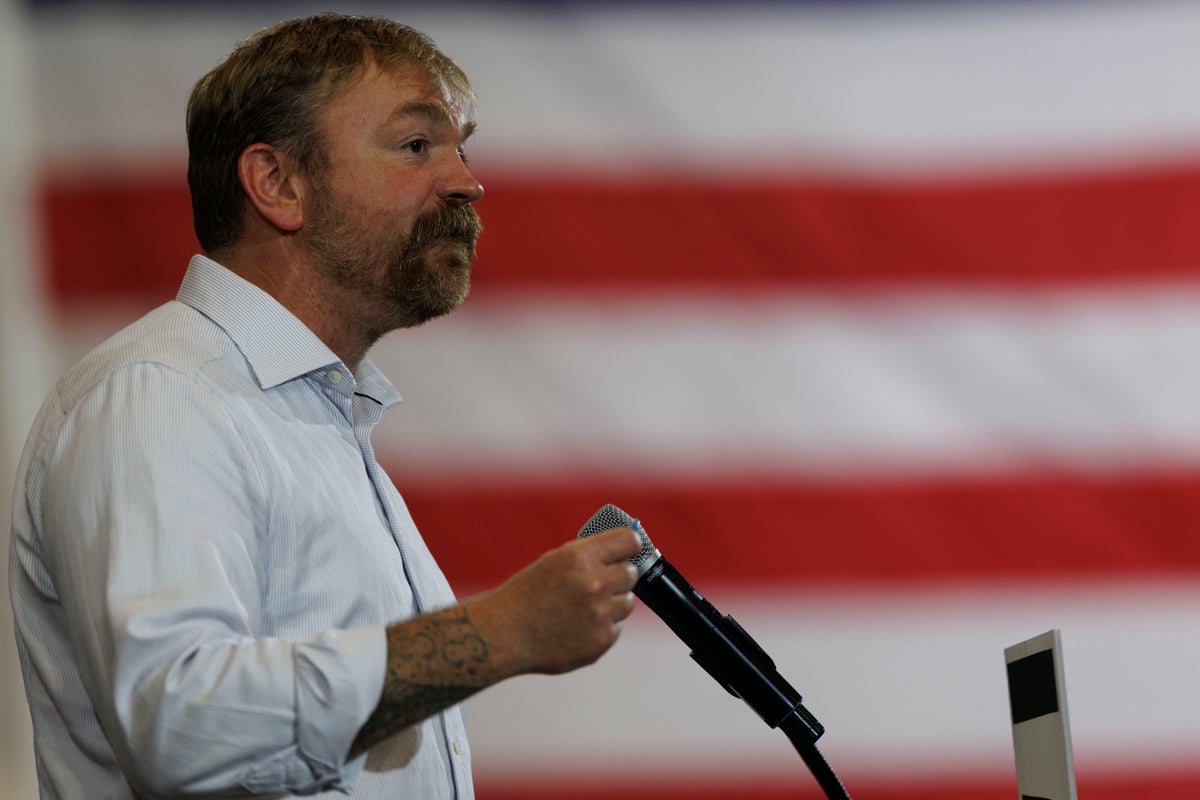
Donald Trump wants a do-over from the highest court in the land, but he’s almost certainly not getting one. After a crushing 6-3 defeat at the US Supreme Court over his day-one executive order targeting birthright citizenship, Trump took to Truth Social to demand an immediate rehearing. He called the court's ruling a "miscarriage of justice" and claimed it would "destroy America".
But here’s the reality checking the legal world right now: the Supreme Court does not just change its mind because a president vents online. Rehearings are the legal equivalent of capturing lightning in a bottle twice.
The court rejected Trump's attempt to restrict birthright citizenship by relying heavily on the clear text of the 14th Amendment. Trump is now using a local news story about Texas billboards to argue that "shocking new evidence" warrants a fresh look. If you look past the political bluster, the legal mechanics tell a completely different story.
The Long Odds of a Supreme Court Rehearing
Let's look at the numbers. The Supreme Court hears roughly 60 to 70 argued cases a year. Do you know how many times they grant a rehearing after issuing a definitive ruling in an argued case? It hasn’t happened in decades.
Under Supreme Court Rule 44, a petition for rehearing must show that the court missed something monumental—like an intervening staff blunder or a massive, newly enacted statute that completely nullifies the legal foundation of the case. It is not an invitation to re-argue the exact same points because you disliked losing.
Trump’s legal team faces an impossible hurdle. To get a rehearing, he needs a majority of the justices to agree to reopen the case. More importantly, he needs the support of the justices who actually voted against him. Chief Justice John Roberts authored the majority opinion in Trump v. Barbara, firmly declaring that children born on US soil are citizens, regardless of their parents' legal status. Justices Brett Kavanaugh and Amy Coney Barrett joined him. They aren't going to look at a Truth Social post and suddenly reverse their constitutional philosophy.
The Billboard Evidence Falling Apart under Scrutiny
Trump’s sudden pivot back to the court rests on a very shaky foundation. He claimed that "signs and Billboards" are popping up across Mexico and the southern border advertising birthright citizenship packages for $4,000. He labeled it a multi-billion-dollar scam.
The Actual Cost Breakdown from the Texas Billboard:
• Natural Birth: $3,950
• Caesarean Section: $5,525
The "shocking new evidence" was actually a single photograph of a billboard for a Texas hospital, originally shared by a local politician. The billboard advertised standard maternity packages aimed at women living abroad who wanted quality medical care. It didn't mention citizenship once.
Texas Governor Greg Abbott quickly ordered an investigation into the hospital for promoting "birth tourism," which fed into the conservative media cycle. But as a legal argument to override a constitutional amendment? It’s completely irrelevant. A hospital’s marketing strategy has zero bearing on the historical meaning of the 14th Amendment.
Why the 14th Amendment Is an Impenetrable Wall
The legal battle in Trump v. Barbara centered on a single phrase in the 14th Amendment: "subject to the jurisdiction thereof". Trump's administration argued that this phrase excluded the children of undocumented immigrants and temporary visa holders. They claimed these children owed allegiance to a foreign sovereign, not the United States.
Chief Justice Roberts systematically dismantled that argument. Relying on English common law and the 1898 landmark precedent United States v. Wong Kim Ark, Roberts noted that "jurisdiction" simply means being bound by American laws. If you are on US soil, you have to follow US laws. Therefore, you are under US jurisdiction.
The exceptions are incredibly narrow:
- Children of foreign diplomats
- Children born on foreign public vessels in US waters
- Invading enemy armies occupying US territory
Undocumented families living and working in Texas or California do not fit any of these buckets. They are fully subject to American police power, courts, and taxation. Justice Clarence Thomas wrote a fiery 91-page dissent pushing an originalist argument about "domicile" and "allegiance," but he lost the debate. The law of the land remains unchanged: if you are born here, you are a citizen.
The Real Strategy behind the Legal Noise
If the legal path is a dead end, why is Trump doing this? It’s about politics and keeping his base energized.
Before this latest push, Trump seemed ready to pass the buck to Congress. Justice Kavanaugh’s concurring opinion had hinted that while the executive order was illegal, Congress might have the statutory authority to tinker with citizenship exceptions. But Congressional Republicans are deeply divided on the issue. Top legal minds in the party, like House Speaker Mike Johnson, know that passing a law to circumvent a fresh 6-3 Supreme Court constitutional ruling is a waste of legislative capital.
By launching a high-profile attack on the ruling and demanding a rehearing, Trump shifts the spotlight away from legislative gridlock. He keeps immigration at the absolute center of the national conversation. He gets to frame the narrative around a "scam" that the courts are failing to fix.
Do not expect the Supreme Court docket to change anytime soon. Trump’s lawyers will file their paperwork, the justices will quietly deny the petition without comment, and the issue will move from the courtroom back to the campaign trail where it belongs. Watch for the formal filing in the coming days, but don't hold your breath waiting for a different result.