The political press corps just finished writing its favorite, most predictable script. A candidate gets hit with a devastating allegation. The party establishment panics, pulls the funding plug, and flees into the night. The candidate drops out. The media calls it a swift exercise in accountability.
They are wrong. They are missing the entire structural mechanics of how modern political campaigns actually function—and fail.
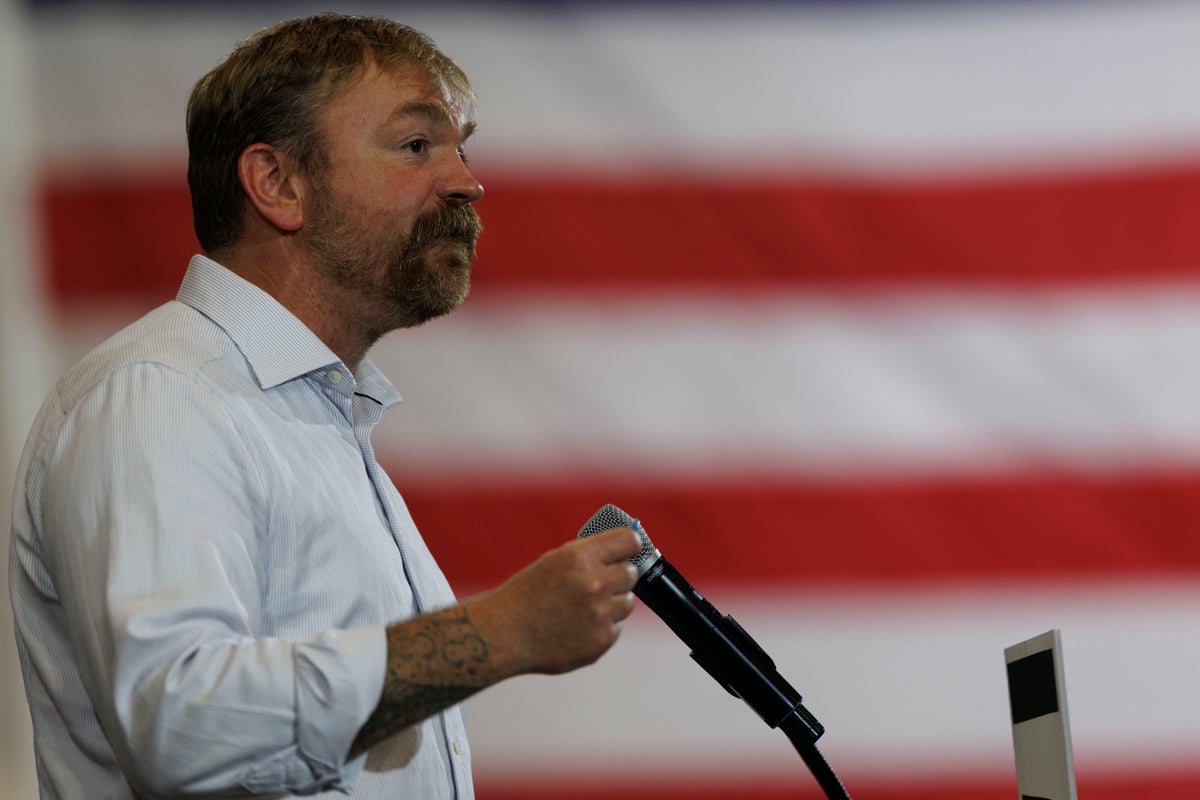
The sudden exit of Graham Platner from the Maine Senate race following a sexual assault allegation isn't a story about swift moral clarity. It is a textbook case study in the absolute bankruptcy of modern campaign risk management. Political operations do not run on ethics; they run on risk mitigation. And right now, the political consulting class is managing risk with the sophistication of a medieval blacksmith.
I have spent nearly two decades watching national and state-level campaigns incinerate millions of dollars because they treat crisis management as an afterthought, a reactive scramble triggered by a Sunday night press inquiry. The Platner fallout proves that the institutional gatekeepers of the political apparatus are utterly incapable of protecting their investments, their candidates, or their voters.
The Illusion of the Flawless Vetting Process
Political parties love to brag about their rigorous vetting procedures. They claim their opposition research teams dig deeper than the FBI, unearthing every unpaid parking ticket and questionable college tweet before a candidate ever steps onto a debate stage.
It is a comforting myth. The reality is far more negligent.
Standard political vetting is not designed to uncover hidden liabilities; it is designed to check boxes. Consultants look for the obvious: tax liens, voting records, public court dockets, and corporate filings. They scan the surface and declare a clean bill of health.
What they fail to assess—and what the Platner situation exposes—is the human infrastructure surrounding a candidate. In private corporate compliance, investigative due diligence involves deep network analysis. It requires looking at non-public patterns of behavior, conducting blind interviews within a candidate’s historical social and professional circles, and mapping out structural vulnerabilities.
Political campaigns skip this because it is expensive, time-consuming, and uncomfortable. Instead, they rely on the "good guy" defense. A candidate comes highly recommended by donors, looks great in a Patagonia vest, speaks articulately about local zoning laws, and the party apparatus assumes the rest is secure. This is not risk management. It is reckless gambling with a brand.
Why the Institutional Flight Instinct Disables Strategic Defense
When the Platner allegation surfaced, the Democratic establishment did what it always does: it panicked and bolted.
[Allegation Surfaces] ➔ [Donor Panic] ➔ [Consultant Flight] ➔ [Campaign Collapse]
This immediate, unthinking reflex to cut and run is viewed by political operatives as the ultimate form of brand preservation. In reality, it is a structural failure that creates a dangerous precedent.
When a party immediately abandons a campaign without a controlled, strategic assessment, they cede absolute control over the narrative, the timing, and the political fallout. They do not save the party's brand; they merely guarantee a chaotic power vacuum that down-ballot candidates must then navigate without a map.
Consider the mechanics of corporate crisis governance. When a major CEO faces a catastrophic personal or professional crisis, the board of directors does not immediately liquidate the company's assets and sprint for the exits within six hours. They initiate a highly coordinated, internal assessment. They manage the transition. They stabilize the stock price. They control the flow of information to protect the organization's broader ecosystem.
The political establishment lacks this institutional maturity. The moment a crisis hits, the consultants protect their own billable retention fees by distancing themselves, the donors lock their checkbooks, and the entire apparatus implodes in real-time. This structural cowardice does not protect the party; it leaves them flat-footed, scrambling to find a replacement candidate while the opposition controls the entire news cycle.
Dismantling the Myth of the Clean Exit
The media framing around Platner's exit suggests that dropping out solves the problem for the party. The consensus states that by removing the problematic candidate, the party can now reset the race with a clean slate.
This is a fundamental misunderstanding of voter psychology and electoral mechanics.
There is no such thing as a clean slate in a high-profile Senate race. When a candidate drops out under a cloud of scandal, the taint does not vanish with the candidate. It binds to the party brand itself.
The Real Cost of Campaign Capitulation
- Voter Demoralization: The core base of volunteers and grassroots donors do not just pivot to a new name overnight. They feel burned, cynical, and detached.
- Resource Incineration: Millions of dollars spent on early name recognition, field infrastructure, and data modeling are instantly rendered useless.
- The Competency Tax: The opposition now has a devastating, permanent talking point: The party is too incompetent to even vet their own standard-bearers.
By forcing or celebrating an immediate, unmanaged collapse, the political apparatus ensures that they enter the general election cycle severely damaged, underfunded, and intellectually bankrupt.
The Flawed Premise of Campaign Compliance
Look at any political training manual or consultant playbook, and you will see an obsession with compliance. But that compliance is strictly financial. Campaigns are hyper-focused on FEC deadlines, donation limits, and disclaimer text on digital ads.
They treat structural risk as a public relations problem rather than an operational one.
True risk management means acknowledging the downside of your own strategy. If you build a campaign entirely around a candidate's personal narrative of integrity and community trust, then that narrative is your single point of failure. If that narrative breaks, the campaign dies.
A sophisticated operation diversifies its messaging and builds institutional resilience so that the campaign is larger than the individual individual on the bumper sticker. Modern campaigns refuse to do this because elevating a cult of personality is easier, cheaper, and faster for fundraising. Platner's collapse is the direct consequence of this lazy operational model.
The Hard Reality for the Political Class
The industry consensus will look at the Maine Senate race and conclude that the party needs better vetting software or a faster PR response team. They will miss the point entirely.
The problem isn't the speed of the response; it is the fundamental architecture of the campaign apparatus. Until political parties stop operating like temporary pop-up shops and start managing risk like multi-million-dollar enterprises, they will continue to be blindsided by predictable disasters.
Stop assuming the institutional gatekeepers know what they are doing. They are flying blind, relying on luck, and running for cover the second the wind changes.