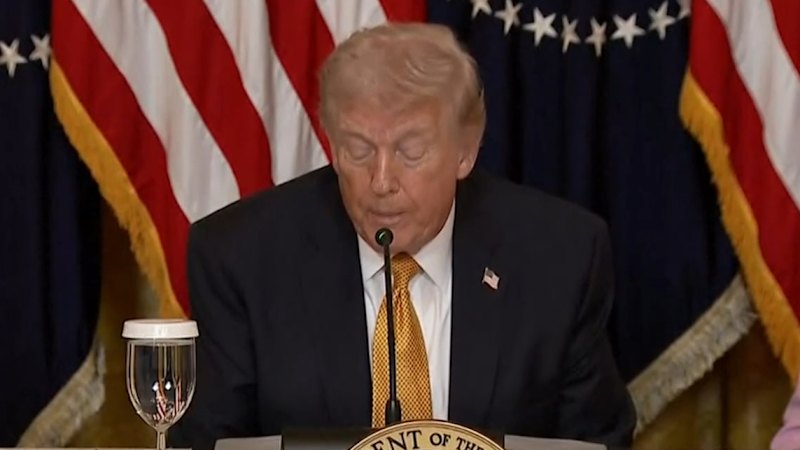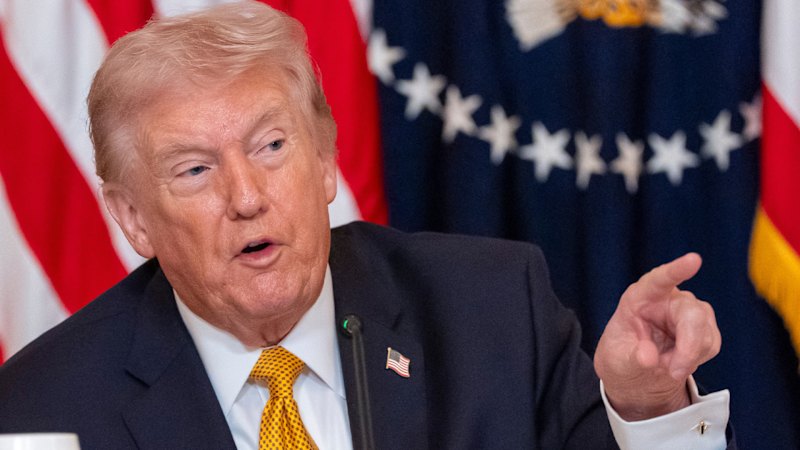
The media is currently hyperventilating over Donald Trump’s recent disclosure regarding a congressman’s terminal illness. They call it a lapse in judgment. They call it a breach of decorum. They are wrong. This isn't a mistake or a slip of the tongue. It is the final, brutal execution of an old-world concept: the right to a private death for public servants.
When Trump stood before a crowd and announced that a sitting member of Congress might be "dead by June" based on private medical projections, he didn't just break a social contract. He signaled a new era where biological data is just another weapon in the political arsenal. If you think this is just about one man’s lack of a filter, you are missing the structural shift happening in how we view the bodies of those who govern us.
The Myth of the HIPAA Shield
Every armchair expert on social media immediately screamed "HIPAA violation." Let’s clear that up right now. HIPAA—the Health Insurance Portability and Accountability Act—applies to "covered entities" like doctors, hospitals, and insurance companies. It does not apply to a politician recounting a conversation.
The real issue isn't a legal statute; it's the total collapse of the "gentleman’s agreement" regarding health in Washington. For decades, the DC press corps and the political establishment maintained a quiet pact. If a senator was fading, or a representative was battling a grim diagnosis, it was treated with a somber, protective silence until the family chose to speak.
That pact is dead.
By turning a terminal prognosis into a campaign trail anecdote, Trump has signaled that health status is now fair game for public consumption and political leverage. We have moved from the era of "get well soon" cards to the era of "death clocks" used as rhetorical flourishes.
Biological Transparency is the New Standard
We pretend to be shocked, but the public has been demanding this for years. We demand cognitive tests for aging leaders. We demand full physical disclosures from presidential candidates. We have spent the last decade arguing that the "right to know" outweighs the "right to privacy" when it comes to the people holding the levers of power.
Trump simply took that logic to its natural, ugly conclusion. If a congressman is too sick to finish a term, or if their "expiration date" affects a committee vote or a narrow majority, why shouldn’t the public know? That is the brutal, contrarian logic at play here.
I’ve watched political cycles for twenty years, and the trend line is clear. We are moving toward a world of "Biological Transparency." In this world, a person’s cellular integrity is considered public data if they are on the public payroll. Trump didn't invent this demand; he just stopped pretending he was too polite to satisfy it.
The Weaponization of Mortality
The danger here isn't just the "meanness" of the comment. It’s the tactical use of mortality to create a sense of inevitability or weakness. When you tell a crowd that a peer is terminal, you aren't sharing news. You are deleting that person from the political equation before they have actually left the room.
It is a form of political ghosting. By announcing the "June" deadline, Trump effectively rendered that congressman a lame duck in the most literal, biological sense. Why negotiate with a man who won't be here in ninety days? Why honor his policy positions?
This is the "nuance" the standard news reports are failing to capture. They see a gaffe. I see a cold, effective stripping of power through the publicizing of a private physical failure.
Why the "Privacy" Argument is Losing
- The Accountability Trap: Voters increasingly view health as a performance metric. A failing body is seen as a failing office.
- The Information Vacuum: In the absence of official updates, rumors fill the void. Trump’s disclosure simply bypasses the gatekeepers.
- The End of Decorum: Social media has rewarded "the raw truth" over "polite fiction" for so long that the public now craves the bluntness, even when it’s cruel.
Imagine a scenario where every candidate’s medical records are leaked via a blockchain-verified hack. The public wouldn't look away in shame; they would refresh the page. We have developed a voyeuristic obsession with the frailty of our leaders.
The Cost of the "Truth"
There is a massive downside to this shift that nobody wants to admit. When we treat terminal illness as a political talking point, we ensure that only those who can perfectly hide their flaws—or those who are pathologically healthy—can survive the scrutiny. We lose the wisdom of those who are facing their own mortality, replaced by a theater of eternal vigor.
We are teaching future leaders that if they get sick, they must lie. They must hide. They must mask their symptoms until the very end, for fear that a colleague will use their diagnosis as a punchline at a rally. We are incentivizing a culture of medical dishonesty.
The competitor articles want to talk about "empathy" and "respect." Those are dead concepts in the current political climate. The real story is that the wall between the doctor's office and the debate stage has been bulldozed.
Don't wait for a return to normalcy. Normalcy was a consensus that both sides decided to abandon. When a person’s death becomes a data point for a stump speech, the transformation of the human being into a political asset is complete.
Stop looking for an apology. Start looking at your own medical records and wonder how long it will be before your boss, your rival, or your neighbor decides that your "dead by June" status is exactly what their narrative needs.
The era of the private patient is over; the era of the public specimen has begun.