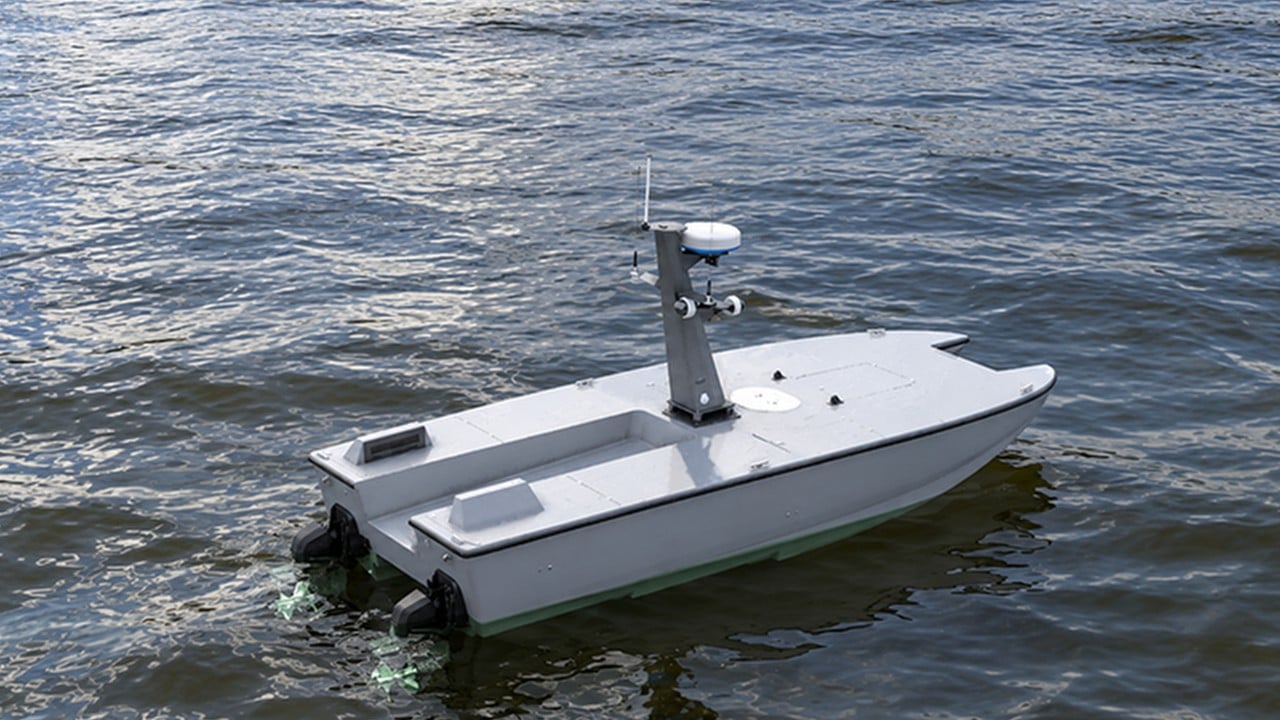
Sending a multi-million-dollar frigate out every time a Chinese coast guard cutter or survey ship pokes at Taiwan's waters burns out crews fast. That's the math behind why Taiwan is leaning hard into US drone boats and autonomous maritime systems to monitor rising mainland Chinese sea activity.
When more than 100 Chinese naval and coast guard vessels operate across surrounding waters during heightening pressure campaigns, human crew fatigue becomes a real strategic liability. Unmanned surface vessels, or USVs, promise persistent eyes on the water without putting sailors in harm's way every single day. Don't forget to check out our recent coverage on this related article.
Still, I think a lot of hype around "drone boats" skips the messy engineering reality. A small one-way attack craft isn't a magic wand for months of gray-zone patrols, brutal winter monsoons, or heavy island resupply. If you're watching how maritime deterrence around Taiwan is actually evolving, the real story sits at the intersection of shipyards, autonomy software, and cold operational trade-offs.
What Beijing Is Actually Doing at Sea
Pressure around Taiwan rarely looks like a neat, single-day invasion script. Instead, it often plays out as persistent gray-zone coercion, large-scale naval and coast guard deployments, simulated quarantine or blockade maneuvers, and undersea surveying. To read more about the background of this, Wired provides an informative breakdown.
Taiwan's leadership has flagged unannounced exercises and sweeping formations involving over 100 Chinese naval and coast guard ships operating around the island and into the Western Pacific. Even when drills stop short of kinetic strikes, they force Taiwan's navy and coast guard to surge ships, burn fuel, and track dozens of moving contacts simultaneously.
Meanwhile, US defense assessments have highlighted China's ability to pressure Taiwan through blockades or quarantines alongside seabed mapping and undersea sensing. Tracking gray-zone vessels is one problem; surviving in an environment packed with electronic warfare, jammed GPS, and heavy surface traffic is a completely different beast.
Why US Drone Boats Are Surging Into Taiwan's Maritime Plans
The appeal of unmanned surface vessels is pretty straightforward. You get speed, lower unit cost compared to crewed warships, and the ability to keep hulls on station for extended windows without rotating a full ship's company.
Rather than treating Taiwan purely as an overseas buyer waiting years for finished hardware, American autonomy and shipbuilding firms have increasingly tied up with Taiwanese yards and defense researchers to co-develop and build vessels locally. For instance, Naval News reported on STR8 Industries unveiling its Taiwan-built Ghostwake USV with claims of up to 55-knot sprint speed, seven-day endurance, a 350-kilogram payload capacity, and plans around Kaohsiung shipyards. Separately, Havoc announced a strategic partnership with Taiwan's major shipbuilder CSBC Corporation to field autonomous surface vessels designed to operate collaboratively even when communications degrade.
On the policy side, Taiwan's defense planning has pushed toward large numbers of unmanned platforms—including coastal reconnaissance and attack drones alongside one-way attack USVs—backed by major supplementary defense budget requests aimed at building initial combat capabilities around 2027. If you've watched Ukraine use exploding sea drones in the Black Sea, it's easy to see why planners want numbers. Mass changes the cost curve when an adversary has bigger hulls and deeper magazines.
Three Gaps Small Attack Drone Boats Won't Fix
Here's where I push back on the "drone boats solve everything" narrative. Having watched how naval experiments play out in real weather, a tender for small attack or kamikaze USVs leaves glaring operational gaps.
First, rough sea states punish small hulls. The Taiwan Strait isn't a calm lake, especially when winter northeast monsoons kick up steep chop. Small unmanned boats can get battered, lose sensor clarity, or struggle to maintain speed and seakeeping when waves climb.
Second, attack craft and persistent surveillance aren't the same job. Shadowing Chinese coast guard or maritime militia vessels day after day takes endurance, clean sensor fusion, and reliable command links over weeks—not just a sprint with a warhead.
Third, mine work and outlying island logistics need heavier muscle. Keeping frontline islands supplied or clearing and laying naval mines requires payload weight and stability that tiny, attritable surface drones simply aren't built to deliver. A 350-kilogram payload class is useful for plenty of missions, yet moving tons of supplies to an outlying garrison demands a different hull altogether.
The Hidden Bottlenecks Behind the Headlines
Building a sleek prototype for a defense expo is one thing. Scaling thousands of reliable, combat-ready unmanned boats in a contested strait is another.
- Software and integration lag hulls: Shipbuilding can move faster than getting sensors, autonomy algorithms, radio links, and human-machine interfaces to work together cleanly under stress.
- Supply chains can't touch Chinese parts: Commercial drone and marine electronics often lean heavily on Chinese components, which creates an obvious security non-starter for Taiwan's defense and coast guard fleets.
- Contested electromagnetic environments break naive autonomy: If GPS is spoofed or jammed and datalinks get contested, a boat that only knows how to follow a neat waypoint map will drift off mission or get lost.
- Budget debates slow delivery: Defense procurement in democratic systems runs into legislative reviews, funding shifts, and shifting timelines, meaning paper targets don't automatically turn into waterborne squadrons overnight.
Honestly, the biggest mistake people make is judging a drone program by its top speed or flashy demo video. In maritime operations, mean time between failures in salt spray and electronic noise matters way more than brochure numbers.
Practical Next Steps If You're Tracking This Space
Whether you're a defense analyst, supply-chain researcher, journalist, or investor trying to separate signal from noise around Taiwan's USV push, focus on concrete indicators rather than announcements.
- Track sea-trial conditions, not just spec sheets: Look for reporting on trials conducted in rough weather, heavy traffic, and GPS-denied or jammed conditions, since calm-water runs prove very little.
- Watch local production and non-Chinese sourcing: Pay attention to shipyard capacity in places like Kaohsiung and how companies verify supply chains free of restricted components.
- Separate surveillance, logistics, and strike roles: When reading about new contracts or budgets, check which specific mission a vessel actually serves instead of lumping all "drone boats" into one bucket.
- Follow budget approvals and exercise integration: Watch how legislative funding gets finalized and whether unmanned boats are woven into live coast guard and naval drills rather than sitting on the sidelines.
At the end of the day, US drone boats can take real pressure off crewed ships and complicate any gray-zone or blockade playbook. They won't replace larger ships, manned aircraft, or coastal defenses—and pretending they will only sets expectations up to fail when the weather turns nasty.