The ice in the tumbler melted fast under the Sevastopol sun. For decades, that specific clinking sound—ice against glass, backdropped by the gentle, rhythmic lap of the Black Sea—was the soundtrack of a very particular kind of status. To affluent Muscovites and elite bureaucrats, Crimea was not just a geographic peninsula. It was an escape hatch from the gray realities of northern winters. It was the Soviet Riviera, reborn as a modern playground of luxury dachas, boardwalks scented with roasted meat, and beaches packed shoulder-to-shoulder with vacationers seeking a tan and a temporary reprieve from history.
But history has a way of crashing through the surf.
Consider a hypothetical traveler. Let us call him Alexei. In the summer of 2023, Alexei took his family on the long drive from Rostov-on-Don across the Kerch Strait Bridge. He ignored the warnings on social media channels. He brushed aside the vague anxieties whispered by his colleagues. To Alexei, Crimea was safe. It was heavily fortified, wrapped in layers of sophisticated anti-aircraft umbrellas, and occupied by a military force that felt permanent. He wanted the warm waters of Yalta. He wanted the nostalgia.
Then came the afternoon the sky tore open.
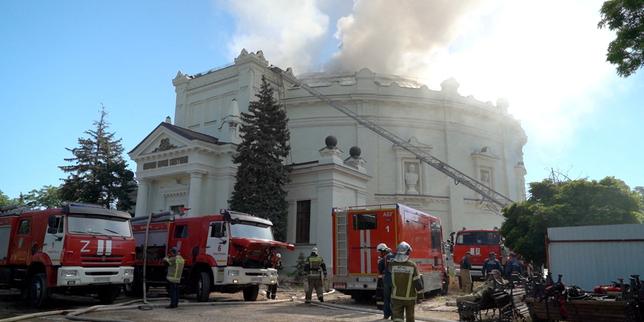
Alexei was lying on a rented sun lounger when a low, vibrating hum shook the pebbles beneath his towel. It was not thunder. The sky was violently blue. Within seconds, the horizon erupted into black plumes as a Ukrainian Neptune missile slammed into a nearby naval repair yard. The sunbathers did not move at first. They froze, caught in a surreal paralysis between a luxury holiday and an active war zone. A woman in a neon bikini stood up, clutching a melting ice cream cone, staring at the smoke.
That is the moment the illusion shattered. The playground had reverted into what it always fundamentally was: a fortress, a prize, and a target.
The Geography of Belonging
To understand how a paradise becomes a firing range, one must look at the geography of the peninsula. It is an emerald diamond anchored to the southern tip of Ukraine by a tiny, fragile strip of land called the Perekop Isthmus. For centuries, empires have looked at this diamond and coveted it. The Tsars fought the British and French for it. Stalin cleared out its indigenous population to remake it in his own image. In 2014, the Russian Federation seized it in a swift, bloodless operation that set the stage for everything happening today.
For eight years after the annexation, Moscow poured billions into the peninsula. They built highways. They erected the massive Kerch Bridge, a physical manifestation of an eternal bond. They turned Sevastopol into the crown jewel of their maritime power, the home of the Black Sea Fleet.
For the average Russian tourist, this military presence was reassuring. It felt like part of the scenery, as traditional as the local sweet onions sold by the roadside. You could eat oysters at a waterfront restaurant while watching a missile frigate glide majestically out of the harbor. It felt powerful. It felt untouchable.
But military hardware is only reassuring until it becomes a lightning rod.
Ukraine looked at the same geography and saw something else. They saw a giant, overextended supply base. They saw an occupying force dependent on a few vulnerable arteries—chiefly that multi-billion-dollar bridge and a single railway line running through occupied southern territories. If those arteries could be squeezed, the fortress would transform from an asset into an unsustainable burden.
The Anatomy of the Long Range
The shift happened gradually, then all at once. It began with whispers, sabotage operations in the dead of night, and mysterious explosions at ammunition depots deep within the interior. The Russian authorities blamed dropped cigarettes and accidental fires. The tourists wanted to believe them. They stayed on the beaches, plugging their ears to the distant thuds.
Then the technology changed. Western long-range precision missiles arrived in Ukrainian hands. Homemade naval drones, sleek and dark, began terrorizing the shipping lanes.
What followed was a masterclass in asymmetric warfare. A nation without a functional navy of its own began systematically dismantling a regional superpower’s fleet. They did not do it with massive, cinematic naval battles. They did it with patience, intelligence, and a cold, calculated awareness of the human element.
Think about the psychological toll of this transformation. A vacation destination relies entirely on peace of mind. You cannot relax when you have to calculate the flight time of a Storm Shadow missile between your breakfast and your swim. You cannot enjoy a boardwalk stroll when the air defense systems on the hilltops are constantly painting the night sky with streaks of fire.
The strategy was brilliant in its cruelty. By striking the naval headquarters in Sevastopol, the airfields in Saky, and the logistics hubs in Dzhankoi, Ukraine sent a clear message to every civilian who had moved there after 2014: This is not your home. You are not safe here.
The Echoes in the Sand
The tourism numbers tell a story that official press releases try to hide. The luxury hotels that once required reservations six months in advance began offering massive discounts. The traffic on the Kerch Bridge became a barometer of panic. Whenever an air raid siren sounded, the bridge was closed, creating miles of idling cars filled with terrified families trying to escape back to the Russian mainland.
The locals—those who lived there before 2014 and those who remained—watch this play out with a complex mixture of dread and quiet satisfaction. For some, the arrival of the war on their doorsteps is a terrifying escalation that threatens their livelihoods. For others, it is the beginning of an eviction notice they have been waiting a decade to see served.
Consider the reality of living under a sky that is no longer yours. The radar stations that once scanned the Black Sea for regional dominance are now being picked off one by one. The advanced S-400 anti-aircraft batteries, worth hundreds of millions of dollars, have become targets themselves, hunted down by American-made ATACMS missiles.
Every time a radar dish is destroyed, a blind spot opens up in the sky. Through those blind spots fly more drones, more missiles, more reminders that the geography of war is shifting.
The Hardened Heart of the Riviera
There is a profound irony in what has become of Crimea. It was seized to project power across the Mediterranean and into the Middle East. It was meant to be an unsinkable aircraft carrier, a symbol of a revived empire. Instead, it has been bottled up. The Black Sea Fleet has largely retreated, pulling its most valuable ships away from Sevastopol to safer, more distant ports like Novorossiysk on the Russian mainland.
The ships left because the harbor was no longer a sanctuary. It was a trap.
What remains is a landscape of nervous anticipation. The beaches are still there. The water is still an impossibly deep shade of blue. But the sunbathers are fewer now, replaced in many areas by dragon’s teeth fortifications and trenches dug directly into the sand. The authorities have built concrete shelters along the promenades, painted with bright signs pointing toward safety.
Imagine sitting on a terrace, looking out over the water where Tsars and Soviet Premiers once vacationed, knowing that beneath the surface, explosive-laden sea drones are hunting.
This is the real victory of the Ukrainian campaign. They did not need to launch an amphibious invasion to change the reality of the peninsula. They merely had to make the cost of holding it unacceptably high. They had to strip away the glamour, the comfort, and the security, leaving behind nothing but the bare, cold machinery of an occupation under siege.
The sun still sets over the Black Sea, casting a long, golden light across the hills of Yalta. But the tourists are looking at the sky, listening not to the waves, but for the distant, unmistakable whistle of incoming reality. The Riviera is gone. Only the battlefield remains.