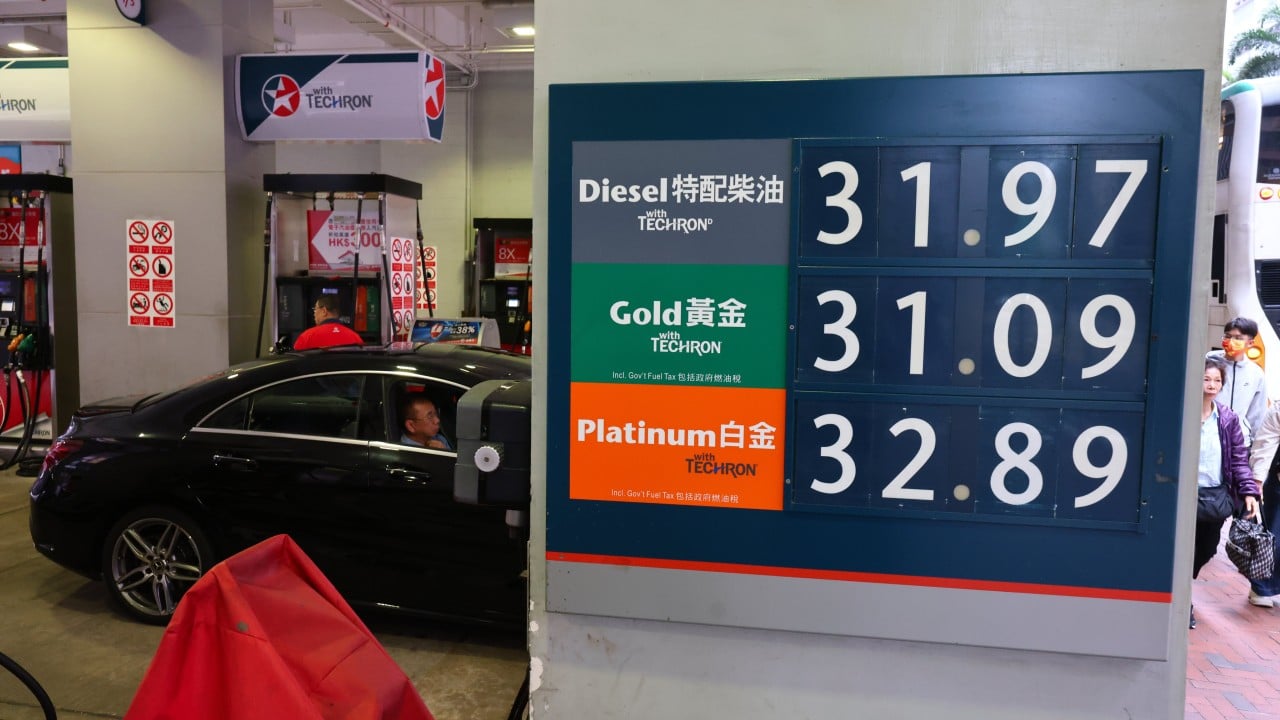
The Hong Kong government’s intervention in the transport sector through subsidies and fee waivers represents a critical attempt to decouple essential logistics costs from volatile global energy benchmarks. In an economy where transport constitutes a foundational layer of the Consumer Price Index (CPI) and total operational expenditure for small-to-medium enterprises (SMEs), fuel price volatility is not merely a sectoral issue but a systemic risk to price stability. The effectiveness of these measures depends entirely on the transmission mechanism between government liquidity and the actual marginal cost of operation for carriers.
The Tri-Lens Framework of Transport Intervention
To analyze the impact of fuel subsidies and fee waivers, one must categorize the intervention into three distinct economic levers:
- Liquidity Injection: Direct subsidies that offset the immediate cash flow drain caused by rising input costs.
- Fixed Cost Abatement: The removal of licensing and administrative fees which lowers the break-even threshold for operators regardless of their fuel consumption.
- Inflationary Buffer: The psychological and structural capping of fare increases that would otherwise be passed on to the public, preventing a secondary inflationary spiral.
The logic here is defensive. By absorbing a portion of the operational risk, the state prevents a mass exit of logistics providers which would result in a supply-side shock far more damaging than the fiscal cost of the subsidy itself.
The Cost Function of Urban Logistics
In the context of Hong Kong, the cost of a single transport unit—be it a minibus, taxi, or logistics truck—is defined by a rigid cost function where fuel is the primary variable.
$Total Cost = Fixed Costs (Licensing, Insurance, Depreciation) + Variable Costs (Fuel, Maintenance, Labor)$
When Brent Crude or local refined diesel prices spike, the Variable Cost component expands. In a high-density environment like Hong Kong, these costs are exacerbated by idling time in traffic and the stop-start nature of urban deliveries. The government’s fee waiver strategy targets the Fixed Cost component to provide breathing room, while the fuel subsidy targets the Variable Cost.
The disconnect in previous iterations of such policies often stems from the "Rebound Effect." If subsidies are too generous, operators lack the incentive to optimize routes or upgrade to more fuel-efficient fleets. However, the current economic climate suggests that these measures are intended as a survival bridge rather than a long-term incentive structure.
Revenue Elasticity and the Fare Ceiling
Public transport operators face a unique constraint: price inelasticity of supply versus price elasticity of demand. While commuters need transport, significant fare hikes often lead to political instability or a shift in consumption patterns that can damage the retail and service sectors.
The government’s decision to waive fees is a method of synthetic price capping. By reducing the overhead for the operator, the state removes the immediate justification for fare increases. This is a crucial distinction. The subsidy is not "free money" for the operator; it is a pre-emptive payment to secure price stability for the end-user.
The primary risk in this model is Fiscal Drag. Every dollar spent on transport subsidies is a dollar diverted from infrastructure investment or social services. The sustainability of this model relies on the assumption that energy prices will mean-revert within a specific fiscal cycle. If energy prices remain elevated for more than 18 to 24 months, the subsidy becomes a permanent transfer payment that distorts market signals and discourages the transition to electric vehicles (EVs).
Supply Chain Transmission and SME Stability
The transport sector is the circulatory system of the Hong Kong economy. SMEs, particularly those in the food and beverage and retail sectors, are hyper-sensitive to "last-mile" delivery costs.
- Upstream Impact: Refined fuel prices dictate the wholesale cost of goods.
- Midstream Impact: Logistics providers determine the margin for distributors.
- Downstream Impact: Final retail prices affect consumer purchasing power.
A failure to support the midstream (transport) results in a "Bullwhip Effect" where a 10% increase in fuel costs results in a 15-20% increase in retail prices as each layer of the supply chain adds a risk premium. By stabilizing the transport layer, the government effectively dampens this volatility before it reaches the consumer.
Bottlenecks in Policy Execution
While the theoretical framework is sound, the execution faces two major structural bottlenecks:
1. The Disparity of Scale
Large-scale bus operators have different capital structures than independent taxi drivers or small van fleets. A flat fee waiver benefits the small operator proportionally more than the large one, whereas a volume-based fuel subsidy favors the large operator with higher fleet utilization. If the policy does not differentiate between these segments, it risks over-subsidizing efficient players while failing to save the most vulnerable.
2. Administrative Lag
The time between a fuel price spike and the disbursement of a subsidy can be several months. For an independent operator with thin cash reserves, this lag can be fatal. The efficacy of the Hong Kong rollout will be measured not by the total dollar amount, but by the velocity of capital.
The EV Transition Conflict
There is an inherent contradiction between short-term fuel subsidies and long-term decarbonization goals. By lowering the cost of operating internal combustion engine (ICE) vehicles, the government inadvertently extends their economic life. This creates a "Carbon Lock-in."
To mitigate this, the subsidy must be coupled with a sunset clause or a tiered system where the benefits for ICE vehicles diminish over time while incentives for EV adoption increase. Without this, the transport sector remains tethered to global oil markets, ensuring that the government will have to repeat this fiscal intervention during the next energy cycle.
Measuring Success Beyond the Headline
The success of these transport measures should be quantified using a Net Transport Cost Index (NTCI), which accounts for:
- The delta between global oil price increases and local transport inflation.
- The change in the "Business Failure Rate" within the logistics sector during the subsidy period.
- The correlation between transport subsidies and the stability of the "Food and Non-Alcoholic Beverages" component of the CPI.
If the NTCI remains stable while global prices rise, the intervention is technically successful, even if it appears as a net loss on the government's balance sheet.
Strategic Path for Operators and Policy Makers
Operators must treat these subsidies as a temporary liquidity bridge rather than a permanent change to their business model. The strategic imperative is to use the period of stabilized costs to audit operational efficiency.
- Route Optimization: Implementing telematics to reduce idling time, which remains the largest uncompensated fuel drain in the Hong Kong geography.
- Credit Hedging: Using the cash flow freed up by fee waivers to secure better terms on fuel hedging or to pay down high-interest equipment debt.
- Fleet Diversification: Shifting capital expenditure toward smaller, more efficient units or electric alternatives where the total cost of ownership (TCO) is becoming increasingly competitive despite the initial hardware cost.
For the government, the focus must shift from blanket waivers to Precision Subsidies. Utilizing data from electronic payment systems (like Octopus) and fuel cards allows for a more granular understanding of which operators are under the most pressure. Future interventions should be triggered automatically by price indices rather than requiring legislative cycles, creating a more responsive and predictable economic environment.
The current rollout provides a necessary buffer, but the structural vulnerability to energy imports remains. The next logical move is the integration of transport subsidies with the broader energy security strategy, moving away from reactive fiscal spending toward proactive infrastructure resilience.
Operators who fail to modernize during this subsidized window will find themselves uncompetitive the moment the fiscal floor is removed. Survival depends on translating this temporary reprieve into permanent efficiency gains.