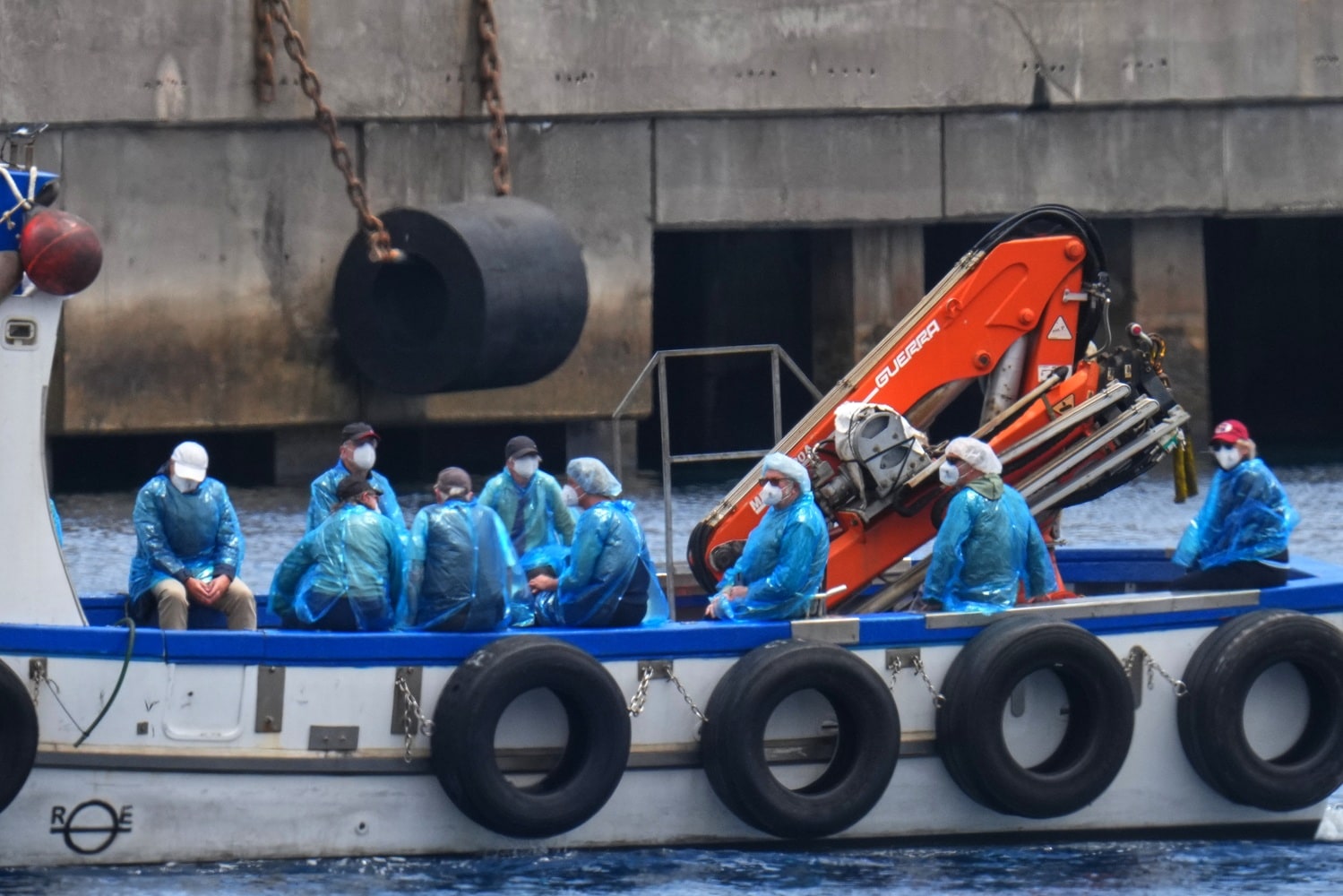
The failure of a quarantine protocol is rarely the result of a single mechanical error; it is the cumulative effect of cascading procedural lapses in the transition between isolation zones. When passengers exposed to Hantavirus are transported via evacuation buses without fitted respiratory protection, the "biocontainment chain" suffers a terminal break. This specific failure mode demonstrates a misunderstanding of viral transmission physics and the operational friction inherent in mass transit evacuations. Effective containment requires a zero-tolerance approach to the "leakage" of potentially infected biological agents into shared airspaces, particularly in high-density vehicles where airflow is recycled.
The Mechanics of Hantavirus Transmission and the Aerosol Fallacy
Containment strategies often fail because they treat viral transmission as a binary state rather than a fluid mechanical problem. Hantavirus, primarily known for Hantavirus Pulmonary Syndrome (HPS), is traditionally associated with the inhalation of viral particles from rodent excreta. However, in a cruise ship or evacuation context, the risk profile shifts toward environmental persistence and the potential for rare but catastrophic person-to-person transmission, as seen in specific strains like the Andes virus.
The effectiveness of a mask is defined by two variables: filtration efficiency and the seal integrity. A "fitted" mask—specifically an N95 or FFP3 respirator—functions by creating a physical pressure seal against the dermis. When passengers wear loose-fitting surgical masks or, worse, remain unmasked in a confined bus, the filtration efficiency drops toward zero. The bus becomes a mobile incubation chamber where the Air Exchange Rate (AER) is insufficient to dilute viral load.
The Dilution Equation in Transit
In a standard evacuation bus, the volume of air per passenger is restricted. If we apply the principle of Volumetric Airflow (Q), the risk of infection $(R)$ can be modeled as a function of the concentration of viral particles $(C)$ and the duration of exposure $(t)$:
$$R \propto \int_{0}^{t} C(t) dt$$
When masks are not fitted, $C$ increases exponentially within the cabin. The lack of a seal means that exhaled breath—which carries a higher velocity than ambient air—bypasses the filter media entirely through the gaps of least resistance (usually around the nose bridge and cheeks).
The Three Pillars of Containment Failure
To understand why evacuation protocols dissolve during execution, we must categorize the points of failure into three distinct operational pillars.
1. The Perimeter Transition Gap
The most dangerous moment in any quarantine is the "hand-off." In the transition from a ship’s medical ward to a land-based vehicle, the biological perimeter is temporarily broken. This is often where PPE (Personal Protective Equipment) compliance drops because personnel focus on the logistics of movement rather than the maintenance of the sterile field. If the transition protocol does not mandate a "seal check" before a passenger boards a secondary vessel or vehicle, the entire previous isolation period is rendered statistically irrelevant.
2. Environmental Confinement Stress
Evacuation buses represent a unique challenge in fluid dynamics. Unlike a ship’s cabin, which may have independent HVAC systems or HEPA filtration, a bus often utilizes a recirculating air system to maintain temperature. In a high-stress evacuation, passengers exhibit increased respiratory rates (tachypnea), which increases the shedding rate of any potential pathogen.
3. Human Compliance Degradation
The psychological fatigue of a cruise-ship quarantine leads to a "normalization of deviance." Passengers who have spent days in isolation begin to perceive the evacuation bus as the "end" of the risk period, leading to a relaxation in PPE discipline. If the staff overseeing the transfer do not enforce strict masking, the group follows the path of least resistance.
Quantifying the Breach: Why "Mask Fitted" is a Technical Requirement
A common misconception in public health reporting is that "wearing a mask" is a sufficient descriptor. In a clinical or high-risk evacuation, a mask that is not fitted is functionally equivalent to a symbolic gesture.
- Surgical Masks: Designed for fluid resistance and large droplet capture. They provide minimal protection against the fine aerosols characteristic of viral respiratory spread in enclosed spaces.
- Non-Fitted N95s: While the material captures 95% of particles, a 1% gap in the seal can allow up to 50% of the air to pass through unfiltered due to the pressure differential created during inhalation.
- Fitted Respirators: These require a quantitative fit test to ensure the Fit Factor—the ratio of the concentration of particles outside the mask to the concentration inside—is at least 100.
The presence of passengers on an evacuation bus without these seals creates a "Point Source" of contamination. If one individual is actively shedding Hantavirus, the probability of secondary infection among the cohort increases by a factor determined by the duration of the bus ride and the CADR (Clean Air Delivery Rate) of the vehicle’s ventilation system.
Logistical Friction vs. Biological Reality
The tension in these scenarios usually exists between the Logistical Throughput (moving people quickly) and Biological Integrity (moving people safely).
When authorities prioritize the speed of clearing a dock or an airport, they often bypass the granular checks required for PPE. A "fitted" mask takes 60 to 90 seconds per person to verify. For a bus of 50 passengers, that adds nearly an hour to the boarding process. In a high-pressure evacuation, command structures often view this hour as an unacceptable delay, failing to account for the months of contact tracing and healthcare costs generated by a single cross-infection during that transit.
The Cost Function of Protocol Laxity
The cost of a breach is not merely the medical treatment of the infected. It includes:
- Secondary Quarantine Requirements: Every person on that bus, including the driver and transit staff, must now be treated as a high-risk contact.
- Vehicle Decontamination: The bus must be taken out of service for deep cleaning with specialized virucidal agents, reducing the available fleet for further evacuations.
- Reputational Erosion: For the cruise line and the public health agency, the optics of an unmasked "quarantine" bus signal a lack of technical competence, which reduces future public compliance with health mandates.
Tactical Requirements for Future Bio-Transfers
To prevent the recurrence of the "unmasked bus" failure, evacuation strategies must move away from "best effort" masking and toward a rigid Biological Transport Framework.
Atmospheric Control
Vehicles used for the transport of high-risk cohorts should be modified to operate on a 100% outside air intake mode, disabling recirculation entirely. If the vehicle allows, windows should be opened to maximize natural air changes per hour (ACH), regardless of passenger comfort regarding temperature.
Supervised Donning Stations
The boarding area for any evacuation vehicle must be treated as a "Warm Zone" in HAZMAT terminology. A designated Safety Officer must perform a visual and, if possible, positive/negative pressure seal check on every passenger before they step onto the vehicle. This removes the burden of compliance from the passenger and places it on the operational system.
Cohort Stratification
Passengers should be seated based on their calculated risk level. Those with the highest probability of exposure must be placed in the rear of the vehicle, with the airflow moving from the front (cleanest air near the driver) to the back (exhaust). This uses the vehicle's internal pressure gradient as a secondary containment layer.
The Strategic Shift from Response to Engineering
The recurrence of unmasked or poorly masked passengers in evacuation scenarios suggests that current protocols are too dependent on human behavior and not enough on engineered safety. A protocol that can be bypassed by a tired passenger or an overworked bus driver is a failed protocol.
Future containment operations must treat the evacuation bus as a temporary extension of the hospital ward. This requires a shift in the procurement of transit services—moving away from standard charter buses and toward vehicles that can be fitted with portable HEPA scrubbers and partitioned driver cabins.
Until the logistics of the "last mile" of quarantine are treated with the same scientific rigor as the initial isolation on the ship, the risk of pathogen "spillover" during transit remains a predictable certainty. The goal is not just to move the passengers, but to maintain the integrity of the vacuum between the infected population and the public. Any deviation from a fitted, high-filtration respiratory seal is not a minor oversight; it is a total system failure.