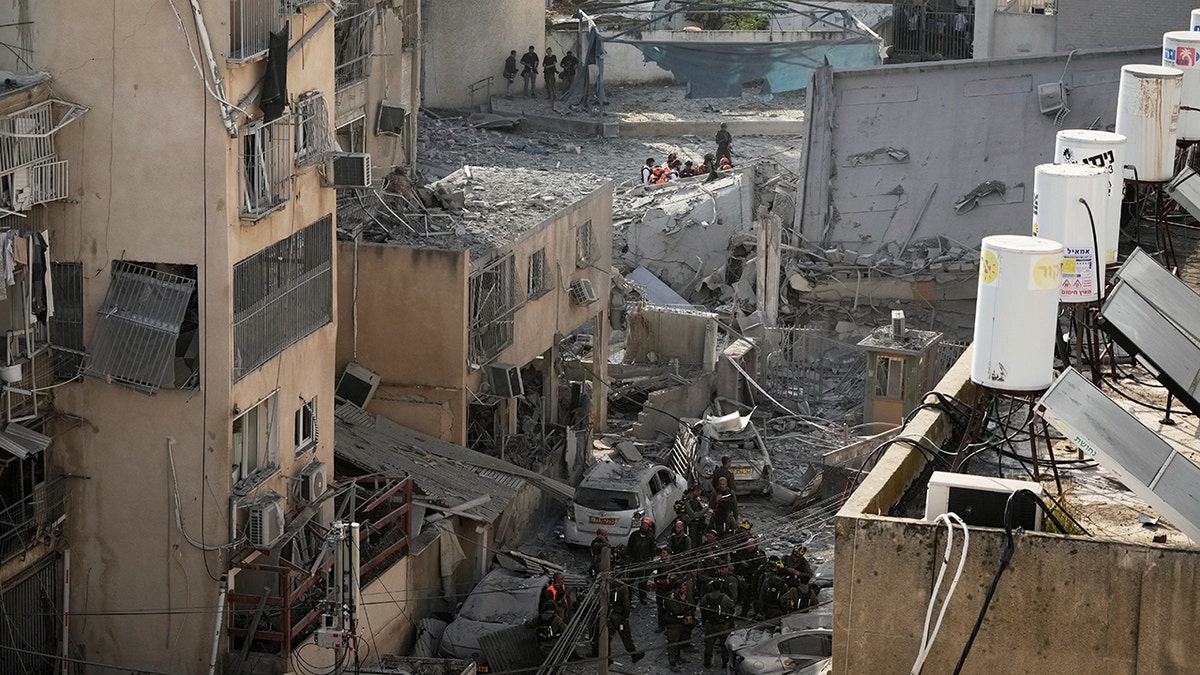
The targeted elimination of Esmaeil Khatib, Iran's Minister of Intelligence (MOIS), represents a shift from tactical attrition to structural decapitation within the Islamic Republic’s security apparatus. While previous kinetic actions by Israel focused on the Islamic Revolutionary Guard Corps (IRGC) external operations or nuclear scientists, the removal of the MOIS head strikes the primary node responsible for domestic stability and counter-espionage. This operation exposes a critical failure in the "Protection of Information" protocols and signals a deep penetration of the Iranian sovereign core. To analyze the impact of this event, one must evaluate the disruption through three specific vectors: institutional friction, the intelligence-security gap, and the erosion of the "deep state" deterrent.
The Institutional Friction Cost
The Ministry of Intelligence (MOIS) operates as the civilian counterbalance to the IRGC’s Intelligence Organization (SAS). Unlike the IRGC, which is a paramilitary entity, the MOIS manages the bureaucratic and administrative aspects of internal surveillance, informant networks, and judicial coordination. The sudden removal of Khatib introduces immediate institutional friction. In high-autocracy systems, transition periods are not merely administrative; they are periods of extreme vulnerability characterized by:
- Information Asymmetry: New leadership lacks the informal "handshake" agreements with regional directors that Khatib maintained over years. This creates a lag in the processing of signals intelligence (SIGINT) and human intelligence (HUMINT).
- Purge Reflex: Following a failure of this magnitude, the instinct of the Iranian regime is to conduct internal purges to locate "moles." This internal cannibalization further degrades operational capacity as veteran officers are sidelined or interrogated.
- Resource Paralysis: The MOIS budget and resource allocation are often tied to the personal political capital of the Minister. Khatib’s death freezes pending operations and shifts the power balance toward the IRGC-SAS, potentially leading to redundant or conflicting domestic security policies.
The Intelligence-Security Gap
The success of the operation suggests that the Israeli intelligence community (likely Mossad) has achieved what is known as "Persistent Access." This is not a one-off breach but a continuous presence within the communications or physical infrastructure of the Iranian leadership.
The mechanism of such an operation requires a convergence of three specific capabilities:
- Near-Real-Time Geolocation: Tracking a cabinet-level official requires high-cadence satellite imagery or, more likely, a compromised mobile device or vehicle tracking system.
- Kinetic Precision: The ability to deliver a payload in a high-security environment—likely Tehran or a secure government compound—without collateral damage that would alert the target prematurely.
- Local Logistics: A "stay-behind" network of agents capable of providing the "eyes on target" verification necessary to greenlight the strike.
This creates an "Intelligence-Security Gap." The Iranian state is currently unable to secure its highest-value human assets, which suggests that their encryption standards, physical security perimeters, or personnel vetting processes have been fundamentally compromised. When the Minister of Intelligence cannot protect himself, the psychological effect on the rest of the cabinet is one of pervasive paranoia, which is often as effective as the strike itself in slowing down government functions.
The Erosion of the Deep State Deterrent
The Iranian security architecture relies heavily on the "Aura of Omniscience." The MOIS projects an image of being everywhere, seeing everything. By killing the man at the top of this pyramid, Israel has mathematically demonstrated the limits of this omniscience.
We can categorize the resultant decay of deterrent power into two specific functions:
The Counter-Espionage Failure Function
If $P(s)$ is the probability of a successful strike and $C(i)$ is the complexity of the intelligence apparatus, the current state shows that:
$$P(s) \propto \frac{1}{\ln(C(i))}$$
As the complexity of the Iranian bureaucracy increases, it creates more "noise" and more opportunities for infiltration. The MOIS has become a victim of its own scale, where the layers of bureaucracy meant to ensure loyalty instead provided more points of entry for foreign intelligence services.
The Regional Proxy Feedback Loop
The MOIS provides critical support to the "Axis of Resistance" (Hezbollah, Hamas, Houthis) in the form of secure communications and financial laundering. A decapitated MOIS cannot effectively vet the communications of its proxies. This creates a ripple effect where proxies may begin to doubt the security of the Iranian "mother ship," leading to a fragmentation of the regional strategy as groups prioritize their own survival over Tehran’s directives.
Technological Vulnerability and the SIGINT Overhaul
The MOIS under Khatib had invested heavily in domestic cyber-surveillance systems, largely sourced from Chinese or indigenous suppliers. However, the strike indicates a failure of these systems to detect the technical signatures of an incoming operation.
The technological failure points include:
- Electronic Countermeasures (ECM) Bypass: Israeli assets have demonstrated the ability to operate within frequencies or using low-probability-of-intercept (LPI) signals that Iranian sensors cannot categorize as threats until the terminal phase of an attack.
- Supply Chain Infiltration: There is a high probability that the hardware used by the MOIS—from secure phones to the servers in the ministry building—contains "logic bombs" or backdoors established at the point of manufacture or during transit.
Structural Recommendation for Regional State Actors
For actors observing this development, the strategic takeaway is that physical security is now secondary to digital and personnel integrity. The Iranian model of "quantity over quality" in its security personnel has proven ineffective against a highly digitized, high-precision adversary.
The immediate tactical move for the Iranian state will be an attempt at a "spectacular" retaliation to restore the perception of parity. However, the structural reality is that until the MOIS can perform a total audit of its human and technical infrastructure—a process that takes years—the Iranian leadership remains in a state of "unprotected transparency."
The most effective strategy for the regime now is not a direct military response, which risks further exposing their technological inferiority, but a "Dark Period"—a total shutdown of high-level digital communications and a return to analog, courier-based command and control. This "strategic regression" is the only way to nullify the persistent digital access currently enjoyed by their adversaries.
The replacement for Khatib must be viewed not as a political appointee, but as a forensic investigator tasked with dismantling the existing ministry to find the rot. Failure to do so ensures that the MOIS will remain an asset for foreign intelligence rather than a shield for the Islamic Republic.