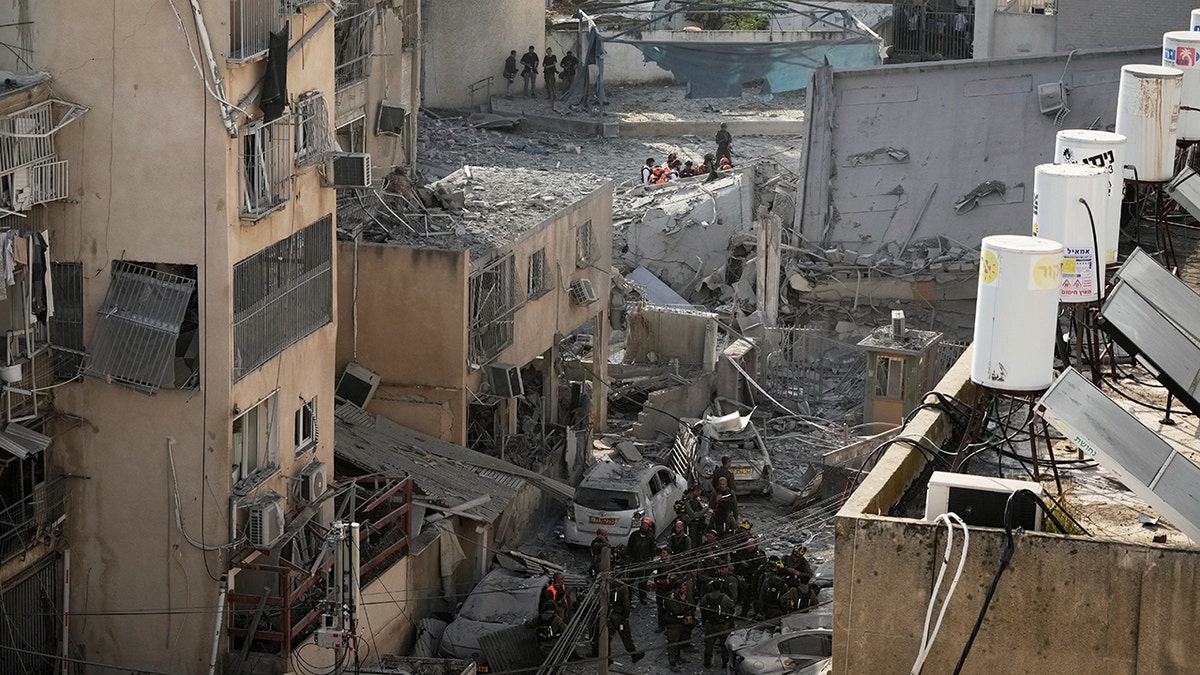
The internal security apparatus of the Islamic Republic of Iran has effectively collapsed. Within a frantic forty-eight-hour window, the targeted elimination of Intelligence Minister Esmail Khatib marks the third high-ranking official to be struck down on sovereign Iranian soil. This is not merely a tactical victory for Israeli intelligence; it is a total surgical removal of the brain trust responsible for Iran’s domestic and foreign security.
For decades, the Ministry of Intelligence (MOIS) and the Intelligence Organization of the Islamic Revolutionary Guard Corps (IRGC-IO) operated under the assumption that their inner sanctums in Tehran were impenetrable. That illusion is dead. The death of Khatib, following the reported assassinations of two other top-tier security architects, suggests that the Mossad has achieved a level of penetration that renders the Iranian state's "security" label a mockery. We are witnessing the systematic dismantling of a regional power’s nervous system in real time.
The Breach Within the Ministry
The removal of Esmail Khatib is particularly devastating because he was the bridge between the traditional intelligence bureaucracy and the ideological hardliners of the IRGC. Unlike his predecessors, Khatib was tasked with "purifying" the ranks—rooting out the very spies who eventually facilitated his own death.
To understand the magnitude of this failure, one must look at the mechanics of the strike. High-level ministers in Tehran do not travel in soft-skinned vehicles or follow predictable patterns. They move in armored convoys, surrounded by signals-jamming equipment and elite bodyguards. For a strike to succeed against a sitting Intelligence Minister, the attackers required more than just satellite imagery. They needed live, ground-level human intelligence from within his personal detail.
The "how" is likely a combination of high-end cyber-kinetic warfare and old-school bribery. While the world focuses on F-35s and long-range missiles, the real work was done months ago through the infiltration of the MOIS communications servers. By the time the physical strike occurred, the target’s location was likely being broadcast to a drone or a hidden cell of operatives via his own encrypted handheld device.
A Triple Strike Strategy
Israel’s decision to execute three high-profile assassinations in two days signals a shift from "containment" to "decapitation." This was a sequence.
The first two hits targeted the logistical and operational heads—the men who move the money and the weapons. These strikes served to create a vacuum of communication. In the ensuing chaos, when the remaining leadership scrambled to secure their positions and "check in" with their superiors, they created a massive electronic footprint. Khatib, in his attempt to manage the crisis, likely exposed himself.
- The First Hit: Targeted a senior IRGC commander responsible for regional coordination. This blinded the "external" eye of the state.
- The Second Hit: Eliminated a technical director of the missile program. This paralyzed the "retaliatory" arm.
- The Third Hit (Khatib): Struck the "internal" eye. Without a functioning Intelligence Minister, the regime cannot even trust its own internal reports on who is still alive or who has turned traitor.
The Myth of Iranian Counter Intelligence
For years, Tehran has touted its "Oghab" (Eagle) surveillance system as a world-class shield. They claimed they could track every "Zionist element" within their borders. These claims have been exposed as vanity projects.
The reality is that the Iranian security state is riddled with economic desperation and ideological fatigue. When inflation is rampant and the currency is in freefall, even the most loyal mid-level officers become susceptible to recruitment. It doesn't take a massive conspiracy to kill a minister; it takes one disgruntled technician with access to a GPS relay.
Furthermore, the technological gap has become an unbridgeable chasm. Israel’s use of autonomous platforms—AI-driven drones and remotely operated sniper systems—means that the "assassin" is often a piece of code or a silent motor miles away from the kill zone. Iran is fighting a 21st-century ghost war with a 20th-century mindset. They are looking for spies in alleyways while the spies are already inside their cloud servers.
The Regional Power Vacuum
With Khatib gone, the IRGC will likely move to absorb the Ministry of Intelligence entirely. This sounds like a consolidation of power, but in practice, it is a recipe for disaster. The MOIS and the IRGC have a long history of professional rivalry. By forcing them together under the pressure of an active assassination campaign, the Supreme Leader is creating a breeding ground for paranoia.
Who replaces a man who was killed despite having the highest security clearance in the land? Any successor will spend their first six months looking behind their own curtains rather than focusing on external threats. This paralyzes Iran’s "Axis of Resistance." Hezbollah, the Houthis, and various militias in Iraq rely on the MOIS for intelligence sharing and strategic guidance. If the head of the MOIS can’t protect himself in Tehran, he certainly cannot protect a militia commander in Beirut or Sana'a.
The Silence of the Neighbors
Note the reaction—or lack thereof—from regional players like Saudi Arabia, the UAE, and Qatar. While they will issue the standard diplomatic calls for "restraint," there is a quiet acknowledgement that the regional balance of power has shifted. The "Iranian Bogeyman" looks significantly less intimidating when its top officials are being picked off like targets at a shooting range.
This sequence of events also puts Russia and China in a difficult position. They have sold Iran radar systems and electronic warfare suites under the guise of "impenetrable" defense. These systems failed. If Russian-made S-400 components or Chinese surveillance tech couldn't save Esmail Khatib, the marketing brochures for those weapons systems suddenly look very expensive and very useless.
Technical Analysis of the Decapitation
How do you kill three people of this stature in 48 hours without being caught? You don't use a large team. You use "sleeper assets" that have been embedded for years, possibly decades.
We are looking at a masterclass in Operational Security (OPSEC). The strikes were likely synchronized through a "dead man's switch" protocol—once the first hit was confirmed, the subsequent targets were automatically engaged by separate, disconnected cells to prevent a leak from stopping the sequence.
The use of precision munitions in these strikes suggests a high level of confidence in the intelligence. A miss would have been a geopolitical catastrophe. The fact that all three targets were neutralized indicates that the attackers had a "100% certainty" threshold. That level of certainty only comes from having "eyes on" the target, likely through compromised CCTV networks or hacked personal smartphones that were turned into mobile bugs.
The End of the Shadow War
The "Shadow War" is no longer in the shadows. By killing the Intelligence Minister, Israel has moved the conflict into the sunlight. This is a direct challenge to the legitimacy of the Iranian government. If a state cannot protect the man in charge of protection, it ceases to be a functional sovereign entity in the eyes of its people and its enemies.
The domestic fallout will be the most significant factor in the coming weeks. The Iranian public, already simmering with resentment over economic hardship and social restrictions, now sees a regime that is tactically incompetent. Paranoia will lead to purges. Purges will lead to further instability.
The Iranian leadership is now faced with a brutal choice: retaliate and risk a full-scale war they are clearly unprepared to fight, or remain silent and admit that their inner circle is a sieve.
Every security protocol currently in place in Tehran is now obsolete. Every encrypted line is suspect. Every bodyguard is a potential informant. The death of Esmail Khatib isn't just a news headline; it is the closing of a chapter on Iranian regional dominance. The state is now hollow, watching its own borders for a ghost it cannot see and a technology it cannot match.
Audit your own secure communications immediately; if Tehran couldn't stay dark, nobody can.