Silence.
That is the first thing anyone who has ever stood beside a freshly struck body remembers—not the squeal of rubber, not the harsh pulse of blue-and-red lights against wet asphalt, not even the rising wail of a siren two blocks away, but the sudden, unnatural hush that falls over a place meant for movement.
I have stood on a quiet residential street in the early morning after a collision and felt that hush settle into my ribs. You smell hot coolant, scorched rubber, and damp earth. You watch a single scuff mark on the curb look like an accusation. In those first minutes, before a single official word is spoken, your brain tries to build a story out of scraps. Maybe the driver was tired. Maybe the glare hit the windshield at the wrong angle. Maybe someone looked down at a phone for half a second too long.
We want accidents to be accidents. There is a strange, desperate comfort in believing that bad things happen by chance, by slip of the foot or fog of mind, because chance means no one woke up that morning with malice in their chest.
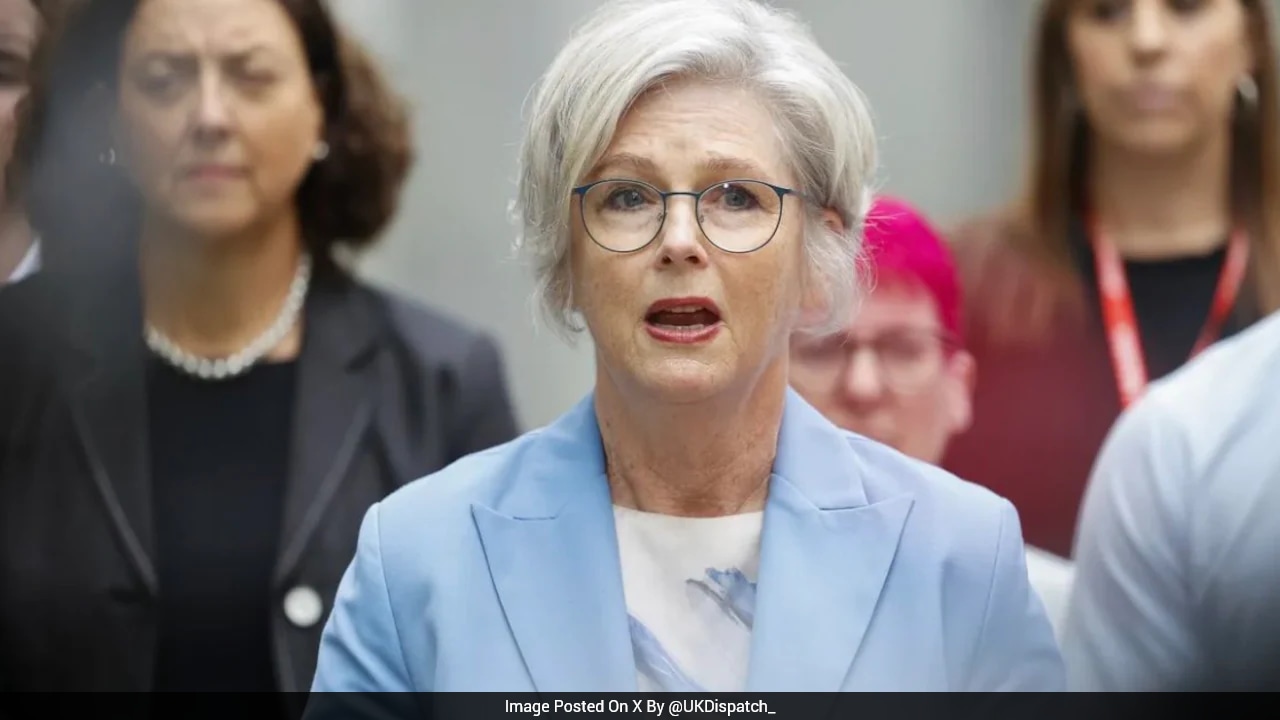
When an Australian lawmaker is left in critical condition after being hit by a car—and the prime minister steps forward to say it was not an accident—that fragile comfort shatters.
Suddenly, a patch of pavement isn't just a traffic hazard. It is a crime scene. A political shockwave. A test of what kind of public life a democracy can actually sustain when ordinary streets and ordinary routines stop feeling safe.
I want to be straight with you from the start: I do not know the full investigative file behind this case, and while details of an active inquiry are still taking shape, the stakes are already unmistakable. When a sitting member of parliament is struck by a vehicle and leaders treat it as deliberate rather than accidental, the story stops being a local police blotter. It becomes a mirror held up to public safety, political courage, and the quiet vulnerability of people who do their jobs in plain sight.
The Thin Line Between Pavement and Peril
To understand why a phrase like "not an accident" hits so hard, it helps to step back from the headlines and look at how fragile public life really is.
Politicians are often talked about as if they live inside thick glass boxes, insulated from the rest of us by motorcades, security detail, and marble corridors. In reality, much of democratic life happens on sidewalks, outside community halls, along neighborhood roads, and during the ordinary comings and goings between home, office, and electorate meetings. A lawmaker is a citizen with a megaphone and a schedule—often walking alone, carrying a briefcase or a coffee cup, crossing the same painted lines as everyone else.
Think of a street as a social contract written in tar and white paint. When you step off a curb, you are betting your body on a thousand unspoken agreements: that drivers see you, that brakes work, that nobody is treating two tons of steel and glass as a battering ram.
Let's use a metaphor to picture what happens when that contract breaks. Imagine a glass bridge hung high over a canyon. Most days, thousands of people walk across it calmly because they trust the engineering and the rules of the line. Now imagine someone walks onto that bridge with a hammer and starts swinging at the floor. Even if only one panel cracks, nobody on the bridge walks the same way again. Your eyes drop to your feet. Your breath tightens. Every footstep carries a question mark.
A vehicle strike framed as intentional acts like that hammer. It turns an everyday tool of commute and commerce into an instrument of harm. Worse, it weaponizes familiarity—the very streets and routines people rely on without thinking.
Even when law enforcement investigates carefully and urges restraint before jumping to conclusions, a prime minister's assertion that an incident was not an accident carries immense weight. Leaders choose words like that carefully—or feel compelled to say them because early indicators, context, or risk assessments point away from a simple traffic mishap. Either way, the signal is clear: this is being treated as targeted harm, not bad luck.
A Morning That Changed Everything
Because we don't yet have every granular detail of the victim's minute-by-minute movements, let's build a hypothetical scenario—clearly labeled as fiction—to trace how a normal day can turn into a national crisis.
Picture a hypothetical member of parliament, let's call her Claire, stepping out into the crisp morning air around 7:15 a.m. She has a folder of constituent notes under one arm, a thermos in the other, and a mental checklist already running: radio spot at eight, committee brief at ten, local school visit in the afternoon. Her shoes click against the concrete. A magpie calls from a gum tree overhead. Nothing about the morning feels historic.
A block away, a car idles near the corner. To anyone glancing up from a phone, it's just another vehicle waiting for a gap in traffic. Then the engine surges. There is no gentle tap of a horn, no frantic swerve to miss a pedestrian. Just the heavy, sickening thud of metal meeting bone and fabric, followed by the sudden stillness that always comes after violence.
If you have ever witnessed or heard about a loved one being hit by a car, you know the sick lurch in your stomach when the word critical enters the room. Critical isn't a medical grade you hear in casual conversation; it is a threshold word. It means every breath is being watched, every monitor is a lifeline, and a family is sitting in a waiting room trying to hold onto hope while doctors fight swelling, trauma, and shock.
In our hypothetical story, Claire's staffers are staring at their phones in disbelief, re-reading the same two sentences until the words blur. Her family is rushing toward a hospital ward where security has suddenly multiplied. And across the country, other lawmakers—people who argued with her on television the night before, people from rival parties who barely knew her first name—are pausing mid-sentence because it could just as easily have been their street, their morning walk, their car in the mirror.
That human shock is the core of the story. Behind every political title is a person with a partner, children, aging parents, bad knees, favorite songs, and unfinished plans. When violence hits someone in public office, it strikes both the individual body and the collective nerve of the community.
Why Political Violence Feels Different
Some readers might ask a fair, uncomfortable question: People get hit by cars every day. Why does it become bigger news when it happens to a lawmaker?
It's a blunt question, and it deserves an honest answer rather than a lecture. Every life harmed on a road is a tragedy, and no grief is "small." Yet an attack on an elected representative carries a distinct civic weight.
In a representative democracy, a lawmaker isn't just an individual; they are a stand-in for thousands of voters. When someone attacks an elected official—especially with a vehicle, or in a way leaders describe as deliberate—it is an assault not only on flesh and blood, but on the right of citizens to choose their representatives and debate laws without fear of physical retaliation.
History shows us how quickly intimidation can ripple outward. Even when an attack stems from a personal grievance, mental health crisis, extremist obsession, or local dispute rather than a grand conspiracy, the effect on the public square can be chilling. Good people think twice before running for local council or parliament. Staffers look over their shoulders walking to their cars at night. Town halls feel tenser. Security barriers go up, and with every new barrier, a little bit of everyday openness disappears.
I'll admit something honestly here: watching political rhetoric grow harsher over recent years has made me uneasy, and I don't pretend to have neat, easy answers for why anger so often spills into real-world harm. Sometimes the motives behind an attack are crystal clear; sometimes they are tangled, dark, and hard to fathom. What is clear is that words have consequences, anger travels fast, and physical safety in public life cannot be taken for granted.
When a prime minister calls an incident "not an accident," it also forces a reckoning with security and accountability. How do you protect public officials without turning democracy into a fortress? How do police investigate thoroughly without fueling rumors or panic? How do leaders speak plainly about danger without inflaming division?
What Happens Next Behind Closed Doors
Once the initial shock subsides, the real work happens out of sight.
Investigators piece together timelines from traffic cameras, dashcams, phone records, witness accounts, and forensic marks on the road. Every second matters. A three-second gap in a camera angle or a single witness who walked away before giving a name can shape how a case is prosecuted.
Meanwhile, hospital teams focus on one thing only: stabilizing a critical patient. In severe vehicle impact cases, early hours are a race against internal bleeding, head trauma, and secondary complications. Families live hour by hour, hanging onto small updates from surgeons while reporters wait outside for brief statements.
In government, leaders face a delicate balance. The prime minister and senior officials must reassure the public that law enforcement has the resources it needs and that justice will be pursued relentlessly. At the same time, responsible leaders know they cannot compromise an active investigation or prejudge courtroom outcomes before evidence is tested.
For ordinary citizens reading the news over coffee or on a commute, the emotional reaction often swings between anger and helplessness. We scroll past headlines of threats, crashes, and crises so often that we can feel numb—until a story like this breaks through the noise and makes our chest tight again.
Consider what happens next when a community refuses to go numb: neighbors check in on local representatives and staff, police get clear community cooperation without vigilante hysteria, and leaders call out violence plainly without turning tragedy into cheap political point-scoring. That doesn't erase the harm already done, nor does it magically solve deep social fractures, but it keeps fear from winning the day.
Protecting the Square Without Losing Ourselves
A healthy democracy needs two things that sometimes pull against each other: strong protection for those at risk, and genuine access between citizens and their representatives.
If we lock politicians away behind high walls and endless security checkpoints, we may lower certain physical risks, yet we lose the very closeness that makes representative government feel real. If we leave people completely exposed in volatile environments without sensible precautions, we invite preventable tragedies.
Finding that balance takes steady judgment, clear-eyed risk assessment, and a shared refusal to treat intimidation or violence as "just part of politics." It is never part of politics. Disagreement is part of politics. Sharp debate, protest, ballot-box defeats, and fierce arguments over policy are all part of politics. Hitting someone with a car is not debate. It is violence.
I think back to that quiet morning street I mentioned at the beginning—the smell of hot metal and wet pavement, the sudden hush, the way time seems to stretch out while everyone waits to see who is going to make it.
A single vehicle, a split second of impact, a prime minister's blunt words that it was no accident. The story starts on a stretch of road, ripples through a hospital and a capital city, and lands right at our feet.
Because the most important question isn't just who was behind the wheel or what happens in court. It is whether we still believe a human being walking down a street deserves to get to the other side whole.