Glass.
That is the first sound you remember when a protest turns into a riot. Not the chant of a thousand voices demanding dignity or reform, and not the low thrum of a siren two blocks away, but the sharp, unmistakable crack of tempered glass giving way under a paving stone, followed by the soft, crystalline rain hitting wet asphalt.
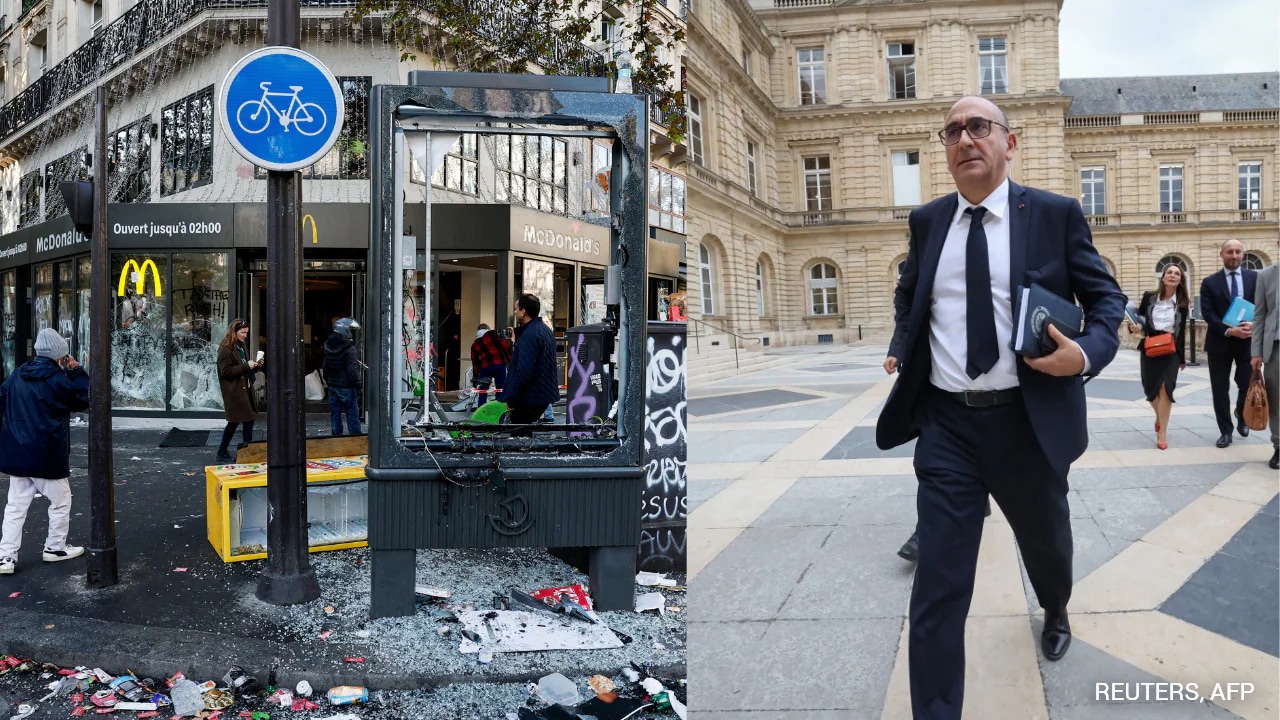
I have stood on enough cold curbs after midnight—watching blue strobe lights paint wet brick walls in jagged stripes, smelling the acrid sting of tear gas hanging low over a boulevard—to know how quickly a crowd's mood can shift from righteous anger to chaotic fury. When a French minister steps up to a bank of microphones and admits that police lost control during protests amid riots and looting, politicians and pundits usually reach for the same cold arithmetic. They count arrested youths, tally burned trash bins, and measure broken windows in euros.
Numbers are neat. Streets are not.
To understand what a minister really confesses when he says order broke down, you have to look past the press conference and sit with the people whose lives sit right on the fault line between lawful dissent and unrestrained looting. Let me introduce a hypothetical character—explicitly hypothetical, drawn from real accounts of small business owners caught in urban unrest across France. Call her Nadia. Nadia runs a corner bakery and café on a tree-lined avenue that leads toward a major transit square. Every morning at four-thirty, she turns on the ovens before the city wakes. She knows the regulars by their coffee orders, remembers which delivery driver has a bad knee, and has spent twelve years turning flour, butter, and patience into a livelihood she plans to pass to her son.
On a Thursday evening, a march starts three avenues over. At first, it looks like France at its most familiar: banners held high, union flags snapping in the wind, families walking beside seasoned activists. Protests are woven into the civic rhythm here. Dissent is not treated as treason; it is treated as a pressure valve.
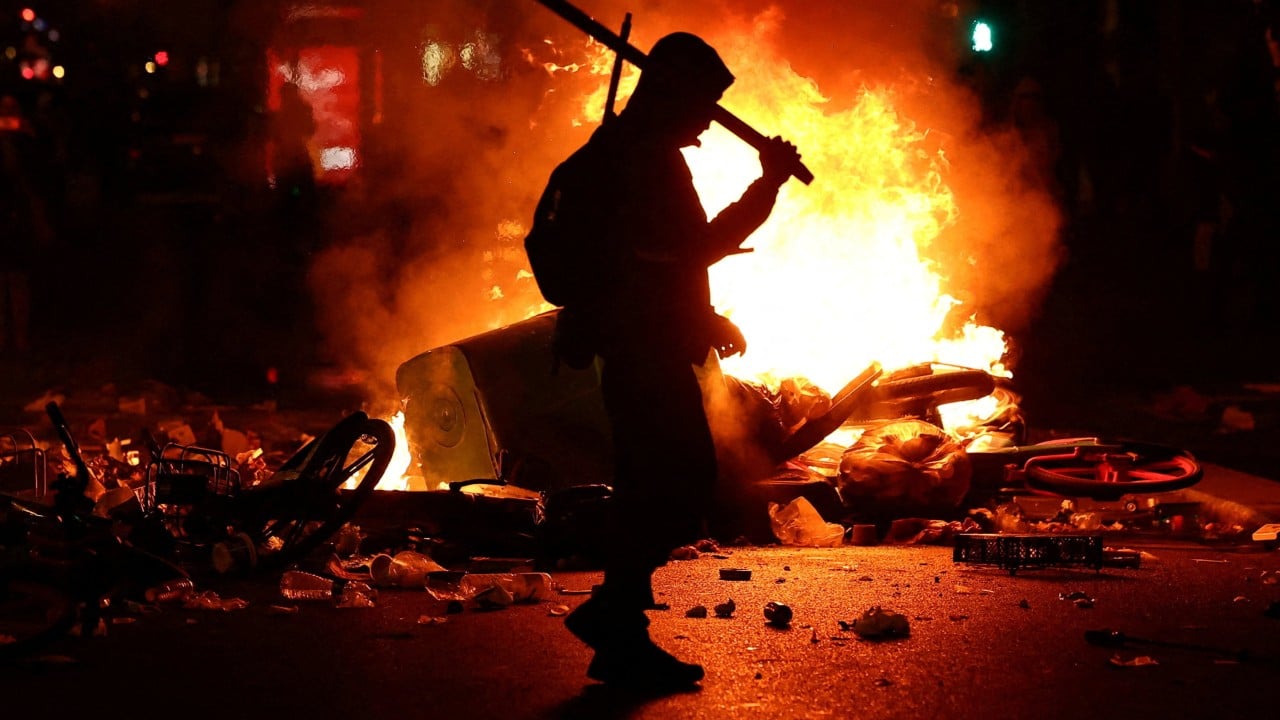
Then dusk settles. The marchers who came to make a point begin peeling off toward side streets or heading home. Smaller, faster groups—some looking for confrontation, others drawn by the sudden absence of security—move into the gaps. Fireworks hiss across the pavement. A bus shelter shatters. Someone wedges a metal barrier across a tram line.
From behind her steel roller shutter, Nadia hears the rhythm change. Footsteps stop marching and start running. Voices lose their cadence and turn into shouts. When a heavy thud vibrates through the floorboards, she does not call a cabinet minister. She checks her security camera feed with a tight knot in her stomach, hoping her shutters hold while wondering how long a thin line of riot officers can stretch across a sprawling city grid.
The Myth of Instant Command
If you have never stood inside a crowd as tension spikes, it is easy to picture crowd control as a chessboard. You imagine a commander in a warm room moving pieces across a map: a squad here, a water cannon there, a cordon holding firm until everyone goes home.
That picture is a comfortable fiction.
In reality, policing a volatile urban protest feels less like playing chess and more like trying to steer a hydrofoil boat through choppy crosswinds while someone keeps throwing loose gravel onto the deck. Every move creates a wake. Push too hard down one avenue, and the crowd spills into three side streets where a single patrol car cannot block anything. Hold back to avoid escalating clashes with peaceful demonstrators, and opportunistic looters treat the restraint as an invitation.
A minister's admission that officers lost control is often read by critics as simple incompetence. Sometimes missteps do happen—poor communication between units, delayed reinforcements, or rigid tactics that inflame rather than calm a crowd. Yet honesty requires admitting something harder: even well-trained forces face moments when sheer numbers, dispersed movement, and fast-moving violence overwhelm containment.
Think of a dam holding back spring meltwater. A dam is engineered for high pressure, not for every rivulet that finds a soft spot along a ten-mile ridge. When water seeps through a low bank miles from the main wall, calling the main wall "broken" misses how water behaves. Once momentum builds in an urban corridor, stopping it without causing severe harm to bystanders or escalating injury becomes a grim calculus.
I have watched officers whose helmets were scuffed and whose shifts had stretched past twelve hours stand motionless under a hail of bottles, waiting for orders to advance or hold. Fatigue narrows judgment. Heat—both literal from burning pallets and emotional from hours of abuse—wears down patience. When a minister says control was lost, that single phrase compresses operational strain, political fallout, and raw street chaos into five blunt words.
What Looting Actually Steals
Looting rarely starts with the people carrying political signs. It thrives in the shadow of distraction.
When riots erupt alongside protests, opportunistic crews move swiftly. A storefront lock is forced in seconds. Within minutes, shelves are stripped bare, display cases lie splintered on the floor, and a shop that took years to build looks like a storm hit it from the inside.
Consider what that does to Nadia in our hypothetical scenario. Even if her bakery survives the night with only a cracked pane and soot on the awning, the next morning still arrives. Insurance deductibles are steep, and insurers sometimes impose higher premiums or stricter conditions after waves of civil unrest. Repair crews are backlogged. Customers hesitate to walk down a block that looked like a war zone on the evening news.
Looting steals twice. First, it takes physical goods, cash registers, and peace of mind. Second, it erodes trust—trust between shopkeepers and the authorities meant to protect property, and trust between neighborhoods that depend on local commerce to feel alive.
When a storefront is gutted in the name of chaos, the bill rarely lands on the architects of the grievance. It lands on the person opening the door at dawn.
I remember talking to a small retailer after a night of street clashes years ago. His voice was flat, stripped of drama, as he swept tiny diamonds of safety glass into a dustpan. "They say it's anger at the system," he told me. "I am not the system. I am just trying to pay my supplier."
That distinction matters. Conflating peaceful protesters with rioters and looters distorts both sides of the story. Treating every demonstrator as a vandal poisons democratic debate and inflames resentment. Pretending that looting is just "noise" around a protest abandons ordinary workers and merchants who have every right to walk, work, and keep their doors open safely.
Why Grievances Turn Volatile
Riots do not erupt out of thin air. Sparks need dry tinder.
Across France and other democracies, large protests often tap into deep, simmering frustrations: rising living costs, strained public services, disputes over labor and pensions, or a sense among young people in marginalized districts that opportunity is locked behind walls they cannot climb. When people feel unheard through ordinary channels, street demonstrations become the megaphone they reach for.
Yet grievance alone does not explain why a protest tips into riots and looting. Behavioral patterns show that crowds are dynamic systems, not single minds. Anxious energy spreads fast. A few provocative acts—throwing projectiles, charging a line, smashing a window—can lower inhibitions for others nearby who might never have started trouble on their own. Meanwhile, social media accelerates rumors in real time, pulling onlookers toward hotspots and turning isolated clashes into viral spectacles.
Let me be candid about a genuine uncertainty here. Even seasoned analysts and security officials often disagree on where the tipping point lies in any given night. Was it a clash at a specific junction? A rumor spreading online? A delayed response to an early fire? Anyone who claims they can predict the exact minute a peaceful gathering fractures is selling certainty where none exists.
What we do know is that once control slips, recovery takes far longer than the riot itself. A fire can be put out in an hour. Rebuilding confidence on a scarred street takes months.
The Invisible Stakes for Democracy
When a government minister speaks candidly about losing control during protests, the stakes reach straight into the plumbing of democratic life.
Democracies rely on a delicate balance: citizens must be free to protest boldly, and the state must maintain public order fairly and proportionally. If authorities respond with heavy-handed force across the board, innocent people get hurt and legitimacy crumbles. If authorities appear unable to stop riots and looting, citizens feel unsafe and begin demanding harsher crackdowns that erode civil liberties.
Both extremes hurt the public. A society that fears going outside during unrest loses part of its freedom; a society that accepts unchecked lawlessness loses its safety.
Look back at Nadia standing behind that steel shutter. If she feels abandoned when chaos hits her street, what does she conclude? She may lose faith not just in the local precinct, but in the idea that rules apply when pressure rises. And if young people in a struggling neighborhood see only tear gas and confrontation rather than a real path forward, alienation deepens on the other side too.
That is the trap of recurring riots and looting. Every cycle leaves behind sharper polarization, heavier security footprints, and deeper exhaustion.
Standing on the Curb at Dawn
By six in the morning, the worst of the smoke usually clears. Street sweepers roll in with brushes and water jets. Delivery vans ease past taped-off intersections. Somewhere, a baker flips a light switch, listens to the quiet hum of a proof box, and decides whether to unlock the door for the early commuters.
A headline about a minister admitting police lost control gives you the flash of the storm. The real story lives in what remains standing when the sirens fade—the bruised officers rubbing stiff necks, the neighbors sweeping glass off a stoop, the unresolved grievances waiting for a better answer than a brick or a baton.
The glass on the pavement can be swept away before noon. The fracture underneath takes much longer to mend.