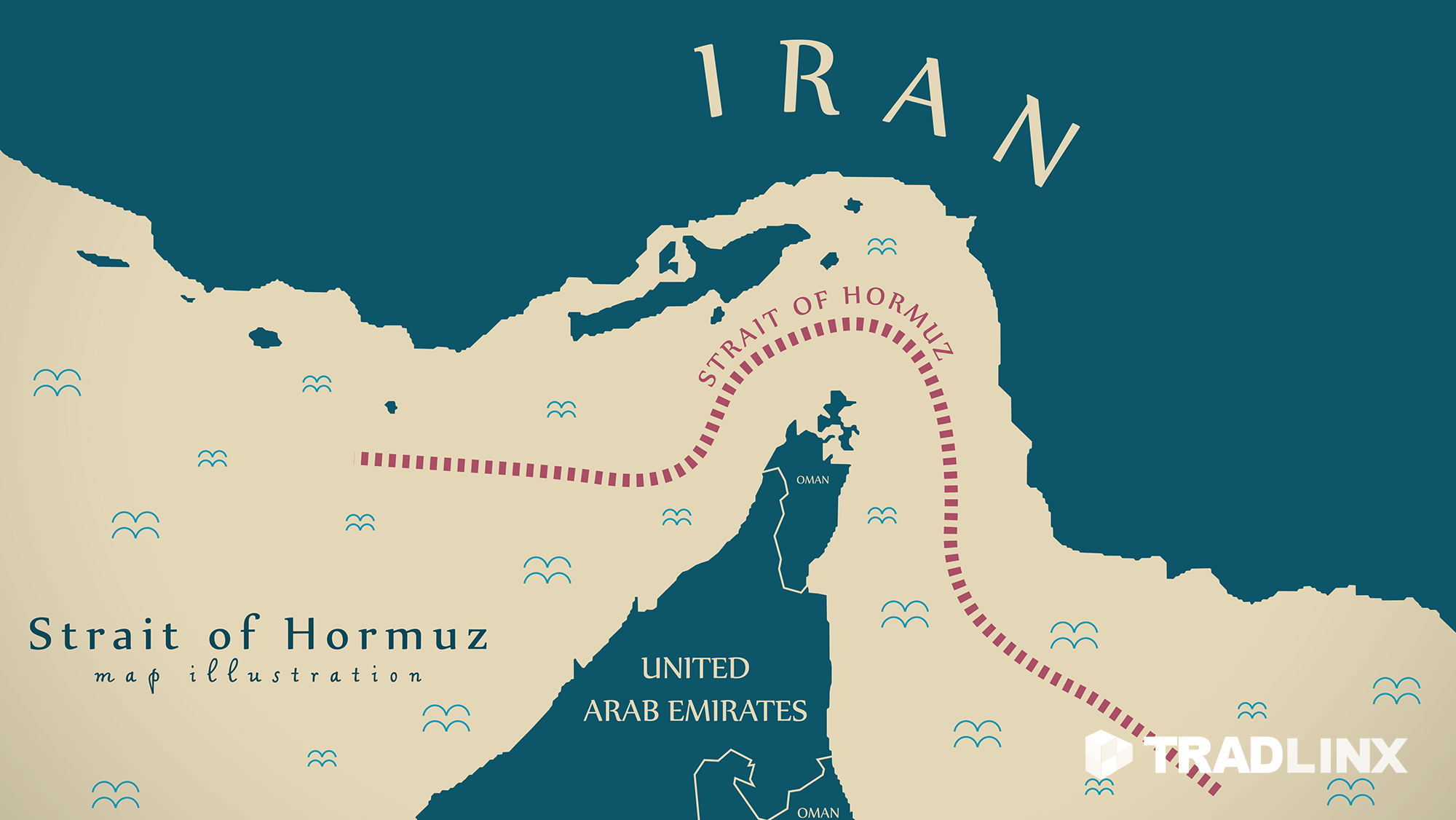
The assumption that a "maximum pressure" campaign would force Tehran to the negotiating table or collapse its regional influence was not just a policy preference; it was a fundamental misreading of Iranian brinkmanship. For years, the prevailing logic in Washington suggested that economic strangulation, combined with targeted military strikes like the 2020 assassination of Qasem Soleimani, would paralyze the Islamic Republic’s decision-making. Instead, these actions triggered a sophisticated, asymmetric response that the United States was unprepared to counter. The core of the failure lies in a misunderstanding of how Iran perceives survival. When backed into a corner, the Iranian leadership does not retreat. It expands the theater of operations to include global energy markets, maritime security, and proxy battlefields where the U.S. has everything to lose and Tehran has very little left to burn.
The Architecture of a Regional Blunder
The withdrawal from the Joint Comprehensive Plan of Action (JCPOA) in 2018 was marketed as the precursor to a "better deal." The theory was simple. By cutting off Iran's oil revenue and isolating its central bank, the U.S. would gain the ultimate leverage. However, leverage only works if the opponent shares your valuation of the status quo. To the hardliners in Tehran, the status quo under the nuclear deal was already a form of slow-motion containment. When the sanctions returned, they didn't see a reason to talk. They saw a reason to fight. Don't miss our previous post on this related article.
Daniel Benaim, a seasoned observer of the Arabian Peninsula, has long argued that the U.S. underestimated Iran's appetite for risk. This wasn't a case of Iran being "irrational." It was a cold, calculated move to prove that if Iran could not export oil, no one in the Persian Gulf would do so safely. We saw this manifest in the 2019 attacks on the Abqaiq and Khurais oil processing facilities in Saudi Arabia. In a single morning, five percent of the world’s daily oil production was knocked offline. The U.S. response? Silence. This signaled to every actor in the region that the "security umbrella" provided by Washington had developed significant holes.
The Soleimani Effect and the Myth of Decapitation
When a Reaper drone ended the life of Qasem Soleimani outside Baghdad International Airport, the immediate reaction in certain policy circles was one of triumph. The "architect of chaos" was gone. The belief was that the Quds Force would crumble without its charismatic leader. This was a classic Western intelligence fallacy: the "decapitation strike" myth. In reality, the Iranian security apparatus is a bureaucratic machine, not a cult of personality. To read more about the background here, USA Today provides an in-depth breakdown.
Soleimani’s death did not stop the flow of sophisticated weaponry to the Houthis in Yemen or Hezbollah in Lebanon. If anything, it removed the one man who had the authority to occasionally restrain these groups for the sake of broader Iranian diplomacy. Without him, the proxies became more autonomous and more aggressive. The U.S. expected Iran to cower; instead, Iran launched a direct ballistic missile attack on the Al-Asad airbase in Iraq. For the first time since the 1979 revolution, Iran had struck a U.S. military installation directly from its own soil. The "red line" had been crossed, and the expected American counter-escalation never arrived.
The Proxy Paradox
We often speak of Iran’s "proxies" as if they are simple puppets on a string. This is a dangerous oversimplification. Groups like Kata’ib Hezbollah or the Houthis have their own local grievances and political ambitions. Iran provides the "how"—the drones, the missiles, the intelligence—but the "why" is often rooted in local power dynamics.
By failing to address the underlying political instability in Iraq and Yemen, the U.S. allowed Iran to build a "land bridge" from Tehran to the Mediterranean. Every time the U.S. applied more economic pressure, Iran simply increased the technical sophistication of the weapons it handed out to these groups. It was a low-cost, high-impact way to keep the U.S. military bogged down in "forever wars" while the Iranian nuclear program continued to spin its centrifuges in the background.
The Houthi Variable
The conflict in Yemen was initially dismissed as a local civil war. Yet, it became the laboratory for Iran’s most successful asymmetric experiment. For the cost of a few thousand dollars in parts, the Houthis can build a drone capable of threatening a multi-billion dollar guided-missile destroyer. The economic disparity of this warfare is staggering. The U.S. Navy is currently spending millions of dollars on interceptor missiles to shoot down "lawnmower-engine" drones. This is not a sustainable model of defense. It is a slow bleed of American resources and morale.
The Failure of Regional Alliances
While the U.S. was busy trying to build a "Middle East NATO" through the Abraham Accords, the regional reality was shifting. Saudi Arabia and the United Arab Emirates realized that the U.S. was no longer a reliable guarantor of their security against Iranian aggression. If a direct hit on Saudi oil fields didn't trigger a U.S. military response, what would?
This realization led to a pragmatic, if uncomfortable, shift. We saw the Riyadh-Tehran rapprochement mediated by China. This wasn't a sign of sudden friendship; it was a sign of Saudi hedging. They realized that if the U.S. wasn't going to protect them, they had to manage the Iranian threat through diplomacy and trade. The U.S. miscalculation here was thinking its allies would wait forever for Washington to find a coherent strategy. They didn't. They moved on.
The Nuclear Brinkmanship
The most tangible failure of the last decade has been the state of the Iranian nuclear program. Before the withdrawal from the JCPOA, Iran’s breakout time—the time needed to produce enough weapons-grade uranium for a single bomb—was roughly one year. Today, that time is measured in weeks, perhaps even days.
The "maximum pressure" campaign was supposed to prevent a nuclear Iran. Instead, it accelerated it. By removing the diplomatic guardrails, the U.S. gave the hardliners in Tehran the perfect excuse to push their enrichment levels to 60 percent, a hair’s breadth away from weapons-grade 90 percent. We are now in a position where the U.S. has fewer diplomatic options and less military appetite for a strike that would likely only delay, rather than destroy, the program.
Technical Realities of Enrichment
To understand the gravity, one must look at the physics of enrichment. The effort required to go from natural uranium to 20 percent enrichment represents about 90 percent of the total work needed to get to weapons-grade. Once you are at 60 percent, you are essentially at the finish line. The U.S. policy assumed that Iran would trade this progress for sanctions relief. But for the Iranian regime, the nuclear program is the ultimate insurance policy against the kind of regime change they saw in Libya and Iraq.
A Broken Feedback Loop
Why does the U.S. keep getting Iran wrong? Part of the problem is an echo chamber in the intelligence and policy communities. There is a tendency to view Iranian actions through a lens of "irrationality" or "religious fervor," ignoring the cold, realist logic that governs the Supreme Leader’s inner circle. They are playing a long game, one that spans decades, while American policy shifts every four to eight years with each new administration.
The Iranians have mastered the art of "gray zone" warfare—actions that stay just below the threshold of triggering a full-scale war but are significant enough to erode the opponent’s will. They attack tankers, seize ships, and fund insurgents, all while maintaining plausible deniability. The U.S. military, designed for "big army" confrontations, struggles to respond to these pinpricks effectively.
The Cost of the Vacuum
When the U.S. signals its desire to "pivot to Asia," it creates a power vacuum in the Middle East. Russia and China are more than happy to fill it. Russia provides the conventional weaponry and veto power at the UN; China provides the economic lifeline by buying Iranian oil despite U.S. sanctions. This new "Axis of Convenience" makes the unilateral American sanctions regime increasingly obsolete.
The miscalculation wasn't just about Iran's response; it was about the world’s response. The U.S. assumed it still held the "financial nuclear option." But as countries like India, China, and even some European allies looked for ways to bypass the dollar, the effectiveness of that option began to wane. We are seeing the birth of a multipolar financial world, spurred in no small part by the over-extension of U.S. economic warfare.
Reassessing the Path Forward
The path to stability in the Middle East does not lie in more sanctions or more "red lines" that are never enforced. It requires a fundamental shift in how the U.S. defines its interests. If the goal is to prevent a regional war and stop nuclear proliferation, the strategy must involve a combination of credible military deterrence and a realistic diplomatic framework that acknowledges Iran as a regional power—albeit a malign one.
Ignoring the reality of Iranian influence won't make it go away. The "maximum pressure" experiment has provided a decade of data, and the results are clear: the regime is still there, its proxies are stronger, and its nuclear program is more advanced. Continuing down the same path is not "toughness"; it is a refusal to learn from failure.
The immediate priority should be the establishment of clear, private channels of communication to prevent a tactical miscalculation from turning into a strategic catastrophe. Deterrence is not just about having a big stick; it’s about making sure the other side knows exactly what will trigger its use. Right now, the lines are blurred, and in that ambiguity, the risk of a catastrophic war grows every day. The U.S. needs to decide if it wants to manage the Iranian threat or continue chasing the ghost of a total victory that has remained elusive for forty years.
Stop looking for a "grand bargain" that solves every issue from human rights to missile ranges in one go. Focus on the immediate flashpoints: the maritime security of the Gulf, the proliferation of drone technology, and the enrichment levels in Natanz. These are the cold, hard metrics of regional security. Everything else is just noise.