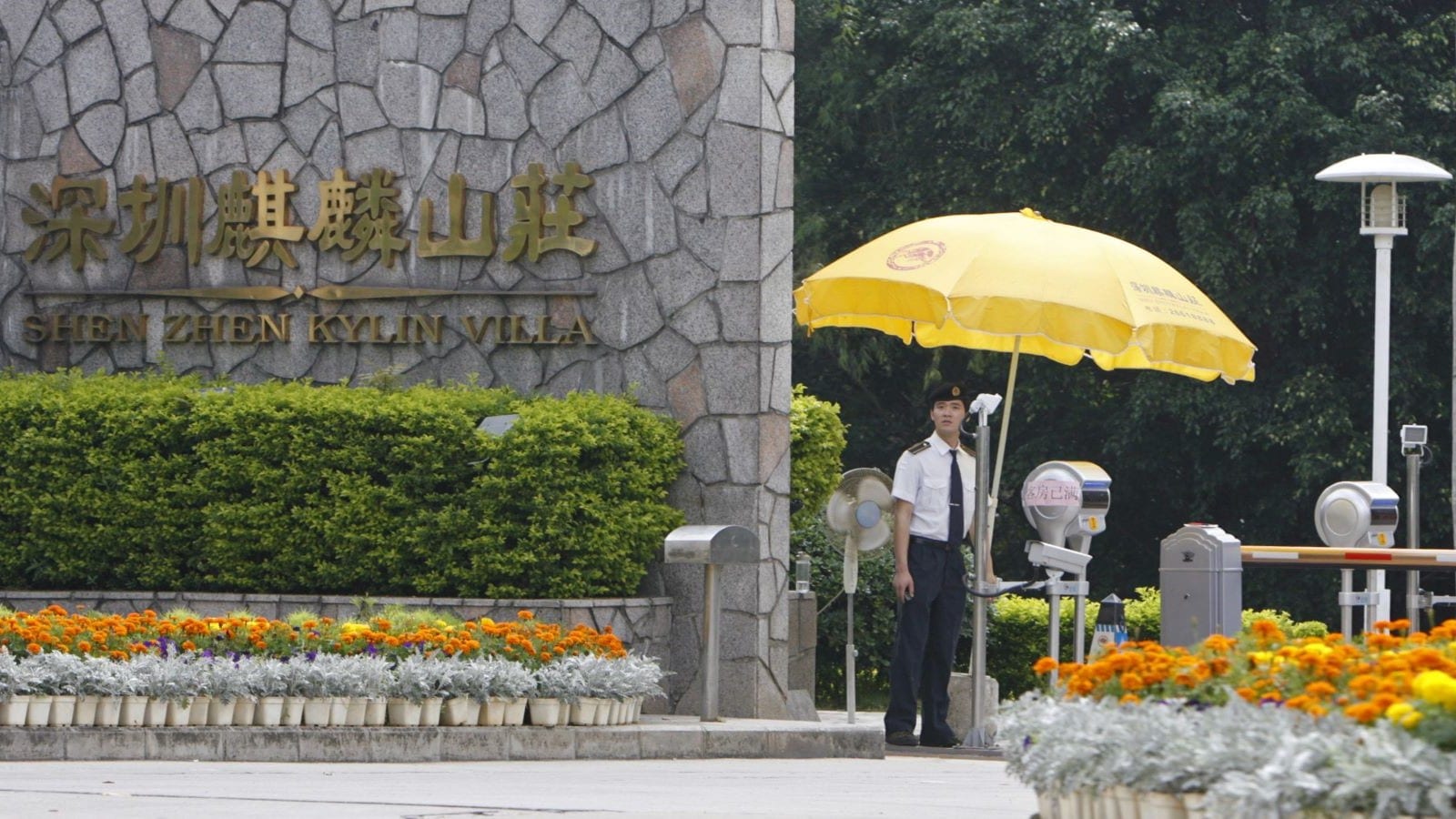
Every foreign desk editor in Western media is currently writing the exact same lazy piece. They pull up satellite imagery of Shenzhen, copy-paste the square footage of the Qilin Mountain Villa—widely stylized in English press as Kylin Villa—and gawk at the 38-hectare footprint, the manicured lychee orchards, and the koi ponds. They treat a luxury state guesthouse like a Bond villain’s lair, convincing readers that the physical architecture of a meeting venue dictates the outcome of global diplomacy.
That is complete nonsense.
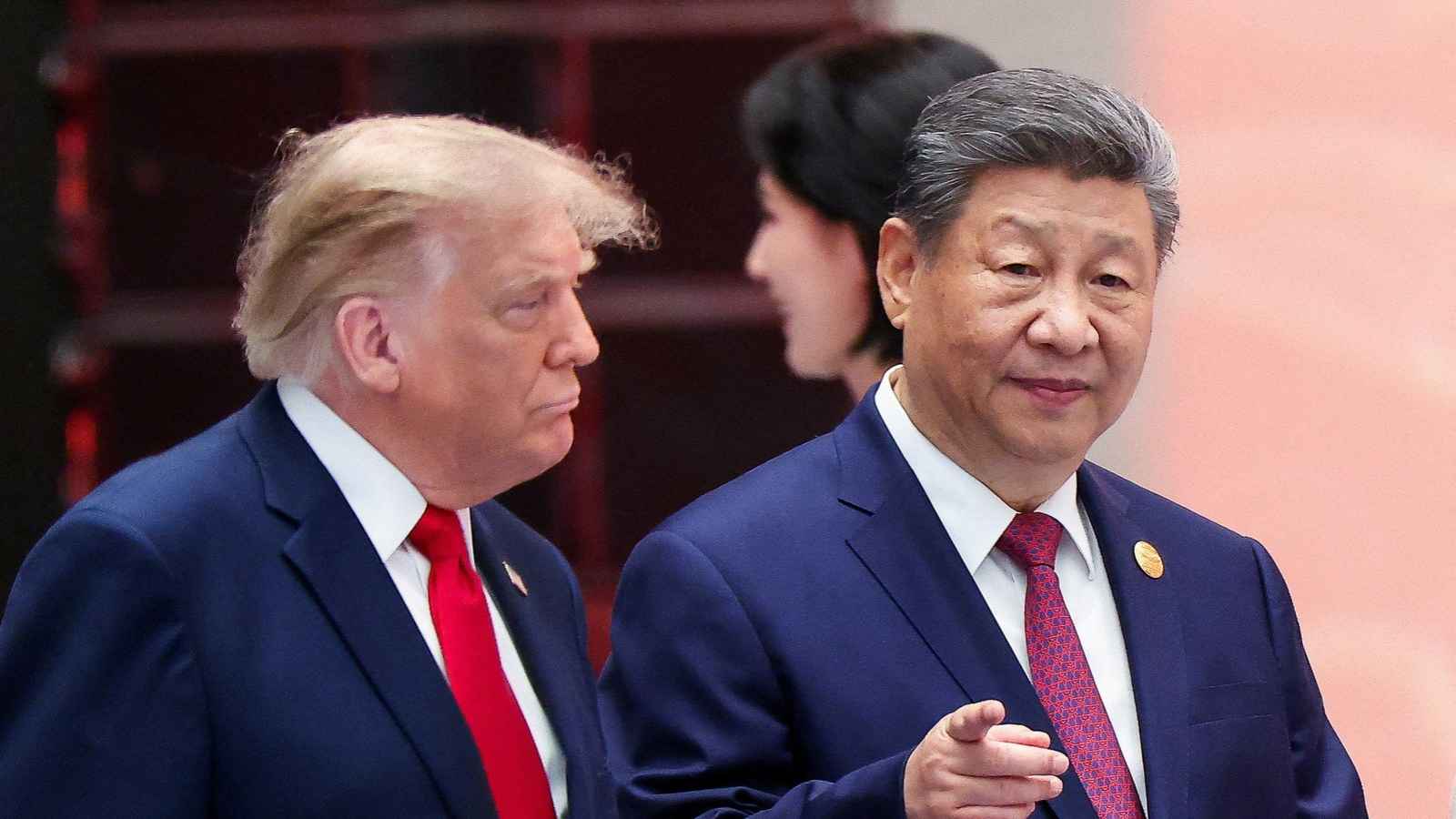
If you believe that putting Donald Trump, Xi Jinping, and Vladimir Putin inside a sprawling lakeside compound in southern China changes the math of nuclear deterrence, semiconductor tariffs, or Eurasian territorial disputes, you have never actually worked a high-stakes negotiation room. I have spent two decades analyzing statecraft, corporate M&A war rooms, and international summit logistics. I have watched billion-dollar deals collapse inside five-star Swiss chalets and historic treaties get signed in windowless airport conference rooms with stale coffee.
The mainstream coverage of Kylin Villa is a masterclass in missing the forest for the bonsai trees. By focusing on the thread count of the sheets, the private helipads, and the scenic backdrop of Shenzhen’s Nanshan District, journalists are falling straight into Beijing’s communications trap. They are reporting on the stage set while ignoring the script.
The Architecture of Distraction
Let’s dismantle the physical myth first.
Yes, Kylin Villa is massive. Spanning roughly 38 hectares (about 94 acres) nestled against Qilin Mountain and bordering Xili Lake, it was built in the late 1990s specifically to house Chinese Communist Party leadership and visiting heads of state. It has seven distinct villa complexes, subterranean security corridors, dedicated telecommunications bunkers, and botanical gardens designed according to classical Lingnan landscaping principles.
To a travel writer or a rushed geopolitical blogger, this looks like an ultimate power move. "Look at the scale," they write. "Look at the seclusion."
Here is what they miss: Seclusion in statecraft is a cage, not a sanctuary.
In diplomatic protocol, a compound like Kylin Villa is known as a closed-loop venue. Unlike a summit held in a bustling urban center—say, a G20 meeting in Osaka or a bilateral summit in Vienna—a 38-hectare walled resort eliminates all organic friction. Nobody bumps into a foreign finance minister in a hotel lobby. Nobody leaks a hallway conversation to a pool reporter waiting behind a velvet rope. Every square meter of Kylin Villa is wired, mapped, and controlled by the host nation’s security apparatus—specifically the Central Security Bureau of the CCP.
When the media marvels at the "tranquil lakeside atmosphere," they are accidentally praising an information blackout. The tranquility is engineered to ensure that the only narrative leaving the gates is the one approved by the host’s press office.
Why Location Geography Matters More Than Resort Amenities
If you want to understand why Beijing selected this specific venue over the Diaoyutai State Guesthouse in Beijing or the West Lake State Guest House in Hangzhou, stop looking at the resort’s brochure and look at a map of the Pearl River Delta.
Shenzhen is not an accidental backdrop. Forty-five years ago, it was a fishing village across the border from British-ruled Hong Kong. Today, it is the hardware capital of the world—the headquarters of Huawei, Tencent, BYD, and DJI.
Placing Trump and Putin inside Kylin Villa is not about offering them a nice view of the water. It is an ideological flex disguised as hospitality.
- To Donald Trump: Shenzhen represents the exact manufacturing and tech ecosystem that Washington has spent nearly a decade trying to decouple from. Hosting him ten minutes away from the global epicenter of electric vehicle batteries and 5G infrastructure is a silent reminder that tariffs have not erased China’s industrial dominance.
- To Vladimir Putin: Shenzhen represents the economic lifeline that kept the Russian economy breathing after Western sanctions severed Moscow from European markets. It is a showcase of Chinese capital and technological self-reliance that Russia desperately needs to access on Beijing’s terms.
The resort itself could be a concrete bunker and the strategic message would remain identical. The 38 hectares of gardens are just expensive wallpaper covering a hard economic reality.
Dismantling the "Personal Chemistry" Fallacy
Whenever three alpha-personality leaders gather at a remote resort, pundits immediately dust off the "personal chemistry" trope. They ask: Will Trump and Putin bond over private dinners? Will Xi charm them both during a lakeside walk?
This is pure fantasy. High-level geopolitics does not run on vibes, golf outings, or late-night scotch.
Consider the actual mechanics of a trilateral summit at a venue like Kylin Villa. Leaders do not sit in armchairs for six hours improvising world peace. Every single minute is choreographed down to the second by sherpas—the senior diplomatic negotiators who hammer out the communiqués weeks before the planes even touch down at Shenzhen Bao'an International Airport.
Let’s look at the hard constraints each leader brings through the gates of Kylin Villa:
- The Domestic Audience Problem: Neither Trump, Xi, nor Putin is speaking to the men across the table. They are speaking to their domestic power bases. Trump is performing for an American electorate that demands visible toughness on trade and foreign entanglement. Xi is projecting unquestioned global centrality to the Politburo Standing Committee. Putin is demonstrating to Russian elites that he is not an isolated pariah, but an indispensable power broker.
- The Translator Bottleneck: Spontaneous banter dies in translation. Even with world-class simultaneous interpreters, nuanced humor, subtle threats, and ideological framing lose half their voltage when filtered through headphones. What journalists describe as "intimate fireside chats" are actually stilted, heavily guarded exchanges where every word is logged by note-takers sitting three feet behind the principals.
- The Zero-Sum Math: No amount of lakeside serenity changes the fact that Washington wants to contain Chinese tech supremacy, Beijing wants Washington out of the first island chain, and Moscow wants territorial concessions in Eastern Europe that Washington cannot unilaterally grant without shattering NATO.
Imagine a scenario where the three leaders actually do take an unscripted, hour-long walk around Xili Lake without aides. Even in that hypothetical vacuum, they cannot sign a binding treaty on the spot. Any verbal concession made near the koi ponds has to survive the bureaucratic meat grinder of the U.S. State Department, the Chinese Ministry of Foreign Affairs, and the Russian Kremlin.
Personal chemistry is the opiate of lazy political commentary. It lets writers tell a simple human-interest story instead of doing the grueling work of analyzing supply chains, defense budgets, and currency reserves.
What Everyone Gets Wrong About Summit Security and Hospitality
Another massive misconception circulating in the coverage of Kylin Villa involves the supposed "neutrality" or "hospitality" of a luxury state resort. Travel and lifestyle outlets love to frame state guesthouses through the lens of ultra-luxury tourism—comparing them to Aman resorts or Four Seasons properties.
That comparison is completely broken. A luxury hotel exists to serve the guest. A state guesthouse exists to manage the guest.
In the hospitality industry, privacy means the staff leaves you alone. In statecraft security, "privacy" means the host intelligence service has exclusive surveillance rights over the perimeter.
When a U.S. president or a Russian president stays at a venue like Kylin Villa, an entire shadow war happens behind the scenes before the motorcade even arrives:
- Counter-Surveillance Sweeps: Advance teams from the U.S. Secret Service and Russia’s Federal Protective Service (FSO) strip down the assigned villas to the drywall. They bring their own encrypted satellite communications tents, their own independent power generators, and sometimes even their own air filtration systems.
- Culinary and Medical Isolation: Despite the press releases touting elaborate Cantonese banquets—steamed garoupa, double-boiled bird’s nest soup, and aged Pu-erh tea—visiting leaders rarely eat or drink anything that hasn't been vetted by their own toxicologists and personal chefs. The ceremonial banquet is theater; the actual calories often come from pre-screened supplies flown in on military transport planes.
- Digital Air-Gapping: Inside Kylin Villa, every wireless signal is jammed, spoofed, or monitored. Staff devices are replaced with single-use burner phones that are destroyed immediately after wheels-up.
Calling Kylin Villa a "resort" in this context is like calling an aircraft carrier a "cruise ship." They both float, and they both have kitchens, but their fundamental purposes are entirely hostile to relaxation.
The Questions You Should Actually Be Asking
If you want to read the tea leaves of a Shenzhen summit properly, stop searching for photos of Kylin Villa’s banquet halls. Start asking the questions that actually dictate whether the global economy booms or fractures over the next twenty-four months.
1. Who Is Sitting in the Second Row?
Forget the photo-op of the three presidents shaking hands in front of a screen painting. Look at the delegation manifests. Is the U.S. Treasury Secretary there? Is the head of China’s National Development and Reform Commission in the room? Is the governor of the Central Bank of Russia attending?
When the economic technocrats outnumber the defense officials, a deal on tariffs, energy pricing, or currency swaps is on the table. When the generals and intelligence chiefs dominate the seating chart, the summit is purely about crisis management and preventing an accidental military clash.
2. Why Did Washington Agree to Play an Away Game?
In diplomacy, venue selection is the first battle. By agreeing to travel to Shenzhen rather than insisting on a neutral third-party location like Geneva, Singapore, or Reykjavik, the White House handed Beijing a massive symbolic victory before a single word was spoken.
The real story is not how nice Kylin Villa looks; the real story is what concession Washington demanded in exchange for granting Beijing home-field advantage. Usually, an away-game summit means the host nation has already agreed in principle to a major deliverable—such as massive agricultural purchases, fentanyl precursor crackdowns, or specific de-escalation guarantees in the South China Sea.
3. What Happens to the Mid-Tier Allies?
While the cameras zoom in on Kylin Villa, look at the panic happening in Tokyo, Seoul, Brussels, and Kyiv. A trilateral meeting between the U.S., China, and Russia triggers the ultimate nightmare for smaller nations: Great Power Condominium—the fear that Washington, Beijing, and Moscow will carve up spheres of influence behind closed doors and present the rest of the world with a fait accompli.
The true market-moving consequences of this summit won't happen inside Shenzhen. They will happen in the emergency cabinet meetings in Berlin, Taipei, and Warsaw the morning after the motorcades leave.
The Downside of Cold Realism
To be fair, dismissing the theater of Kylin Villa entirely carries its own blind spot.
If you treat diplomacy strictly as a spreadsheet of economic leverage and military hardware, you risk underestimating the psychological power of face-to-face optics. In East Asian diplomatic tradition, mianzi—face, prestige, and status—is not superficial fluff; it is a tangible political currency.
By hosting Trump and Putin in a lavish, serene southern enclave rather than the rigid, imperial halls of Beijing, Xi Jinping is signaling confidence, modernity, and gracious strength. For Trump, a leader who famously values visual grandeur and personal rapport, walking through a massive, tightly controlled estate can genuinely soften short-term rhetoric, even if it doesn't alter long-term structural friction. And for Putin, standing as an equal beside the leaders of the world's two largest economies provides domestic propaganda value that no economic statistic can replicate.
Optics do not solve structural conflicts. They cannot fix a broken supply chain or redraw a contested border. What they can do is buy time—six months of tariff delays, a temporary pause in naval brinkmanship, or an open hotline when a crisis hits. In a world bristling with nuclear weapons, buying six months of stability is not worthless.
How to Read Summit Coverage Without Getting Played
The next time a major geopolitical gathering dominates your feed, use this filter to separate signal from noise:
- Ignore the adjective count. Whenever an article uses words like "historic," "lavish," "secretive," or "unprecedented" to describe a venue, skip the paragraph. It is filler written to hit a word count before the official press conference starts.
- Track the communiqué verbs. Diplomatic statements are written in a strict code. Words like "welcomed" and "agreed" mean actual deals were struck. Words like "candid," "frank," and "constructive" are diplomatic euphemisms for "we yelled at each other for three hours and solved nothing."
- Watch the bond and currency markets, not the cable news panels. If the offshore yuan, the ruble, or U.S. Treasury yields don't move within two hours of the summit’s closing statement, nothing of substance happened behind those 38 hectares of lakeside walls.
Kylin Villa is a magnificent piece of real estate. Its lychee trees are immaculate, its security perimeter is airtight, and its lakeside views are genuinely peaceful.
Just don't mistake the scenery for the strategy. The walls of that resort aren't keeping the world out so three men can make peace—they are keeping the cameras out so three empires can manage their rivalry without losing face.