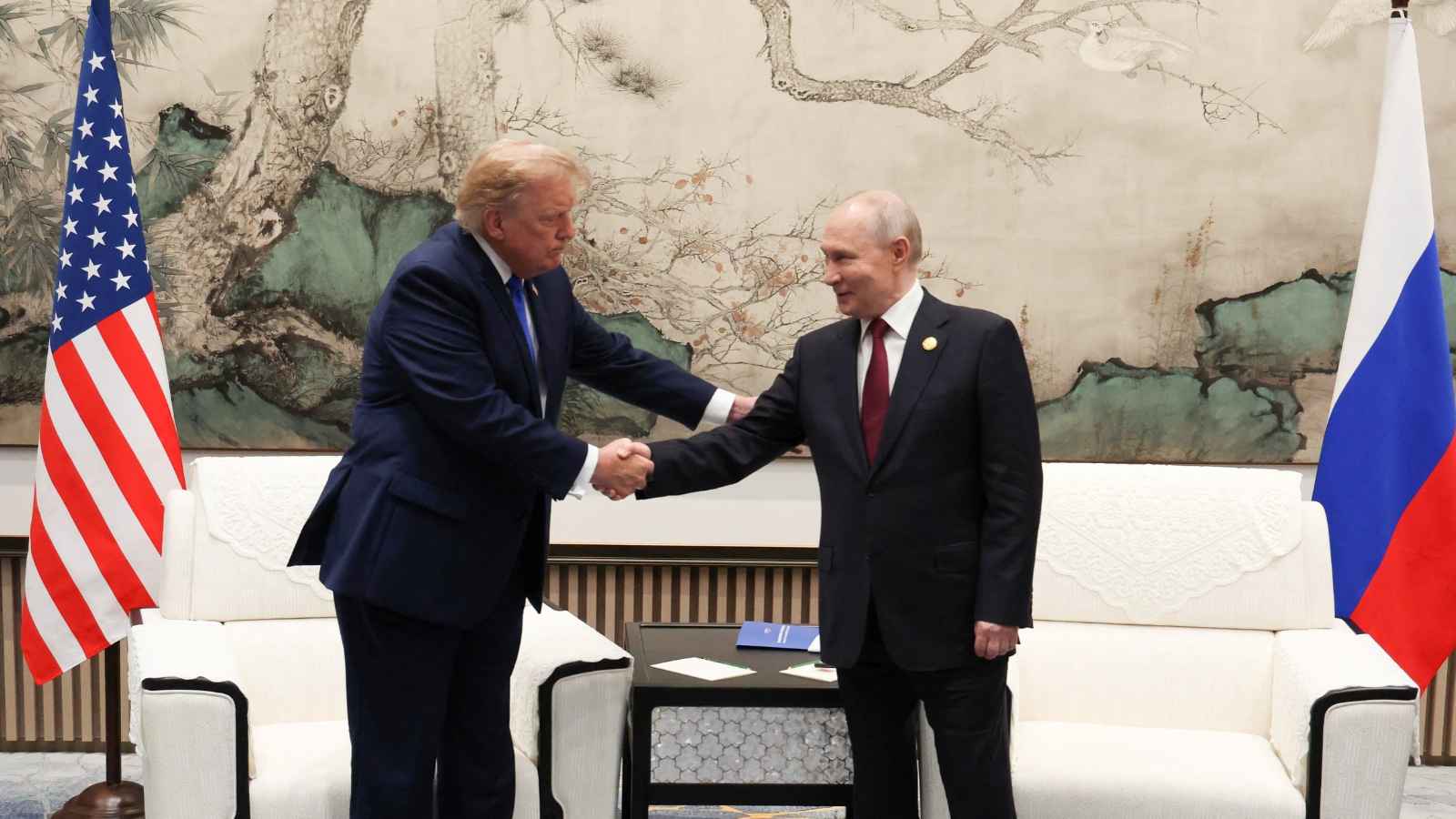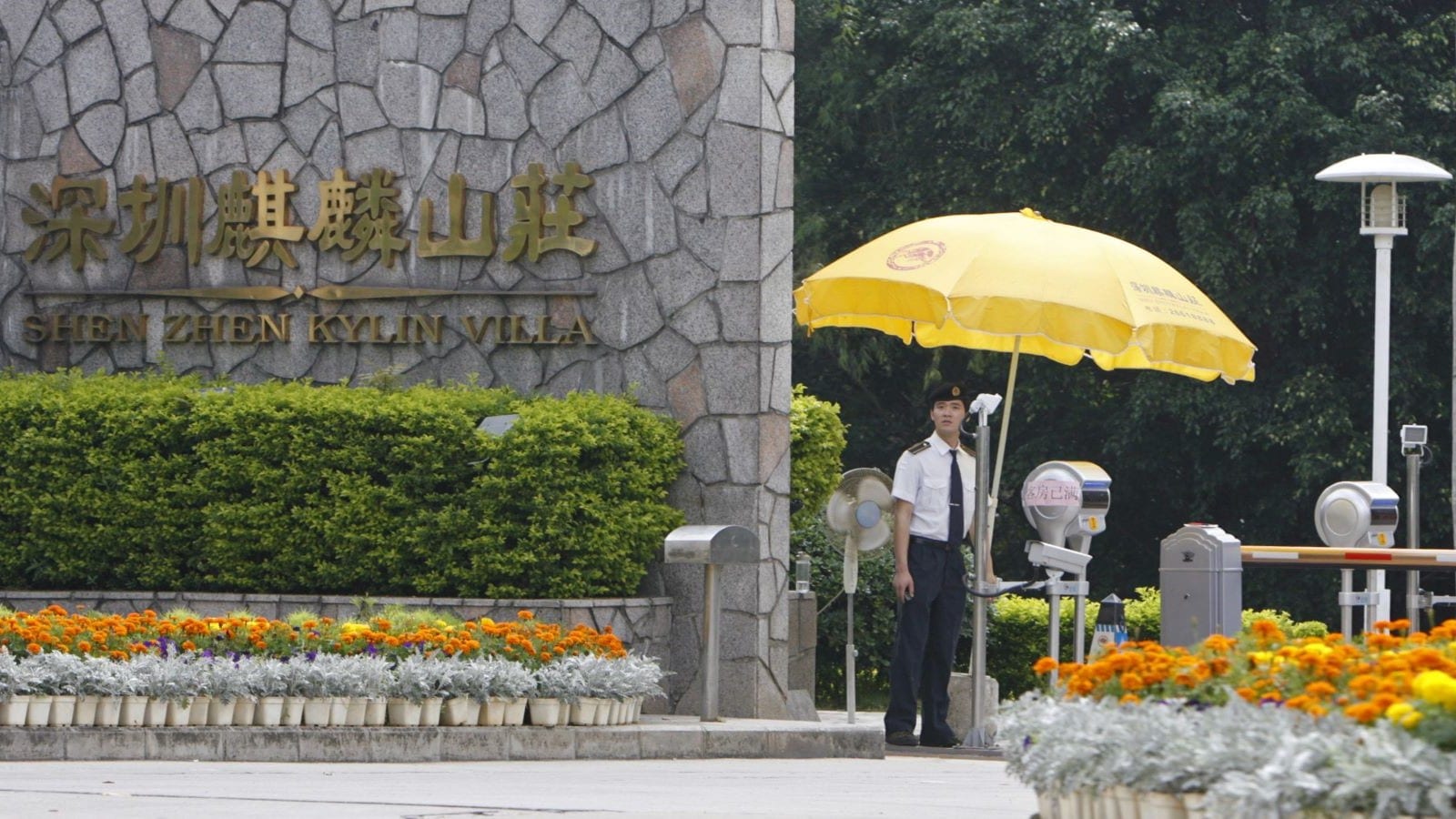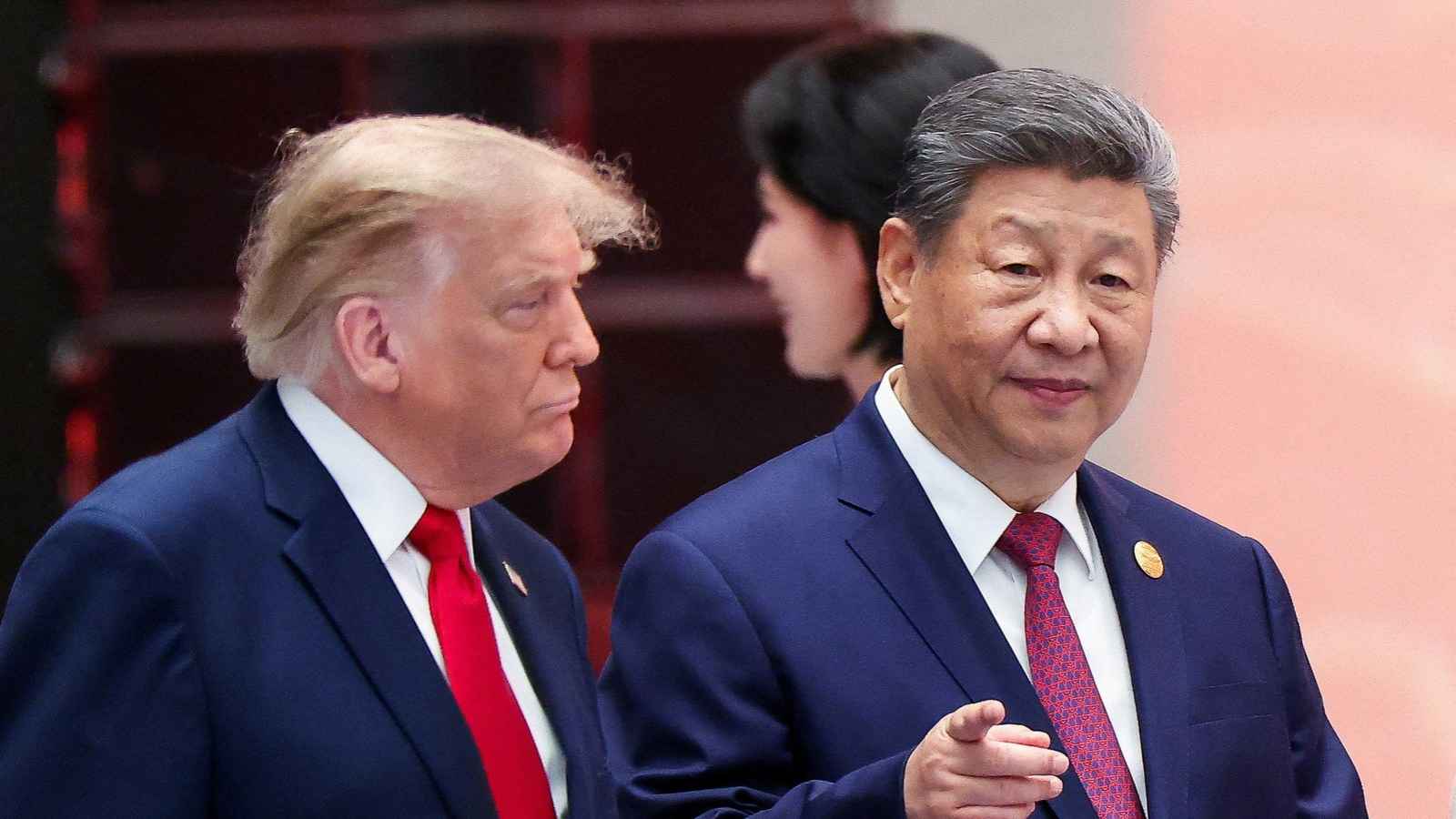
President Donald Trump wants Beijing to freeze its nuclear weapons program immediately, even though China holds roughly one-sixth as many warheads as the United States or Russia. Speaking in Shenzhen alongside a rare three-way meeting with Chinese President Xi Jinping and Russian President Vladimir Putin in November 2026, Trump warned that China is "going hot and heavy" on nuclear production and will soon catch up to Washington and Moscow. The problem is that his public numbers do not match independent intelligence assessments, and his demand collides with a hard geopolitical reality following the expiration of the last U.S.-Russia arms treaty.
The Numbers Gap in Shenzhen
Trump’s pitch for a three-way freeze rests on a claim that the nuclear playing field is nearly level—or soon will be. In an interview with Fox News in Shenzhen, he stated that the United States possesses 4,000 nuclear weapons, Russia holds 3,800, and China sits at 400 to 500.
Independent nuclear analysts and Pentagon reports tell a different story. According to the 2026 assessments from the Stockholm International Peace Research Institute (SIPRI) and the Federation of American Scientists (FAS), Russia actually leads the world with approximately 4,400 warheads in its military stockpile. The United States ranks second with roughly 3,700. China, sitting at an estimated 620 warheads as of early 2026, is not just behind—it operates in a completely different weight class. Combined, Washington and Moscow control about 83 percent of the world's stockpiled nuclear weapons.
Even if you take the Pentagon's upper-end projection—that China could exceed 1,000 operational warheads by 2030—Beijing would still hold less than a third of the U.S. military stockpile and less than a quarter of Russia's. Furthermore, SIPRI data indicates China added only about 20 warheads throughout 2025, a slowdown from earlier years noted in the Defense Department’s own annual China Military Power Report. Reaching 1,000 warheads by the end of the decade would require Beijing to accelerate its assembly lines several times over. Trump’s recurring assertion that China "will be even within five years" mistakes rapid infrastructure construction for immediate warhead parity.
Why Beijing Refuses to Sign
From the perspective of a strategist in Beijing, accepting Trump’s offer to cap nuclear weapons right now is a non-starter. For decades, China maintained a doctrine of minimum deterrence—keeping a small, survivable force of a few hundred warheads solely to guarantee it could retaliate after absorbing a nuclear first strike. Unlike Washington and Moscow, Beijing kept most of its warheads stored separately from its missiles during peacetime.
That posture changed when Chinese leadership concluded that American missile defenses, precision conventional weapons, and space-based sensors were becoming capable of wiping out a small arsenal before it could ever launch. To ensure its retaliatory threat remained credible, Beijing began pouring concrete across its western deserts. Satellite imagery analyzed between 2021 and 2026 confirmed the construction of roughly 320 new silos for solid-fuel intercontinental ballistic missiles across three massive fields near Yumen, Hami, and Ordos, alongside major upgrades to nuclear production complexes in Sichuan Province.
Asking Xi Jinping to freeze his arsenal at 620 warheads while the United States and Russia sit on thousands is asking China to lock in permanent strategic inferiority. Beijing’s diplomats have repeated the same counter-offer for years without blinking. If Washington and Moscow want China at the negotiating table, they must first slash their own stockpiles down to China’s level—or China will keep building until the gap narrows enough to negotiate from a position of strength.
The Collapse of the Guardrails
Trump’s push for a trilateral deal is happening in a dangerous vacuum. On February 5, 2026, the New START treaty expired. Signed in 2010, it was the final surviving legal barrier limiting the world's two largest nuclear powers, capping the United States and Russia at 1,550 deployed strategic warheads each and providing vital on-site inspections.
For the first time since 1972, there are zero binding treaties restricting the nuclear arsenals of the world's major powers. Trump argued during his first term and throughout 2025 and 2026 that bilateral treaties with Russia were obsolete because they left China completely unconstrained. By refusing to extend or replace New START without Beijing’s participation, Washington traded away hard verification limits on 4,400 Russian warheads in pursuit of an unverified freeze on 620 Chinese ones.
The expiration of New START did not pressure Beijing into joining talks. Instead, it removed the ceiling on Washington and Moscow, giving Chinese military planners even more justification to expand their forces. If the United States begins uploading reserve warheads back onto its Minuteman III missiles and Trident submarines—a move Pentagon planners have openly debated now that treaty caps are gone—China’s worst-case scenarios become reality.
The Tripolar Deterrence Trap
Nuclear arms control during the Cold War was brutally difficult, yet mathematically simple. It was a two-body problem. Washington and Moscow tracked each other's silos, submarines, and bombers, maintaining a rough balance known as mutual assured destruction.
Adding a third major player breaks that math entirely. Pentagon war planners now face what strategists call the two-peer problem. For the first time in history, the United States must plan to deter two major nuclear-armed adversaries simultaneously, both of which have deepened their military cooperation through joint bomber patrols over the Sea of Japan.
Consider a hypothetical scenario that keeps Pentagon officials awake at night. If the United States cuts its deployed arsenal to 1,500 warheads under a three-way treaty, and Russia and China each hold 1,500, Washington is suddenly outnumbered two-to-one in a combined crisis. Conversely, if the United States demands the right to hold 3,000 warheads to match Russia and China combined, neither Moscow nor Beijing will ever sign the paper. Moscow has already complicated the geometry further by insisting that any future multilateral talks must also include the nuclear arsenals of France and the United Kingdom, which hold roughly 290 and 225 to 260 warheads respectively.
What Actually Matters in a Nuclear Race
Public debates over nuclear weapons almost always fixate on raw warhead counts, largely because big numbers make easy headlines. Veteran arms control negotiators know that warhead totals are often the least revealing metric on the board. What determines whether a crisis stays cold or turns nuclear is survivability and launch posture.
China’s recent military parades and satellite leaks highlight a shift that is far more consequential than the jump from 400 to 620 warheads. Beijing has spent the last five years completing a true nuclear triad—the ability to launch nuclear weapons from land, sea, and air.
Land-Based Mobility and Silos
China is transitioning from older liquid-fueled missiles, which take hours to fuel and are vulnerable on the ground, to solid-fueled missiles like the road-mobile DF-41 and the newly unveiled DF-61, alongside hundreds of hardened underground silos. Solid fuel means a missile can be launched within minutes of an order.
Undersea Stealth
The People's Liberation Army Navy has refitted its Type 094 ballistic missile submarines with the longer-range JL-3 missile. Operating from bastions in the South China Sea, these submarines can now threaten parts of the continental United States without having to sail past American anti-submarine chokepoints in the Pacific.
Launch on Warning
Perhaps the most alarming shift noted by defense intelligence is evidence that China is moving toward a launch-on-warning posture. By mating warheads directly to missiles during peacetime and building early-warning radar networks with Russian technical assistance, Beijing is preparing to fire its missiles the moment satellites detect incoming warheads, rather than waiting to absorb an attack first.
The Illusion of the Grand Bargain
At the Shenzhen summit, Xi Jinping repeated the standard diplomatic line that a nuclear war "cannot be won and must never be fought," and the three leaders issued a broad joint declaration without a single concrete limit on weapons production. Trump simultaneously suggested that nuclear powers "only need about 10" weapons while continuing a massive, trillion-dollar modernization of the entire U.S. nuclear triad.
The contradiction at the heart of Washington's strategy is impossible to miss. You cannot convince a rising superpower to halt its nuclear buildup while simultaneously modernizing your own arsenal, threatening to resume underground nuclear testing for the first time since 1992, and abandoning the verification treaties that kept the last arms race in check. Until Washington is willing to put limits on its own missile defenses and reserve warheads, Beijing will keep pouring concrete in the desert—and no amount of summit choreography in Shenzhen will stop the clock.