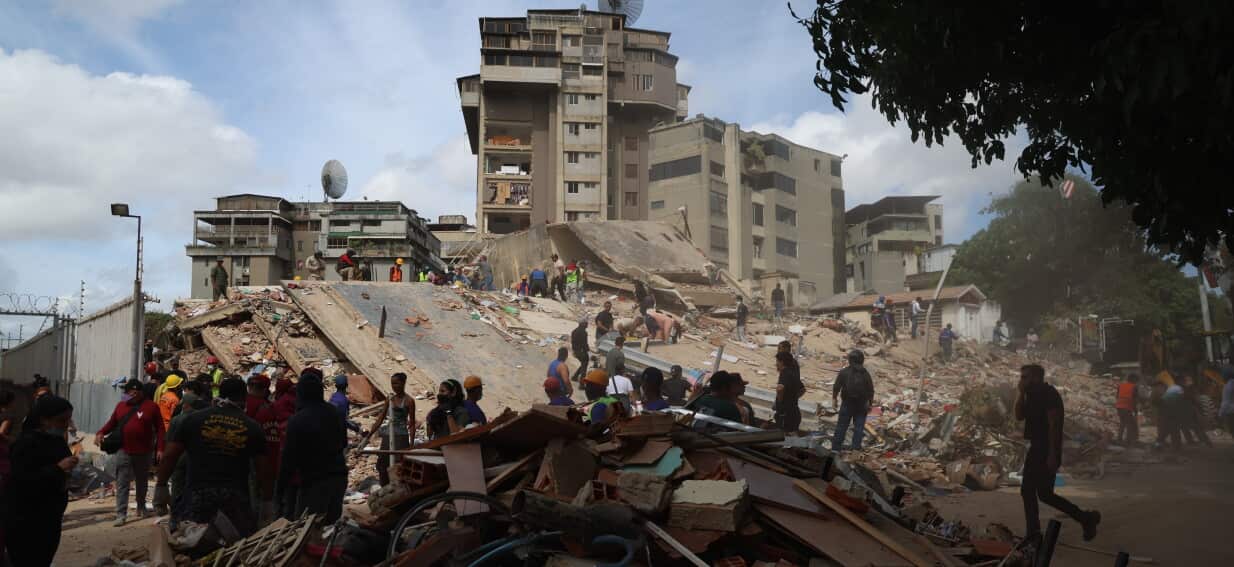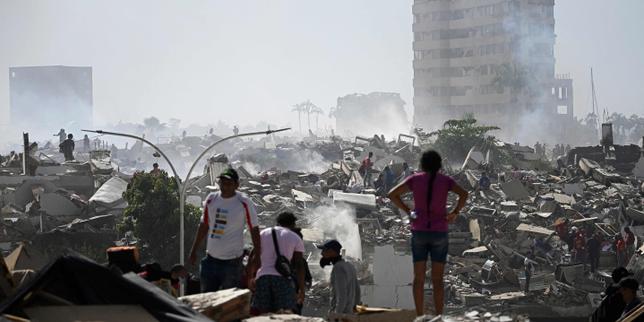
The lazy consensus loves a natural disaster. It cleanses the conscience. Following the devastating twin earthquakes that tore through northern Venezuela, the media recycled its favorite comforting line: "Venezuela is a seismic country; 80% of the population lives right on top of active faults."
It is a beautiful narrative for incompetent administrators. It frames a man-made tragedy as an inevitable act of God. It implies that if you build a city near the junction where the Boconó, San Sebastián, and El Pilar faults meet the Caribbean plate, you are simply playing Russian roulette with geography.
This is a dangerous lie.
The real crisis in Venezuela isn't the tectonic plates shifting beneath the surface. It is the systemic, structural decay above it. The catastrophic damage seen in Caracas and La Guaira wasn't an unavoidable consequence of a magnitude 7.5 mainshock. It was an engineering and regulatory choice.
The Fault Line Myth: Geography is Not Destiny
Let's dismantle the central premise of the panic-mongers. Yes, approximately 80% of Venezuelans live in areas of high seismic threat. The Venezuelan Foundation for Seismological Research (FUNVISIS) has mapped this for decades. The 100-kilometer-wide strip along the Andean and coastal mountain ranges is a known hot zone.
But proximity to a fault line does not equal an inevitable mass casualty event.
Consider Tokyo. Consider San Francisco. Consider Santiago de Chile. These cities sit on tectonic powder kegs that make the northern coast of South America look tranquil. Yet, when a major quake hits Chile, buildings sway, glasses clink, and people go back to dinner. When the June 24 doublet earthquake hit Venezuela, non-ductile concrete structures exploded.
The hazard is natural. The risk is manufactured.
The competitor article treats the 80% statistic as a condemnation, a geographical error made by the country's founders. In reality, population distribution is dictated by water, climate, and commerce—not seismic maps. The problem isn't where the people are living. It is what they are living inside of.
The "Double Tap" and the Concrete Lie
I have analyzed structural failures across Latin America for two decades. I have seen municipal funds poured into cosmetic urban renewals while the structural bones of the city rot. Venezuela's recent disaster revealed exactly what happens when corrupt governance meets outdated engineering.
Independent structural dynamics experts point out that the recent disaster was exacerbated by a "double tap"—a M7.2 foreshock followed less than 40 seconds later by a massive M7.5 mainshock.
"Most of what collapsed appears to be what we call non-ductile concrete buildings; that is, buildings where structural elements like columns and beams simply don't have enough steel, or the steel they have is not properly distributed, to absorb seismic energy without shattering."
When the first shock hit, it weakened these brittle frames. When the second shock arrived 39 seconds later, the buildings didn't bend. They pancaked. They exploded.
[Brittle Non-Ductile Concrete] + [High-Intensity Seismic Waves] = Catastrophic Brittle Failure
[Flexible, Ductile Steel-Reinforced Frame] + [High-Intensity Seismic Waves] = Controlled Deflection
Venezuela actually introduced a highly progressive seismic building code in 1982. On paper, anything built after that year should have possessed the ductility required to survive the June 24 shockwaves. But a code is only as good as its enforcement. For the past twenty-five years, building inspections in Venezuela became a transactional joke. Substandard concrete was poured, rebar density was slashed to save costs, and building permits were bought rather than earned.
The Vulnerability Trade-Off Nobody Admits
If you want to fix this, you have to accept a brutal reality: retrofitting an entire nation's informal housing is economically impossible right now.
The media focuses on the high-rises of San Bernardino, Los Palos Grandes, or Altamira. But the real ticking time bomb is the informal sector—the barrios clinging to the steep slopes of the Central Cordillera. When the shallow seismic waves traveled from the hard bedrock of Yaracuy into the loose sediments and steep mountain ridges of La Guaira and Caracas, the ground motion amplified aggressively.
To make these areas safe, you would have to forcibly displace millions of people and bulldoze entire mountainsides. No government, left or right, has the political will or the cash reserves to do that.
The contrarian solution isn't to preach about moving away from the faults. It is to pivot entirely toward localized, low-cost structural mitigation and decentralized emergency response networks. Stop trying to rebuild Caracas to look like Tokyo. Focus on reinforcing soft-story foundations in the most dense sectors using localized steel bracing, and accept that some zones must be completely abandoned to nature.
Blaming the 80% statistic is a coward's way out. The earth will always shake. It is time to stop pretending the faults are the ones writing the death certificates.