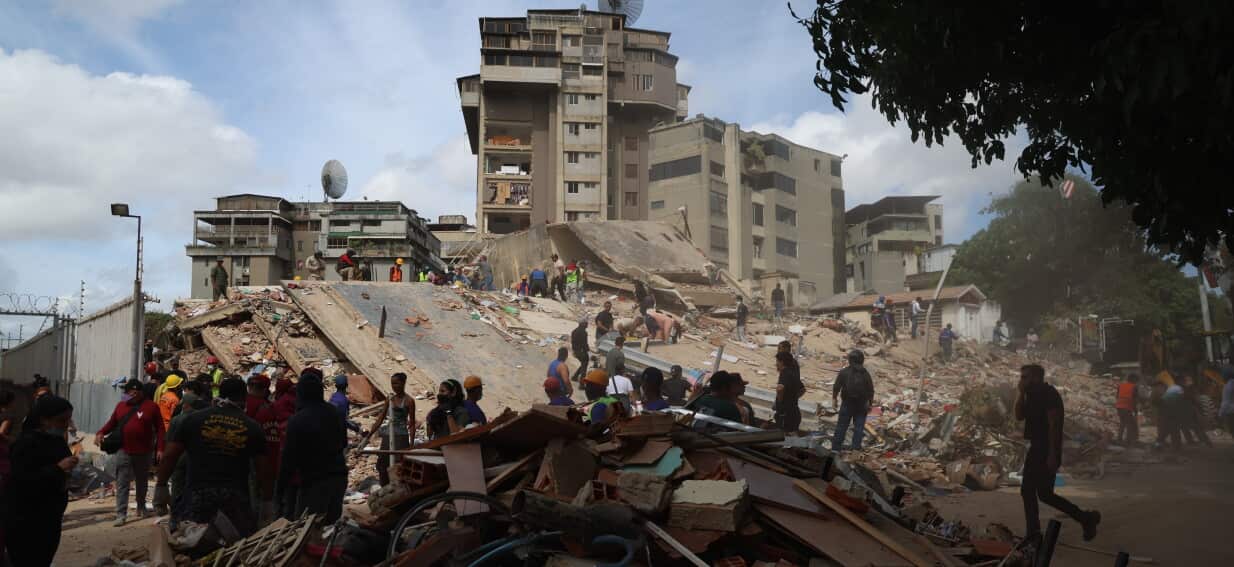
The ground does not just shake when an earthquake hits; it screams. It is a low, guttural roar that starts deep in the belly of the earth and tears through concrete, asphalt, and human lives before you even have time to process the sound.
In Caracas and across the vulnerable coastal ridges of Venezuela, that sound is a recurring nightmare. When the fault lines slip, the fragile infrastructure of a nation already stretched to its absolute limit buckles. Entire neighborhoods built precariously on hillsides risk sliding into valleys. For the families living inside those walls, a tremor is not a geological event. It is the sudden, terrifying lottery of survival.
But when the dust settles, the tragedy shifts from the physical to the geopolitical.
Nations do not operate on pure altruism. When an earthquake shatters a community, the international response is rarely just about blankets, clean water, and search-and-rescue teams. It is about presence. In the wake of recent devastating seismic activity, as Venezuelans dug through rubble, a hand reached out from thousands of miles away.
Iran pledged its immediate aid and solidarity.
To understand why a major power in the Middle East is rushing to send concrete mixers, medical supplies, and engineers to a Caribbean nation, you have to look past the standard diplomatic press releases. The real story is not found in the sterile language of international accords. It is found in the shared isolation of two nations that have learned to lean on each other when the rest of the world turns away.
The Chemistry of Common Ground
Consider two countries separated by an ocean, different languages, and vastly different cultures. On paper, the partnership makes little sense. But geography is a luxury; shared hardship is a binder.
Both Tehran and Caracas exist under the heavy, suffocating weight of intense international sanctions. When a country is cut off from global banking systems, when it cannot easily buy parts to fix its electrical grids or medicine to stock its hospitals, normal life becomes a series of complex workarounds.
Imagine a local hospital administrator in Venezuela trying to prepare for a natural disaster while missing basic surgical tools. Now imagine an Iranian engineer who has spent the last decade inventing domestic alternatives to banned western technology. When the earthquake hit, the alignment was already built.
This is what diplomats call "south-south cooperation," but for the people on the ground, it is a lifeline forged in necessity. Iran’s promise of aid is a deliberate message to the world: isolation only works if you let it keep you apart.
The assistance offered is practical, targeted, and immediate. Iranian officials quickly mobilized resources to assist in rebuilding damaged infrastructure, offering expertise in seismic retrofitting and urban recovery—skills honed in a homeland that is itself no stranger to catastrophic earthquakes. From the Bam earthquake of 2003 to the tremors along the Zagros Mountains, Iran understands the brutal mathematics of structural collapse.
The Invisible Stakes
But there is a tension here that we have to acknowledge.
When emergency cargo planes land in Caracas carrying Iranian aid, the western hemisphere watches with deep unease. For Washington and its allies, this is not a humanitarian mission; it is a strategic foothold. It is an assertive move into a sphere of influence that the United States has historically guarded with fierce jealousy.
The doubt is natural. Is this genuinely about helping a mother who just lost her home in a landslide, or is it about projecting power?
The truth is rarely an either-or proposition. It is both. For Venezuela, accepting aid is not a political statement; it is a matter of keeping people alive. When your house has collapsed and the water lines are ruptured, you do not check the passport of the worker handing you a filtration kit. You take it.
The alliance between these two nations has evolved from simple oil trades into a deeply integrated network of mutual survival. Iran has previously sent tankers of condensate to help Venezuela process its extra-heavy crude oil; Venezuela has provided gold and political alignment. The earthquake response is simply the latest, most human iteration of this bond.
Beyond the Rubble
The real test of this solidarity will not happen in the immediate aftermath, while the news cameras are still rolling and the statements of grief are fresh. It will happen six months from now.
It will happen when the ruined buildings need to be completely rebuilt from the foundations up. It will happen when the psychological trauma of the survivors requires long-term stability, not just temporary tents.
The global community often views these events through a macroscope, focusing on shifting alliances and regional balance. But the macroscope misses the texture of the crisis. It misses the sound of a shovel hitting dirt, the smell of ruptured gas lines, and the quiet dignity of people refusing to leave their land.
Iran’s pledge of aid is a reminder that the geopolitical map is being redrawn, not by treaties signed in grand European halls, but by concrete actions taken in the dust of disaster zones. As Venezuelan communities begin the long, agonizing process of recovery, they do so with a stark realization: their neighbors down the street might look away, but a friend across the world is watching.