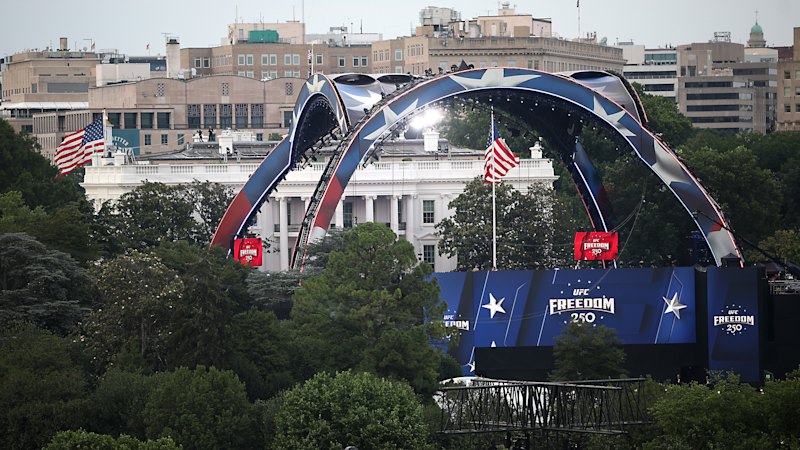
The South Lawn of the White House is usually reserved for state arrivals, Easter egg rolls, and the quiet dignity of executive history. Tonight, it is encased in chain-link steel, bathed in the blinding glare of television production lights, and vibrating with the bass of walkout music. Under the guise of celebrating the upcoming American Semiquincentennial, UFC Freedom 250 has transformed the executive mansion into a combat sports arena. The timing is entirely deliberate. Today is June 14, 2026, marking both Flag Day and Donald Trump’s 80th birthday. Yet, as thousands of invited guests cheer cageside and millions stream the event online, the real knockout blow did not happen in the Octagon. It dropped hours before the first preliminary fight, via a social media post that blindsided Washington and rewritten global geopolitics.
While fighters cut weight and crews assembled a temporary arena on the executive grass, American and Iranian emissaries were quietly concluding months of backchannel warfare and frantic diplomacy. The United States and Iran have officially agreed to a comprehensive deal to end their recent military conflict. Trump declared the immediate cessation of the naval blockade in the Strait of Hormuz, ordering the global shipping corridors to reopen.
The juxtaposition is staggering, even for an administration built on reality-television sensibilities. On the grass, young men bleed for sport. Behind the curtains, a high-stakes geopolitical gamble has just concluded, trading immense sanctions relief for a fragile truce that leaves Washington’s most critical long-term objectives unfulfilled.
The Choreography of Distraction
The staging of a professional mixed martial arts event at the seat of American presidential power is unprecedented. It is the culmination of a decades-long relationship between Trump and UFC CEO Dana White, a partnership that has successfully blurred the lines between sports entertainment and populist political theater. By moving the event from the traditional Fourth of July weekend to June 14, the administration turned a national milestone into a personal celebration of longevity and executive authority.
But the spectacle serves a far more tactical purpose.
Throughout the spring, the administration faced mounting domestic blowback over the economic fallout of the U.S. naval blockade in the Persian Gulf. Energy prices spiked, supply chains snarled, and the shadow of an open-ended conflict in the Middle East loomed over the upcoming midterm elections. The sheer noise of UFC Freedom 250 provided the perfect domestic cover to roll out an agreement that, under normal media scrutiny, would provoke fierce bipartisan resistance.
Consider the mechanics of the announcement. The news did not break through a formal White House press briefing or a solemn address from the Oval Office. Instead, it was pushed out directly to the public amidst the pre-fight hype, framed not as a diplomatic compromise, but as total capitulation by Tehran. Iranian state media immediately countered with its own narrative, broadcasting images of victory banners claiming Washington was forced to sign the armistice.
This is information warfare optimized for the attention economy. By embedding a monumental foreign policy shift into a high-octane sports broadcast, the administration effectively muted the immediate capacity for critical analysis.
What the Iran Deal Leaves Behind
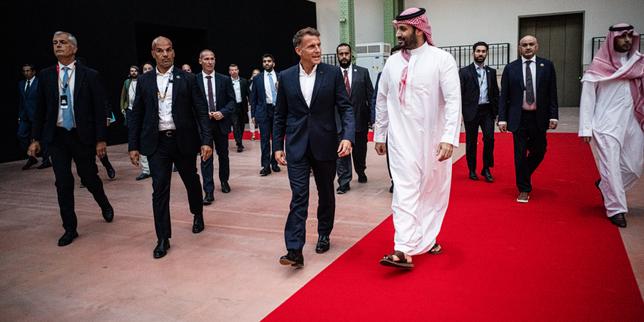
When the official signing ceremony takes place in Switzerland this Friday, the text will reveal an agreement born out of mutual exhaustion rather than structural resolution. A close examination of the negotiation timeline, which stretched across grueling rounds from Muscat to Islamabad, reveals that the core catalyst for the war remains completely unaddressed.
The war began under the banner of a "maximum pressure" campaign aimed at permanently dismantling Iran’s nuclear ambitions and stripping its regional proxy network. The resulting agreement achieves neither.
Instead, the treaty essentially restores the status quo ante bellum, but with a drastically altered balance of leverage. To secure the reopening of the Strait of Hormuz and a permanent termination of military operations on all fronts, including Lebanon, the United States made massive concessions:
- The immediate lifting of the naval blockade on Iranian ports.
- The relaxation of primary and secondary economic sanctions to allow the resumption of Iranian oil exports.
- The planned release of billions of dollars in frozen Iranian assets.
In return, the fundamental issue that initiated the crisis—Iran's highly enriched uranium stockpile—remains unresolved. Throughout the negotiations, American officials alternated between demanding the total destruction of the material or its forced removal to a third country like Russia. The finalized deal simply punts the nuclear problem down the road, decoupling the immediate cessation of hostilities from long-term non-proliferation goals.
The Fractured Coalition
The blowback within Washington and among traditional allies is already simmering beneath the surface of tonight's festivities. Hawkish elements within the president's own party are quietly furious. They argue that the administration has surrendered its leverage just as the economic pressure on Tehran was reaching a boiling point. The deal grants Iran the exact economic lifeline it required, without forcing a verified decommissioning of its nuclear infrastructure.
Simultaneously, the view from Jerusalem is one of deep betrayal. Israel, which has spent the last year pushing its military operations deeper into Lebanon to permanently neutralize Hezbollah, now finds its strategic objectives cut short by a Washington-mandated ceasefire. The agreement forces a halt to operations before the underlying threat to Israel's northern border could be structurally resolved.
The geopolitical reality is that Iran enters this truce in a position of unexpected strength. Despite suffering significant economic pain and the loss of personnel during the brief war, Tehran has demonstrated that it possesses the asymmetric capability to choke global energy markets at will. By successfully linking the maritime blockade to the broader regional conflict, Iran has established a dangerous precedent: it can use the threat of global economic chaos to escape the consequences of its nuclear enrichment program.
Steel Cages and Sovereign Power
Back on the South Lawn, the crowd roars as the main event fighters enter the cage. The image of the Octagon framed against the iconic neoclassical portico of the White House is an indelible metaphor for the current era of American governance. It is an explicit rejection of traditional political norms, replacing bureaucratic decorum with raw, visceral showmanship.
For an eighty-year-old president, the event is the ultimate projection of vitality. Surrounding oneself with elite combat athletes on one's birthday is a calculated performance designed to project strength, dominance, and defiance against the inevitable march of time.
Yet, the true test of power is not found in the choreography of a cage fight or the optics of an unprecedented birthday party. It is found in the endurance of the treaties signed in the quiet rooms of diplomacy. As the lights eventually dim on the South Lawn and the temporary arena is dismantled, the reality of the Swiss agreement will set in. The administration has traded long-term strategic security for a short-term economic reprieve, betting that the American public will remember the roar of the crowd rather than the details of the capitulation.
The immediate crisis in the Persian Gulf may be deactivated, but the underlying fuse continues to burn. Washington has not won a war; it has merely purchased a temporary intermission, and the price tag was extraordinarily high.