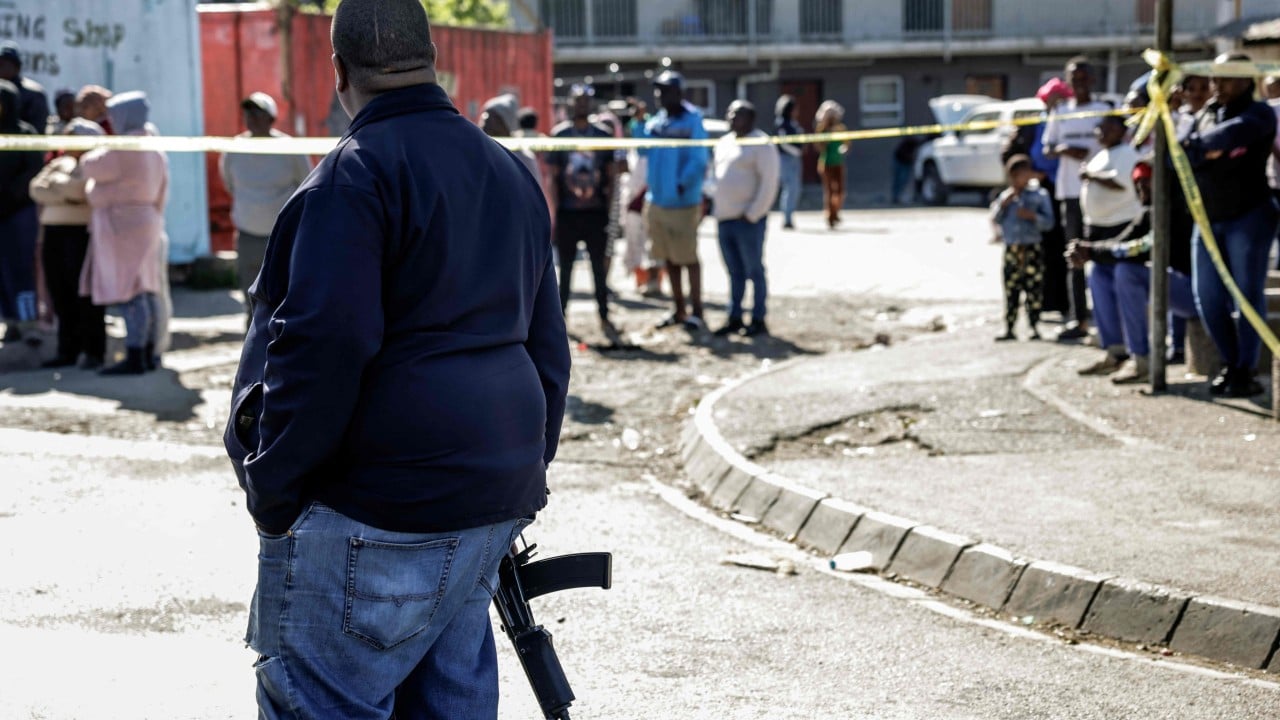
When twenty-seven people are cut down in a matter of hours across separate mass shootings, you don't just look away and call it ordinary crime. South Africa is facing a systemic fracture. The twin tragedies—hitting communities where illegal mining feuds and bitter commercial rivalries run deep—laid bare a terrifying reality: the state's grip on violent syndicates is slipping precisely when stability matters most.
Local elections are looming, and political tensions are pouring gasoline on an already raging fire of organized crime. Let's look past the standard political soundbites. What is actually driving these massacres, and why are security forces constantly playing catch-up in the townships? Building on this topic, you can find more in: The Clock in the Mountain.
The Underground War No One Wants to Fix
Illegal mining isn't just a handful of guys sneaking underground with hand tools. It is a multi-million-dollar war zone controlled by heavily armed, militarized syndicates. When competing factions fight over shaft access and illicit gold distribution networks, bodies pile up.
In areas like the Western Cape and the outskirts of Johannesburg, informal settlements have become battlegrounds. The September violence—which left 17 dead in one bloody encounter and another 10 dead shortly after—shows
Why South African Mining Feuds Turn Deadly Right Before Elections Analysts at Reuters have provided expertise on this matter.
news
Elections bring out tension. In South Africa, that tension often gets written in blood underground.
When authorities confirmed twenty-seven bodies discovered in a ventilation shaft near Johannesburg, the headlines flashed and faded. But this wasn't a sudden tragedy born from thin air. It was the predictable collision of underground syndicate wars, illegal mining, and political desperation as the country barrels toward a high-stakes national vote.
If you only look at the surface, you miss how these systems actually operate. Let's break down what's happening beneath the earth and why politicians would rather look away.
The Underground Economy Nobody Controls
South Africa has thousands of abandoned mine shafts. Decades of industrial gold mining left a Swiss cheese of tunnels across the Gauteng province. When major corporations pull out, informal miners—locally known as zama zamas—move in.
They don't wear hardhats with company logos. They operate in the dark for weeks at a time, digging out remnants of gold using rudimentary tools. But simple survival is only half the story.
Over the last decade, these operations have professionalized into militarized criminal syndicates. Rival gangs from across Southern Africa now fight turf wars over rich mineral veins miles below the surface. They smuggle food down, they smuggle raw gold out, and they carry automatic weapons to defend their territory.
When twenty-seven bodies turn up in an abandoned shaft in Orkney, it's rarely an accident. It's an execution. Heavy security forces and rival factions regularly clash in pitch-black tunnels where no cameras reach.
Why Elections Amplify the Violence
Timing matters. Crime doesn't happen in a vacuum, and political calendars dictate when law enforcement cracks down—or looks the other way.
As national elections approach, politicians face intense pressure to show they control public safety. Law enforcement agencies launch high-profile crackdowns on illegal mining operations to prove competence. They cut off ventilation shafts. They block food supplies to force miners to the surface.
This creates a brutal panic. Underground syndicates fight viciously over shrinking access points and dwindling resources. When the state tightens the screws from above, the violence multiplies below.
Furthermore, local politicians often rely on informal networks for campaign mobilization. Turning a blind eye to illegal extraction has historically been a quick way to secure local loyalty or fund political machinery. When those political alliances shift during an election cycle, protection disappears. The syndicates are left to slaughter each other.
The Cost of Looking Away
The South African government treats illegal mining primarily as a law enforcement headache or an immigration issue, since many zama zamas come from neighboring countries like Lesotho and Zimbabwe.
That framing is a cop-out.
It is an economic crisis born from extreme unemployment and structural poverty. When the formal job market offers zero prospects, young men calculate that risking their lives underground for a speck of gold beats starving in the township. The syndicates exploit that desperation.
Until the state addresses the root economic failures and tackles the corrupt officials who fence the stolen gold, these mass casualties will keep happening. Police probes and crime scene tape won't stop the next shaft from turning into a mass grave.
The bodies in Orkney are a symptom of a deeper rot. The elections will pass, the campaign posters will come down, but the tunnels will remain dark, violent, and completely unregulated.