Ice does not merely exist in Greenland. It reigns.
It is a crushing, two-mile-thick weight of frozen water that presses down upon the earth with the quiet brutality of geologic time. For centuries, this white desert served as a natural moat. It kept the world away. It swallowed ships, defeated explorers, and offered an almost absolute isolation. But ice melts. And as the frozen crown of the planet softens under the steady creep of a warming atmosphere, the moat is draining.
Look north. Past the jagged fjords where calving glaciers thunder into the black sea, past the small wooden houses painted in bright yellows and reds clinging to the rocky shoreline, something profound is shifting. The Arctic is no longer a frozen footnote on the edge of a map. It is becoming the chessboard.
And the United States is watching.
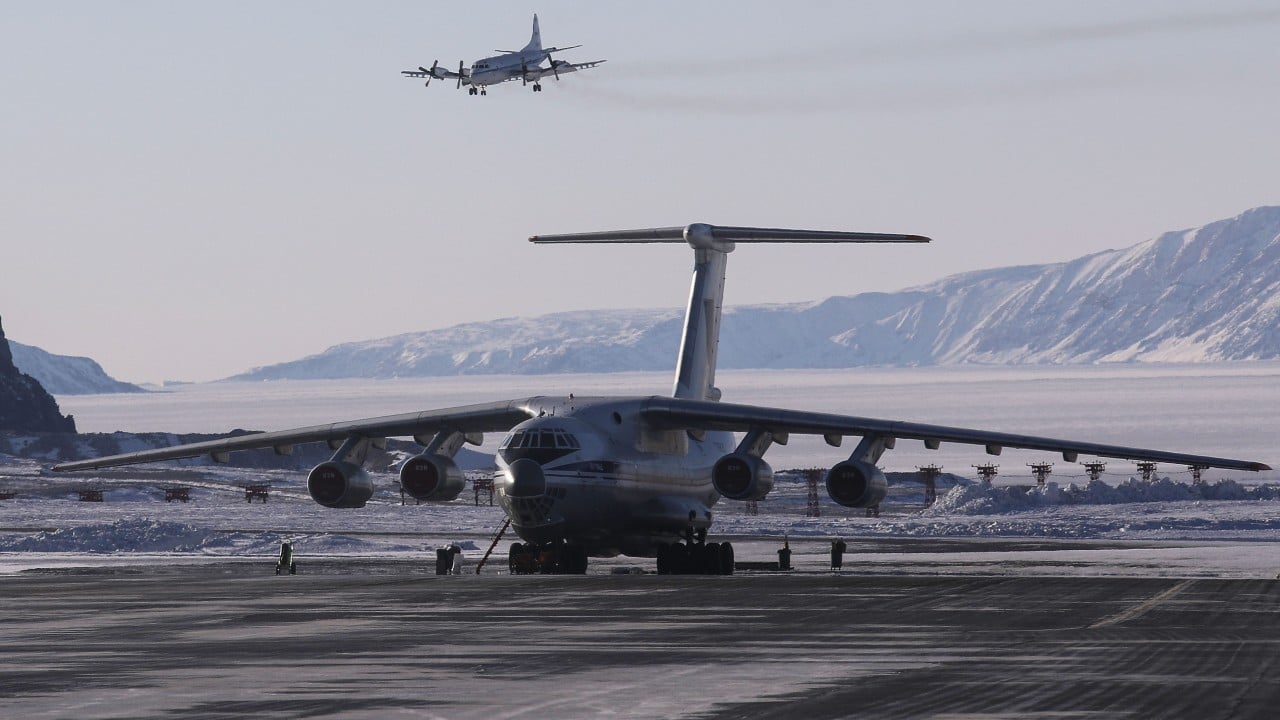
To understand why American eyes are fixed so intently on this autonomous territory of the Kingdom of Denmark, you have to look past the political headlines and stand where the wind strips the skin from your cheekbones. You have to stand at Pituffik Space Base, formerly known as Thule Air Base.
Picture a hypothetical radar technician named Marcus standing on the concrete apron of the base during the dead of the polar night. The sky above is not dark; it is alive with the electric green shimmer of the aurora borealis, a chaotic curtain of light dancing across the stars. But Marcus is not looking at the lights. His eyes are fixed on the massive, white, spherical radome looming against the horizon like a frozen moon. Inside that shell, a high-powered phased-array radar sweeps the polar sky, searching.
What is it searching for?
For decades, the answer was simple: Soviet missiles. During the Cold War, Thule was the ultimate tripwire, the northernmost outpost of a nervous empire listening for the rumble of bombers coming over the top of the world. Then the Soviet Union collapsed, and the base slipped into a quiet slumber of routine patrols and scientific observation. The world forgot about the ice.
The world was wrong to forget.
Today, the threat profile has evolved, and the silent watchers at Pituffik are busier than ever. The United States military is upgrading its gaze because the Arctic has become crowded. Russia has spent years clawing its way back into the high north, reopening Soviet-era airstrips, stationing air defense systems, and launching nuclear-powered icebreakers that can crush through multi-year ice as if it were paper. Moscow wants control of the Northern Sea Route, a shipping shortcut between Europe and Asia that shaves weeks off traditional transit times.
But Russia is not the only new player on the ice.
Thousands of miles to the south, a rising superpower looks at the shrinking polar cap and sees destiny. Beijing calls itself a "near-Arctic state"—a geographical stretch of the imagination given that the nearest Chinese border is thousands of miles away. Yet, China’s ambitions in the region are as concrete as the reinforced steel of its new research stations. Through the Polar Silk Road, a northern branch of its massive Belt and Road Initiative, Beijing is investing in Arctic shipping lanes, deep-water ports, and mineral extraction rights.
Greenland holds the keys to the future. Beneath the ice sheet lie vast, untouched deposits of rare earth elements, nickel, lithium, and uranium—the very materials required to build electric vehicles, advanced weaponry, and the digital infrastructure of the twenty-first century. When a Chinese state-backed firm attempted to buy an abandoned naval base site in southern Greenland a few years ago, alarm bells rang quietly in Washington and Copenhagen. The island was no longer just a strategic radar perch. It was the next great economic prize.
Consider the mathematics of geography. If you draw a straight line from Washington, D.C. to Beijing, or from Moscow to New York, the shortest path crosses the top of the world. The Arctic is the shortest distance between hostile intentions.
This brings us back to the quiet urgency animating American defense strategy in Greenland. The Pentagon does not want another nation dominating the choke points of the polar north. To prevent this, the United States is quietly reinforcing its partnerships, modernizing infrastructure, and reasserting its security architecture in the North Atlantic.
Yet, numbers and treaties miss the human reality of what is happening on the ground.
Talk to an Inuk hunter in the northern settlement of Qaanaaq, just a few dozen miles from Pituffik. He does not talk about great power competition or phased-array radars in abstract terms. He talks about the ice. He talks about the sea ice forming later in the autumn and breaking up earlier in the spring. He talks about the traditional hunting routes that are no longer safe because the winter floor is becoming thin and unpredictable.
The security of the Arctic is tied directly to the insecurity of its original inhabitants. As foreign navies, mining corporations, and military planners cast covetous eyes toward the north, the people who have lived in harmony with this extreme environment for millennia find their world being reshaped by forces far beyond their control.
There is an inherent tragedy in this geopolitical scramble. The very climatic changes that are opening the Arctic to exploitation—the burning of fossil fuels, the warming of the oceans, the retreat of the glaciers—are the symptoms of an industrial civilization consuming itself. And now, having melted the moat, the major powers are rushing across the puddles to see who can claim the mud.
Washington knows this. Copenhagen knows this. Nuuk knows this.
The diplomatic dance between the United States and Greenland is delicate. Greenland wants independence from Denmark eventually, but independence requires economic self-sufficiency. Where will that money come from? Mining? Tourism? Foreign investment? Every choice carries a risk. Accept too much investment from Beijing, and you trade Danish oversight for Chinese dependency. Align too closely with Washington, and you become an unsinkable aircraft carrier in someone else's global chess match.
So the radar spins. Day and night. Through blinding whiteout blizzards that reduce visibility to zero, through the long months of summer when the sun never sets and casts a low, golden amber light across the endless white expanse.
It tracks objects moving at hypersonic speeds through the stratosphere. It tracks commercial cargo vessels testing new polar routes. It listens to the digital chatter of a changing world.
We often think of borders as lines drawn on paper or fences built of barbed wire. But in the modern era, borders are invisible waves sent pulsing through the ionosphere, tracking the curvature of a warming earth. They are maintained by men and women stationed in remote outposts who look out over landscapes so stark and empty that they resemble the surface of another planet.
The ice is retreating. The silence is breaking.
And high above the fjords, the cold air carries the low, steady hum of machinery that never sleeps, listening for the future before it arrives.