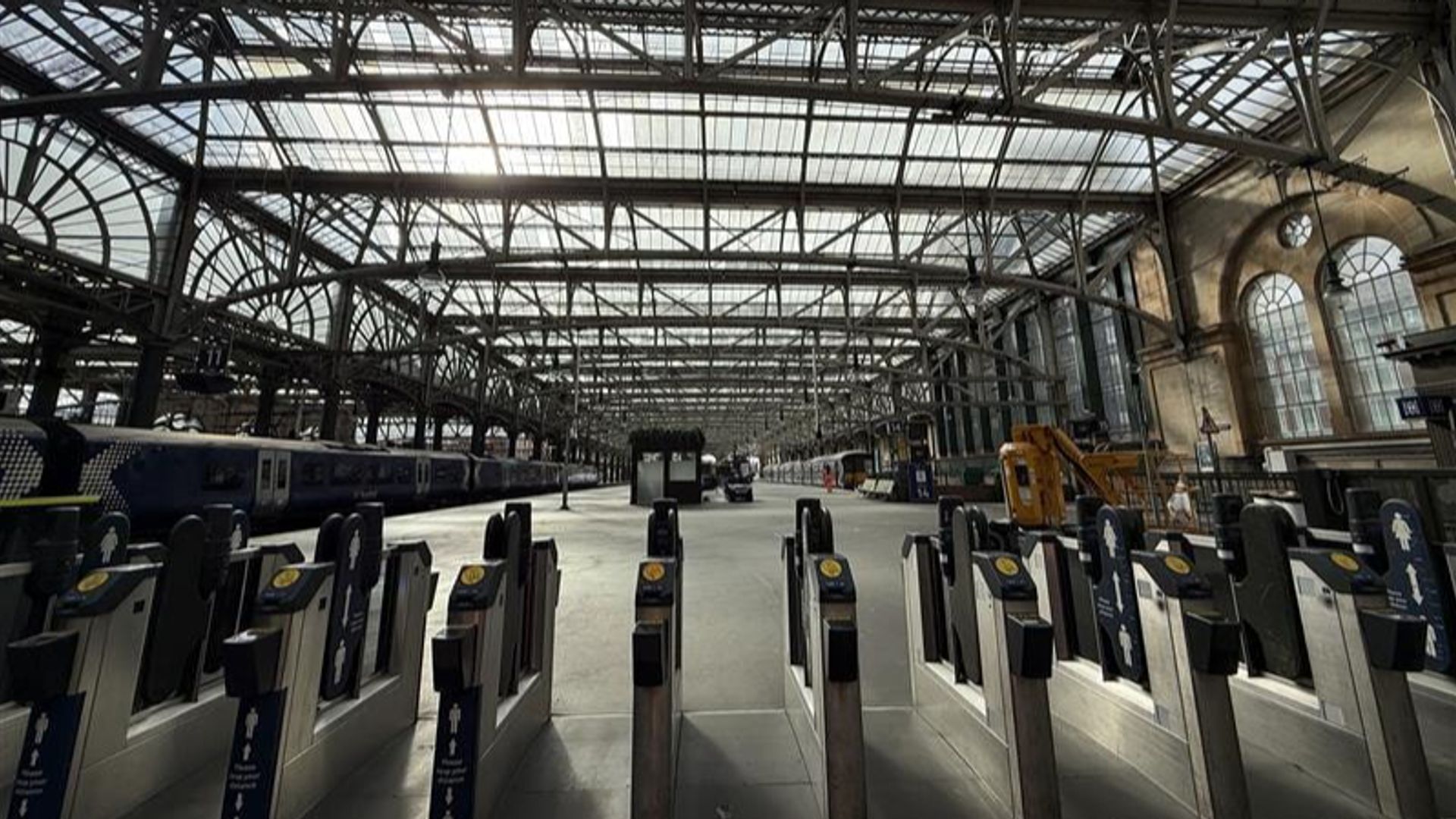
The smoke cleared years ago. The charred timbers of Troon’s historic station building were hauled away. And yet, the rail industry is still patting itself on the back for "reopening" a relic.
The press releases are predictably soft. They talk about restoration, community heritage, and the "vital link" being restored. It is a comforting narrative. It is also a lie. Reopening Troon station in its original image isn't a victory for Scottish transit; it is a textbook example of the sunk cost fallacy in public infrastructure. We are spending millions to recreate a nineteenth-century solution for a twenty-first-century crisis.
The Heritage Trap
Every time a fire guts a Victorian railway building, the same knee-jerk reaction occurs: rebuild it exactly as it was. This is "Disney-fication" masquerading as urban planning.
I have watched transport authorities burn through budgets trying to maintain "character" while the actual service—the thing people pay for—deteriorates. Heritage is a luxury. Efficiency is a necessity. By obsessing over the aesthetics of the Troon rebuild, Network Rail and its partners have dodged the harder, more important conversation.
Does a town like Troon actually need a sprawling, static station building in an era of digital ticketing and mobile working? Probably not. But it is easier to hire a stonemason than it is to redesign a transit hub from the ground up.
The Myth of the Vital Link
The "People Also Ask" sections of the internet are filled with queries about when the platform will be "fully operational." The premise of the question is flawed. "Operational" shouldn't mean "back to 2021 standards."
Modern rail travel is failing because it is rigid. We treat stations like cathedrals—heavy, permanent, and expensive to maintain. If we were truly being innovative, the fire at Troon would have been seen as a clean slate.
Imagine a scenario where we didn't rebuild the station house. Instead, we invested that capital into:
- High-frequency autonomous feeder shuttles that eliminate the need for massive station parking.
- Climate-controlled, modular shelters that cost a fraction of the price and can be upgraded in a weekend.
- Real-time integration with regional bus networks that actually sync with train arrivals.
Instead, we get a new roof and some fresh paint on an old idea. We are building a shrine to a way of traveling that is rapidly becoming obsolete.
The Financial Delusion
Let’s talk about the math that the "industry insiders" won't touch. The cost-per-passenger-benefit of these boutique station restorations is astronomical.
When a private business burns down, the owner asks: "Is this model still profitable?" When a public utility burns down, the government asks: "How do we make it look like nothing happened?"
The latter is a recipe for stagnation. We are subsidizing nostalgia. Every pound spent on replicating Victorian joinery at Troon is a pound not spent on electrifying the lines further north or fixing the systemic delays that plague the ScotRail network.
- The Hidden Cost: Maintenance on "heritage" structures is 3x higher than modern, streamlined glass and steel.
- The Opportunity Cost: The two-year lead time for "partial reopening" represents a massive loss in economic momentum.
- The Regulatory Cost: Adhering to historical building codes in 2026 is a bureaucratic nightmare that adds zero value to the commuter’s experience.
The Cult of the Commuter
We are told that the "community" demanded the restoration. But "community demand" is often just a vocal minority of property owners worried about their house values.
The actual users—the students, the office workers, the day-trippers—don't care about the Gault brick. They care about whether the train shows up. They care about whether there is a dry place to sit with a power outlet.
By prioritizing the "reopening" as a ceremonial event, the rail industry is signal-to-noise ratio at its worst. They are giving you a shiny wrapper on a stale product.
Stop Rebuilding and Start Redesigning
The standard defense is that these buildings are "the soul of the town." This is sentimental nonsense. The soul of a town is its connectivity and its economy. A burnt-out shell is a tragedy; a poorly planned, expensive replacement is a policy failure.
If we want a rail system that actually competes with the car, we have to stop treating stations like museums. We need to move toward "Station-as-a-Service" (SaaS in a physical sense). Minimalist, high-tech, low-maintenance hubs that prioritize flow over form.
Troon could have been the pilot program for the future of the North Clyde and Ayrshire lines. It could have been a modular, solar-powered, ultra-efficient transit node. Instead, it’s just another station that looks great on a postcard and functions like it’s 1950.
The rail industry doesn't need more ribbon-cutting ceremonies. It needs an intervention.
Stop asking when the station will be "back to normal." Normal was the problem. We should be asking why we’re so afraid to build something better.
Build for the passenger of 2050, or don't build at all.