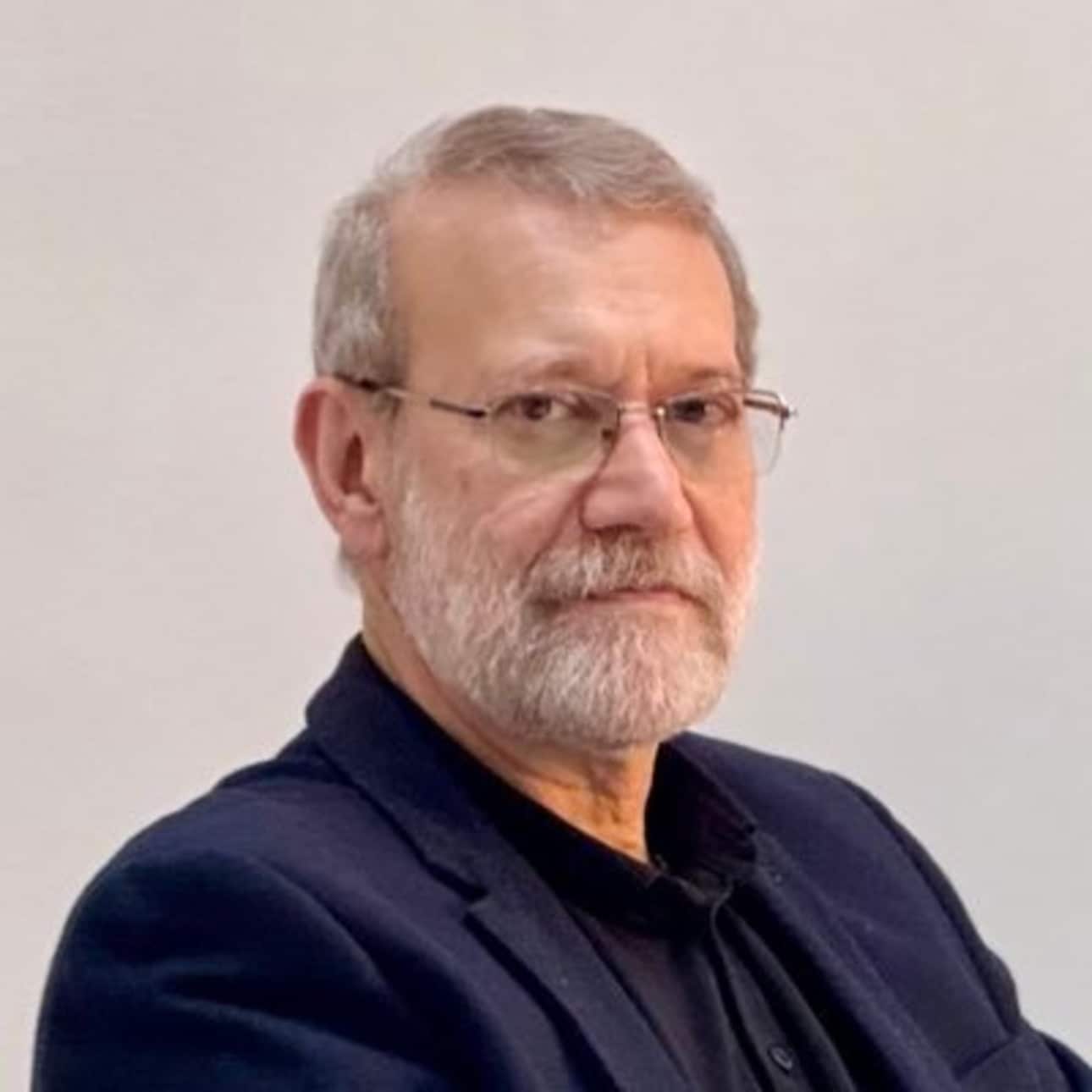
The assassination of Ali Larijani in an Israeli airstrike on March 17, 2026, isn't just another name on a hit list. It's the removal of the last adult in the room for the Iranian regime. While headlines focus on his title as the Secretary of the Supreme National Security Council, the truth is much heavier. Larijani was effectively the glue holding a fracturing state together after the death of Supreme Leader Ali Khamenei just weeks ago.
If you're trying to understand why this specific strike in Tehran matters more than the dozens before it, look at the vacuum he leaves behind. He wasn't just a bureaucrat; he was a philosopher-general who could speak to both the IRGC hardliners and Western diplomats without losing his footing. Now, that bridge is gone.
A Legacy of Power and Pragmatism
Ali Larijani spent decades as the ultimate survivor in Iran's cutthroat political ecosystem. He didn't just hold office; he defined the institutions he ran. From his ten-year stint heading the state broadcaster (IRIB) to his twelve years as the Speaker of Parliament, he knew where every body was buried.
He was the guy the regime called when things got complicated. When the 2015 nuclear deal needed to be shoved through a reluctant parliament, Larijani was the architect of that victory. When the country faced a "12-day war" in June 2025, it was Larijani who stepped back into the inner circle to manage the national security strategy.
He was unique because he wasn't a cleric. In a system dominated by turbans, Larijani was a mathematician and a Kantian scholar. He famously wrote his doctoral dissertation on Immanuel Kant, and that cerebral approach made him a formidable negotiator. He didn't just shout slogans; he calculated moves.
The De Facto Leader After Khamenei
The real shockwave comes from the timing. Following the US-Israeli strikes on February 28, 2026, that killed Ayatollah Ali Khamenei, the Iranian leadership went underground. In the chaos of succession—with Mojtaba Khamenei's status being debated and the IRGC taking more direct control—Larijani emerged as the de facto manager of the state.
He was the person directing the response to the massive domestic protests in January 2026. While the West sanctioned him for his role in that brutal crackdown, the regime saw him as the only person capable of coordinating the military, the intelligence services, and the remaining clerical establishment.
- The Strike: Targeted a hideout apartment in Tehran.
- The Casualties: Included his son, Morteza, and his deputy, Alireza Bayat.
- The Impact: Leaves the Supreme National Security Council (SNSC) without its primary coordinator during an active war.
Why the West and Israel Changed Their Minds
For a long time, there was a whisper in diplomatic circles that Larijani could be a "transitional figure." The idea was that if the regime ever had to negotiate a surrender or a major shift, he was the only one with enough "system credit" to make it stick.
That calculation clearly changed. By targeting him, Israel and its allies have signaled that they aren't looking for a reformer within the system anymore. They're looking to decapitate the leadership entirely. The IDF's description of him as the "effective leader" of the "terror regime" shows they no longer saw him as a partner for a future deal, but as the brain behind the current resistance.
What Happens to Iran Now
With Larijani dead, the internal competition for what's left of Iran is going to get ugly. You have a "leadership vacuum of extraordinary depth," as some analysts are calling it. The IRGC is likely to stop pretending they're under civilian or "strategic" guidance and take over every lever of power that's still functioning.
This also kills any immediate hope for a ceasefire. Larijani was the man who would have negotiated it. Without him, the voices calling for "decisive and regrettable" retaliation—like Army Chief Amir Hatami—are the only ones left in the room.
Immediate Next Steps for Observers
- Watch the Strait of Hormuz: Trump’s threats to hit Iran "twenty times harder" if oil flow stops are now facing a regime that feels it has nothing left to lose.
- Monitor the IRGC Command: Look for who steps into the SNSC role. If it’s a pure military man like Mohsen Rezaee, expect total escalation.
- Domestic Unrest: With the "mastermind" of the January crackdown gone, keep an eye on whether the protest movement finds new life in the confusion.
Larijani was a man who combined a life of contemplation with a life of action. Now that he’s gone, the Iranian regime is left with plenty of action, but very little of the contemplation that kept it alive for 47 years.