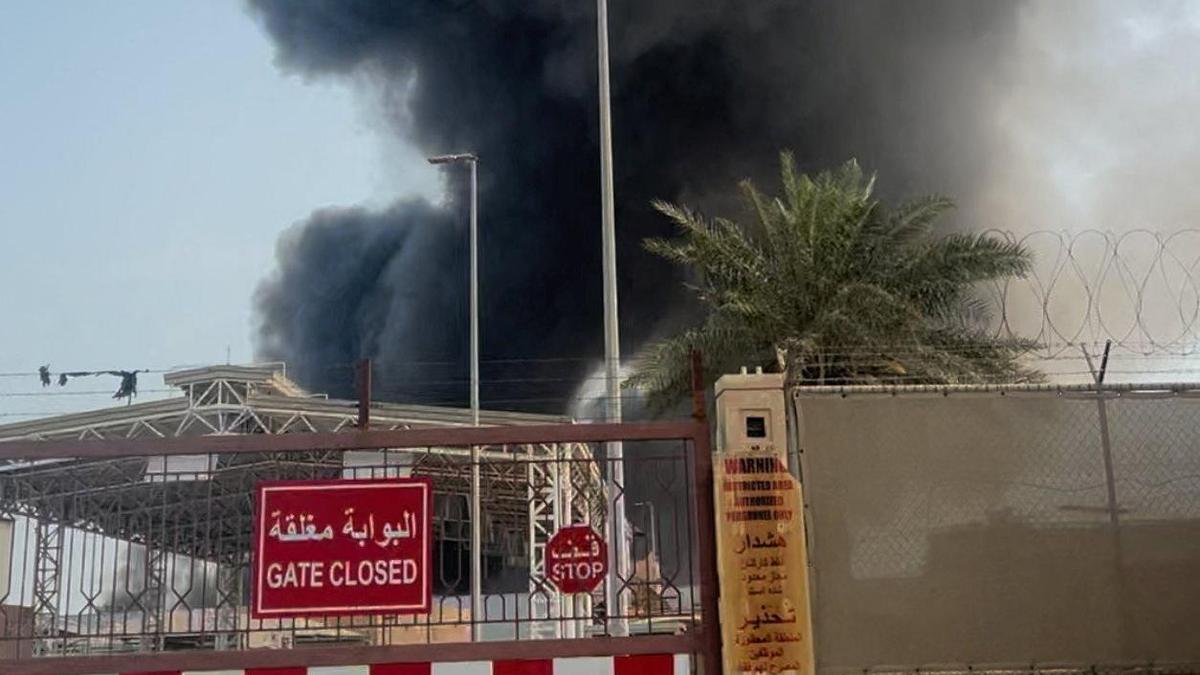
The lethality of modern urban warfare is not merely a product of explosive yield but a function of structural density and the failure of "deconfliction intervals." When a precision strike occurs in a densely populated multi-use environment—such as the site in Lebanon where eleven individuals were recently killed—the casualty rate is determined by the intersection of three specific variables: the blast pressure wave, the collapse mechanics of reinforced concrete, and the proximity of high-value targets to civilian infrastructure. Understanding this event requires moving beyond the surface-level tragedy to analyze the structural and strategic breakdown that converts a surgical objective into a mass-casualty event.
The Triad of Urban Lethality
To quantify why a single strike results in double-digit fatalities, we must examine the specific mechanics of the engagement. The "Success-to-Collateral Ratio" in urban environments is governed by three primary pillars.
1. The Proximity Variable
In Lebanese urban centers, the distinction between military assets and civilian life is often non-existent in a spatial sense. This is not necessarily a tactical choice by all actors, but a result of historical zoning and high-density development. When a target is embedded within a residential block, the "Safe Buffer Zone" (SBZ) is effectively zero. Any munition with a lethal radius exceeding five meters will, by definition, impact non-combatants.
2. Structural Fragmentation and Secondary Debris
Most fatalities in these strikes do not result from the initial fireball. They result from the conversion of building materials into high-velocity projectiles. Reinforced concrete, while strong against static loads, becomes a source of secondary fragmentation when subjected to high-order explosives.
- The Spalling Effect: High-pressure waves travel through concrete, causing the interior surface to "spall" or flake off at lethal speeds.
- Structural Pancakes: If a strike hits a load-bearing column, the resulting vertical collapse traps occupants in "void spaces" that are frequently smaller than the human body can survive.
3. The Intelligence Lag
There is a fundamental decay in the accuracy of human intelligence (HUMINT) versus the speed of kinetic execution. If an operative is identified at a location at 14:00, but the strike occurs at 14:15, the "Civilian Occupancy Variable" may have shifted. In the case of the strike that killed eleven, the data suggests a failure to account for the peak occupancy of the structure at the time of impact.
The Economics of Asymmetric Attrition
The strike in Lebanon serves as a data point in a broader strategy of "Degradation via Infrastructure." For the striking party, the objective is rarely just the elimination of an individual; it is the destruction of the logistical ecosystem that supports them.
The Cost Function of Precision Munitions
While a Joint Direct Attack Munition (JDAM) or a Spike missile is marketed as a precision tool, its precision is limited to its GPS coordinates, not its biological impact. The "Cost per Kill" increases exponentially when international diplomatic pressure is factored in following civilian casualties. However, from a cold military-strategic perspective, the destruction of a residential building used for "dual-use" purposes (storage and living) serves to displace the support network of the adversary.
The Displacement Metric
For every high-value target (HVT) eliminated, the "Displacement Metric" measures how many civilians are forced to flee. This creates a secondary strategic effect:
- Resource Strain: Influx of Internally Displaced Persons (IDPs) into neighboring regions.
- Intelligence Exposure: Displaced populations are easier to monitor than those embedded in stable urban grids.
- Psychological Attrition: The erosion of the "Sanctuary Myth"—the belief that certain civilian areas are off-limits.
Technical Limitations of "Surgical" Warfare
The term "surgical strike" is a misnomer that ignores the physics of thermodynamics. Even the most advanced thermobaric or fragmentation warheads have a "Circular Error Probable" (CEP) and a "Damage Radius" that cannot be narrowed beyond the laws of physics.
The Overpressure Barrier
Human organs, specifically the lungs and ears, are susceptible to overpressure levels as low as 5-10 psi. A standard 500-lb bomb creates an overpressure wave that can remain lethal far beyond the visible scorch marks. In an enclosed alleyway or a Lebanese apartment block, this pressure is reflected and amplified by the walls, creating a "Reflected Wave" effect. This explains why individuals in adjacent rooms, who were not hit by shrapnel, are often found dead with no visible external injuries.
The Intelligence-Kinetic Gap
There is a persistent hypothesis in modern strategic circles that real-time surveillance (drones/SIGINT) eliminates the risk of error. This is false. The "Latency of Intent" is the time it takes for a target to move from a "clean" area to a "cluttered" area. If the decision-to-fire loop is longer than thirty seconds, the probability of a civilian entering the lethal radius increases by a factor of 0.15 for every additional ten seconds in a high-density environment.
The Erosion of International Law Buffers
The killing of eleven individuals in a single strike highlights the decaying utility of the "Principle of Proportionality." Under International Humanitarian Law (IHL), a strike is legal if the military advantage outweighs the civilian harm.
The problem is the lack of a standardized "Quantification of Advantage."
- How do you weigh the life of one commander against eleven civilians? * Is the advantage "Immediate" (preventing a rocket launch) or "Strategic" (degrading long-term command)?
The current trend in the Levant suggests a shift toward "Strategic Advantage" modeling, where the long-term degradation of an adversary’s command structure is used to justify higher immediate civilian casualty counts. This represents a fundamental pivot from the counter-insurgency (COIN) doctrines of the early 2000s, which prioritized winning "hearts and minds" through casualty minimization.
The Logistics of the Aftermath
Post-strike analysis often ignores the "Secondary Attrition" phase. After the initial eleven deaths, the local social and economic fabric undergoes a rapid transformation.
1. Forensic Contamination
In the immediate aftermath of such strikes, the rush to rescue survivors often destroys forensic evidence that could determine exactly what was being targeted. This creates an "Information Vacuum" that is filled by propaganda from both sides.
2. The Radicalization Feedback Loop
Data from previous conflicts in the region indicates that high-casualty strikes in residential areas provide a "Recruitment Subsidy" for the targeted group. The "Replacement Rate" for a mid-level commander is usually measured in weeks, whereas the resentment generated among the surviving population lasts for decades.
Strategic Trajectory and Forecast
The shift in engagement rules seen in this Lebanese strike indicates a move toward "Total Urban Interdiction." This strategy assumes that any infrastructure used by an adversary loses its protected status entirely.
The logical conclusion of this trajectory is the "Depopulation of the Borderlands." As the risk of being near a potential target becomes a statistical certainty of death, the civilian buffer will continue to evaporate. Strategic planners must recognize that "precision" is no longer a shield against political or humanitarian fallout; it has become a tool for the systematic dismantling of urban viability.
Future operations will likely see an increase in the use of smaller, "low-collateral" munitions (such as the R9X "Flying Ginsu"), but these are ineffective against the reinforced bunkers or concrete-heavy structures typical of Lebanese architecture. Therefore, the reliance on high-yield explosives—and the resulting double-digit casualty counts—will remain the operational baseline for the foreseeable future. Organizations and observers must recalibrate their expectations: the "surgical" era is being replaced by an era of "Structural Attrition," where the building is as much a target as the person inside it.
The most effective strategic play for non-aligned observers is the establishment of "Verified Neutral Zones" (VNZ) that are physically separated from high-density residential grids, though the geographic constraints of Southern Lebanon make this an engineering and political improbability. Absent this, the casualty rate per strike will continue to track with structural density, regardless of the "precision" of the guidance systems used.
Would you like me to analyze the specific munition types most commonly utilized in these strikes to determine their specific overpressure-to-fatality ratios?