The Economic Mechanics of Modern Air Defense Attrition
Modern industrial warfare operates on an economic equation that peacetime defense procurement models were never designed to manage. When state-on-state conventional conflict returned to the European continent, it exposed a fundamental misalignment between the capital-intensive nature of high-end precision missile design and the sheer volume demanded by prolonged high-intensity combat. European ministries of defense spent decades optimizing their acquisition strategies for expeditionary operations, low-density counter-insurgency strikes, and lean, just-in-time supply chains. This historical philosophy produced weapon systems of exquisite technological sophistication alongside structural vulnerabilities in production throughput and unit economics.
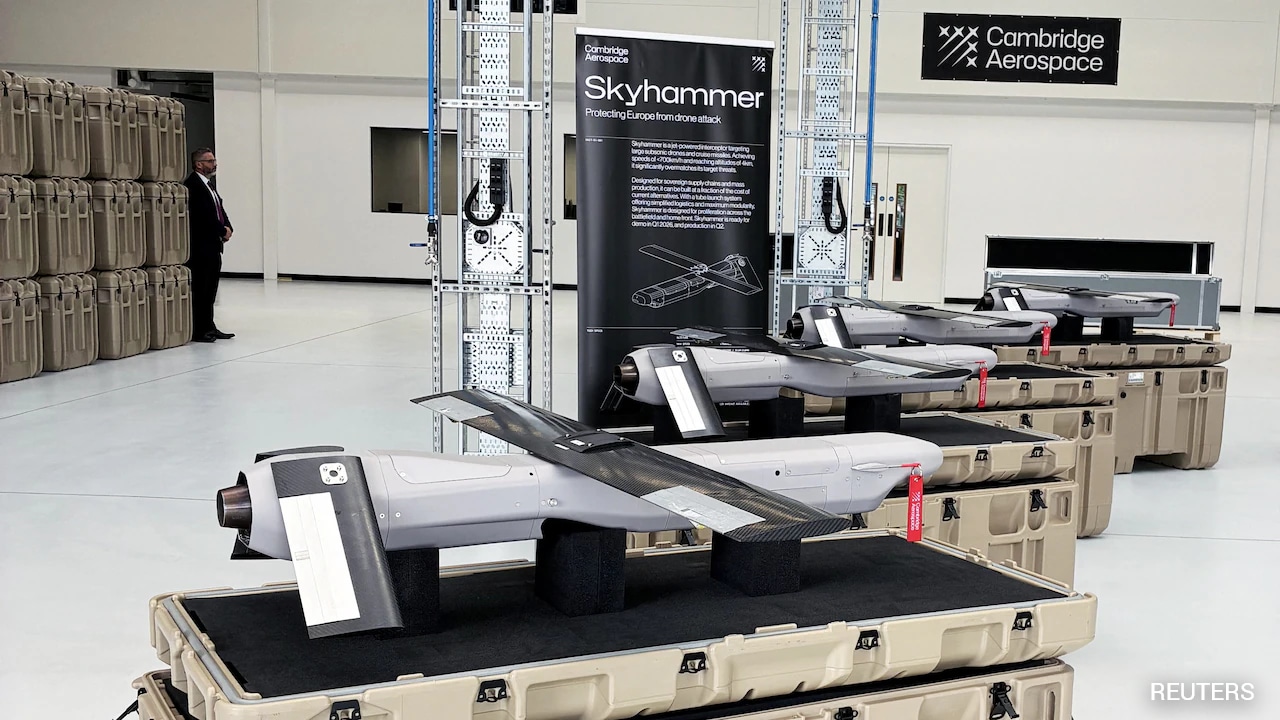
The core crisis facing European arsenals today is not merely a shortage of physical inventory; it is a profound cost-exchange mismatch. Interceptors designed to neutralize advanced ballistic and low-observable cruise missiles carry procurement price tags running into millions of units of local currency. When adversaries deploy low-cost, mass-produced uncrewed aerial vehicles and saturation munitions, defenders are forced into a severe mathematical trap. Expending a multi-million-dollar interceptor against a low-cost platform degrades fiscal sustainability long before it exhausts the attacker's inventory.
To deconstruct this operational reality, analysts must evaluate the cost function of air defense through three distinct economic variables: unit acquisition cost, manufacturing lead time, and stockpile replenishment velocity. Traditional procurement metrics prioritized reliability and precision over volume and scalability. Consequently, when consumption rates spiked across European and allied defense sectors, the industrial base found itself incapable of pivoting from artisanal, low-rate initial production to mass-scale manufacturing without encountering severe systemic friction.
Anatomy of the Tiered Supply Chain Constraint
To understand why European defense output cannot instantly match wartime demand, one must examine the physical architecture of missile manufacturing. A missile is not assembled on a single, self-contained production line; it is the final output of a complex technological ecosystem reliant on specialty chemical precursors, precision electronics, and rare alloy metallurgy.
The primary constraint points reside deep within Tier 2 and Tier 3 supply chains. Consider solid rocket motors, a critical subsystem for both tactical air defense and artillery rockets. The production of composite propellants requires specialized energetic materials, restricted chemical stabilizers, and strict temperature-controlled curing facilities. European capacity for nitrocellulose, specialized gunpowder, and ammonium perchlorate experienced decades of systemic downsizing following the post-Cold War peace dividend. Expanding these chemical production facilities requires complex environmental permitting, heavy capital expenditure, and specialized engineering talent that cannot be rapidly scaled through financial injection alone.
Lead times for forging critical structural components and guidance chips often stretch across multiple years, creating a structural lag between contract signature and physical delivery. Order books across major European contractors have expanded exponentially, yet revenue growth does not translate directly into immediate product delivery. The backlog-to-production ratio illustrates a systemic capacity ceiling. While funding instruments have injected billions into European defense budgets, the physical conversion of cash into finished munitions remains bound by material throughput limitations and specialized labor shortages.
The Geographic Shift and Industrial Integration
Recognizing these domestic constraints, European strategy has shifted from external procurement dependence toward localized industrial integration and co-production models. For years, European defense acquisition relied heavily on foreign architectures, particularly from the United States, creating extended delivery horizons that stretched well into the next decade.
To bridge the temporal gap between immediate tactical requirements and long-term domestic industrial scaling, European institutions have redirected financing instruments directly toward regional manufacturing ecosystems. This includes funding local production lines within frontline states, where rapid iteration cycles and battlefield feedback loops shorten the time required to field functional systems. By integrating European capital with wartime manufacturing innovation, policymakers attempt to bypass traditional bureaucratic procurement timelines.
However, this strategy introduces its own structural friction. Balancing the rapid, iterative adaptation seen in active conflict zones with traditional European standards of quality assurance, interoperability, and long-term reliability requires institutional recalibration. European industrial strengths are distributed across specialized national nodes—from German advanced manufacturing and French aerospace technology to Dutch semiconductor expertise. Connecting these fragmented capabilities into a unified production network remains one of the most complex organizational challenges facing continental defense planners.
Inventory Depletion and the Interceptor Gap
Air defense systems present the most acute manifestation of this supply crisis. Strategic interceptors stored across European inventories were originally calculated for localized defense scenarios rather than protracted territorial saturation attacks. Transfers from existing national stocks to support allied defense eroded readiness levels among European Union and NATO members, who are now hesitant to deplete their remaining deterrent margins without guaranteed replenishment timelines.
Procuring replacement stocks involves multi-year queues. When governments approve major missile acquisitions, delivery schedules frequently extend over half a decade due to manufacturing slots being fully booked. This creates a strategic paradox: nations are committing substantial capital to future defense contracts while remaining vulnerable to immediate supply deficits. The friction is particularly evident in high-demand categories such as Patriot-class systems and medium-range European air defense alternatives, where production lines operate at maximum historical capacity yet remain vastly outpaced by operational consumption rates.
Furthermore, the financial commitment required to maintain these expanded arsenals strains national fiscal frameworks. Even as European defense spending surpasses historical benchmarks, a disproportionate share of capital is consumed by urgent short-term materiel acquisitions rather than long-term research and development. This creates a path dependency where defense ministries remain locked into purchasing existing generational technologies to satisfy immediate gaps, delaying the fielding of next-generation propulsion and guidance architectures.
Strategic Outlook and Industrial Adaptation
Overcoming this structural vulnerability requires a permanent shift in how defense industries calculate risk, capacity, and reserve manufacturing margins. Surge capacity cannot be improvised during a geopolitical crisis; it must be engineered into peacetime procurement frameworks through warm production lines, dual-sourcing mandates, and prepositioned strategic material reserves.
Rather than relying entirely on long procurement cycles for exquisite systems, defense planners are forced to diversify portfolios by incorporating lower-cost interceptors and distributed effector networks. This dual-track approach preserves high-end assets for complex ballistic threats while deploying economical solutions against massed saturation attacks. Long-term defense budgeting must institutionalize multi-year funding commitments that provide contractors with the financial predictability required to invest in heavy capital infrastructure, secure raw material supply chains, and train specialized technical personnel. The future security architecture of Europe depends entirely on whether industrial policy can successfully transition from lean, low-volume manufacturing to resilient, scalable production networks capable of sustaining high-intensity deterrence without exhausting fiscal or material foundations.