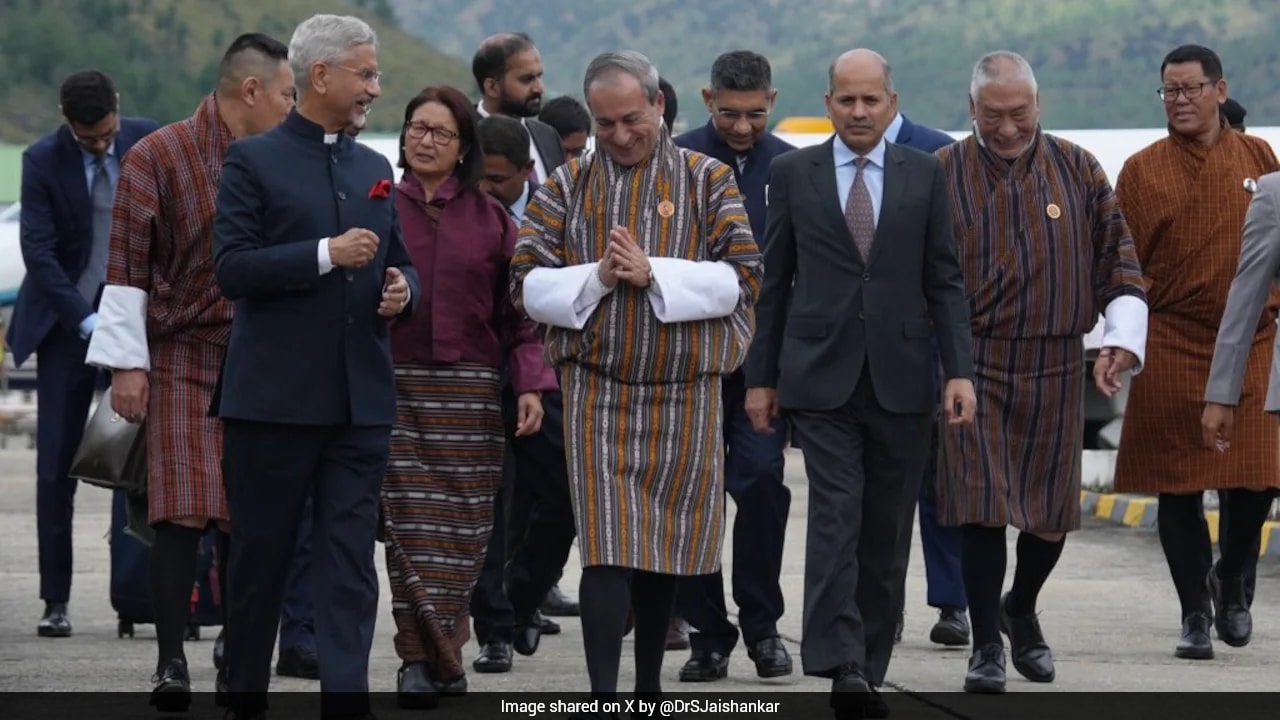
Statecraft in the Eastern Himalayas operates on a precise calculus of geographic asymmetry and institutional trust. When External Affairs Minister S. Jaishankar executed his diplomatic mission to Thimphu and Paro, the engagement moved far beyond conventional diplomatic pleasantries. It served as an operational audit of a deeply integrated bilateral framework. To understand the mechanics of this relationship, one must dissect the structural dependencies governing energy trade, cross-border connectivity, and high-level political alignment.
The Energy Matrix and Economic Hydraulics
The foundational pillar of India-Bhutan relations rests on hydropower development. This sector functions as a dual-engine mechanism: it provides Bhutan with a reliable, high-yield revenue stream while supplying northern Indian states with clean, predictable baseload energy.
The economic exchange rate of this arrangement is straightforward. Bhutan monetizes its river gradients through capital-intensive infrastructure projects financed and engineered largely via bilateral cooperation with New Delhi. The resulting export of surplus electricity transforms natural geography into sovereign fiscal stability. However, the modernization of this energy corridor requires continuous structural adjustment. Recent ministerial dialogues have focused on shifting from traditional generation models toward diversified transboundary resource management and technical collaboration. This includes upgrading transmission infrastructure and expanding cooperation into emerging technological and green energy vectors.
Connectivity as a Strategic Variable
Geographic topography imposes severe friction on commerce and logistics in the Himalayan corridor. Consequently, physical and digital connectivity functions as the primary variable for reducing economic distance.
The strategy relies on three distinct layers:
- Physical Transit Infrastructure: Upgrading road networks, expanding border trade checkpoints, and establishing the foundational groundwork for rail connectivity links that integrate landlocked Bhutanese markets directly into the Indian industrial grid.
- Digital Integration: Extending financial payment networks, telecommunications infrastructure, and digital public goods into Bhutan to lower transaction costs for enterprises and citizens alike.
- Institutional Interoperability: Harmonizing regulatory standards, customs procedures, and trade documentation to eliminate administrative friction at border crossing points.
Without these interventions, bilateral trade remains bounded by the physical cost of transit. By systematically compressing these friction points, both nations optimize the velocity of capital and goods movement.
Sovereign Alignment and Institutional Mechanisms
Diplomatic architecture between New Delhi and Thimphu relies on regularized institutional touchpoints rather than ad-hoc crisis management. The diplomatic schedule, featuring structured bilateral talks with the foreign trade ministry, executive consultations with the Prime Minister, and high-level royal audiences with His Majesty The King, ensures continuity across political cycles.
This multi-tiered engagement model mitigates informational asymmetries. In an era marked by shifting regional security dynamics and aggressive infrastructure expansion across the broader Himalayan frontier, maintaining high-frequency institutional contact acts as a stabilization protocol. It allows both administrations to pre-emptively align foreign policy vectors regarding regional stability, ecological preservation, and economic resilience.
Institutionalizing Long-Term Resilience
The trajectory of this bilateral axis depends on disciplined execution rather than aspirational declarations. As Thimphu advances urban modernization initiatives—exemplified by projects like the Gelephu Mindfulness City designed to retain domestic human capital—India’s strategic imperative is to align its development partnership with Bhutan's internal economic diversification goals.
The operational priority moving forward is the systematic implementation of joint digital, energy, and infrastructural commitments, ensuring that the economic and security architecture remains robust against external macroeconomic shocks.
EAM Jaishankar's Bhutan visit highlights bilateral ties
This video provides direct coverage and visual context of External Affairs Minister S. Jaishankar's official engagements in Bhutan, illustrating the high-level diplomatic choreography discussed in the analysis.