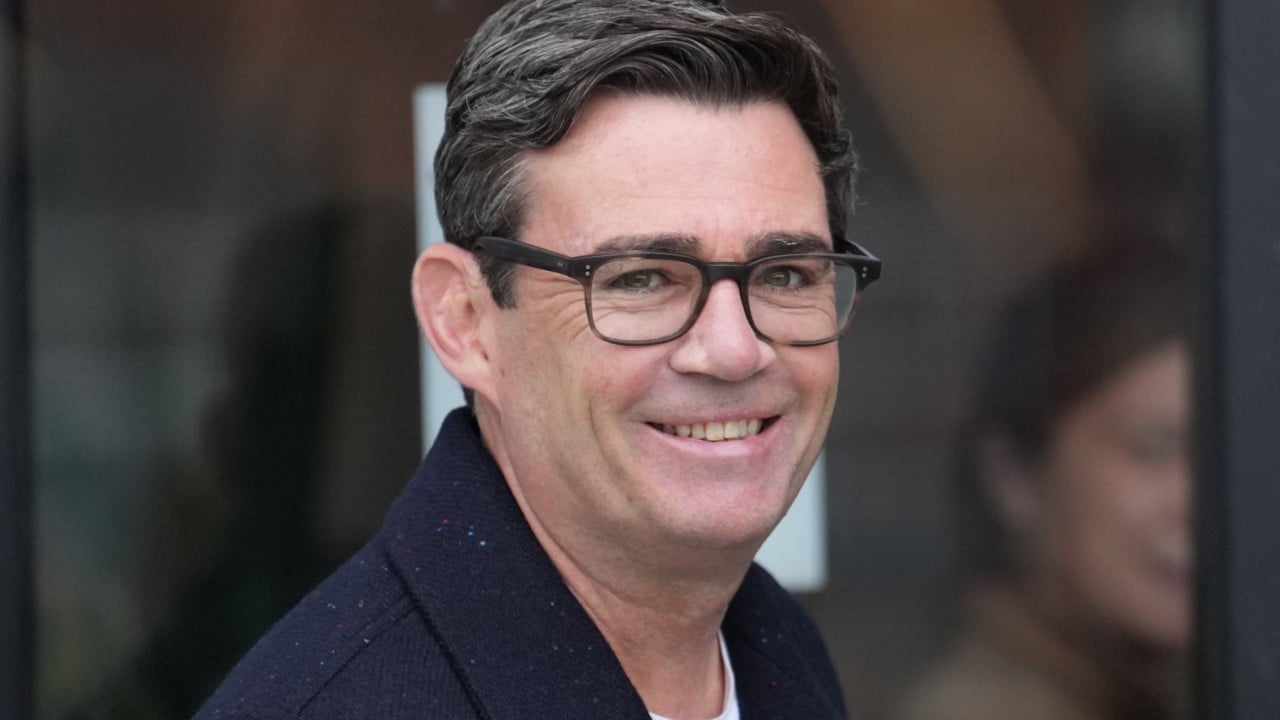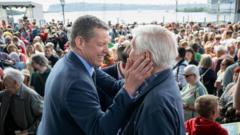
The media loves a "relatable" blunder. When a political leader—in this case, a First Minister—spends the night of an election victory at a budget hotel because they "forgot their keys," the press corps salivates. They frame it as a charming slice of humanity. They paint a picture of a man so consumed by the weight of democracy that he neglected the mundane task of pocketing a piece of metal.
They are wrong. They are falling for the oldest trick in the optics handbook.
The "forgotten keys" narrative isn't a lapse in memory; it’s a masterclass in manufactured humility. In an era where trust in the political class is at an all-time low, being "locked out" is the most effective way to lock in a voter base. It’s time to stop treating these anecdotes as accidents and start seeing them for what they are: tactical deployments of artificial incompetence.
The Myth of the Relatable Leader
Every "man of the people" story follows a predictable script. There is a high-stakes event, followed by a trivial human error that supposedly bridges the gap between the elite and the electorate. We saw it with leaders eating bacon sandwiches awkwardly, and now we see it with the First Minister at a Premier Inn.
The competitor articles focus on the "oops" factor. They want you to think, “He’s just like me.” But he isn’t. He has a security detail. He has a staff of advisors whose entire job is to ensure his life runs on tracks. Forgetting a key in that environment requires a level of concentrated effort that borders on the miraculous.
When a leader checks into a budget hotel, they aren't looking for a bed. They are looking for a headline. They are buying the image of the "unassuming servant." It’s a calculated rejection of the "limousine liberal" trope. By choosing a purple-branded room over a state-funded residence or a high-end suite, the politician signals that they haven't been corrupted by the very power they just won.
The Architecture of Manufactured Authenticity
Why a Premier Inn? Why not a Travelodge or an Airbnb?
Specific brands carry specific cultural baggage. The Premier Inn is the middle ground of the UK. It is safe, predictable, and aggressively "normal." It’s where salesmen stay on a Tuesday. It’s where families stay before a flight. By placing himself there, the First Minister isn't just getting sleep; he is performing a ritual of class-alignment.
I’ve spent years watching political communications teams map out "accidental" moments. I have seen campaigns spend hours debating which "common" brand a candidate should be seen consuming. You don’t end up at a Premier Inn on election night by mistake. You end up there because your internal polling shows that your "elitism" score is creeping too high.
The Cost of Convenience vs. The Value of the Gaffe
Let’s look at the logistics. A First Minister has:
- A Security Detail: Professional protection officers don't just stand around. They manage access. The idea that a secure residence was inaccessible because the principal forgot a key is a logistical impossibility.
- Staff Access: There are always spare keys. There are always people with master access.
- Alternative Options: If you are the head of a government, you don't need to walk into a lobby and ask for the "saver rate."
The decision to stay at the hotel was a choice. It was a play for the "morning after" cycle. Instead of a photo of a politician behind a podium looking powerful, we get a photo of a politician looking slightly disheveled and "human." It’s a prophylactic against the inevitable accusations of arrogance that follow a major win.
The Inverse Relationship of Competence and Likability
There is a documented psychological phenomenon often referred to as the Pratfall Effect. Research suggests that people who are perceived as highly competent become more likable when they commit a small, embarrassing blunder.
If a bumbling intern forgets their keys, they look like a failure. If a First Minister forgets his keys on the night he triumphs, he looks "endearingly human." It softens the edge of his power. It makes his authority palatable to those who fear it.
The danger of this contrarian view is that it sounds cynical. It is. But cynicism is just another word for observing patterns. The "relatable gaffe" is a weaponized tool used to deflect scrutiny. While the public laughs about the Premier Inn breakfast, they aren't asking about the policy shifts, the cabinet appointments, or the actual mechanics of the win. It is the ultimate shiny object.
Stop Asking "How Did He Forget?"
The media is asking the wrong questions. They are asking:
- "How could he be so forgetful?"
- "What did he have for breakfast?"
- "Did he get the £35 rate?"
The questions we should be asking are:
- Who called the press? These stories don't leak by accident.
- What is being buried? While the "locked out" story dominates the social media feed, what boring, complex, and potentially controversial legislation is being moved to the back burner?
- Why do we fall for it every time?
We are addicted to the idea that our leaders are "just like us." They aren't. They operate in a world of high-velocity decisions and curated public personas. To believe that the most powerful man in the country was defeated by a door lock is to admit a level of naivety that allows these very leaders to manipulate us.
The Counter-Intuitive Truth: The Key was Never Lost
Imagine a scenario where the First Minister had his keys the entire time. He arrives at his doorstep, feels the cold metal in his pocket, and realizes that entering his home would be a wasted opportunity. He knows that a photo of him entering a quiet house doesn't trend. But a story about a "man of the people" stuck at a budget hotel? That’s gold.
He makes the call. The "forgotten key" narrative is born.
The downside to this approach is that it eventually wears thin. If everything is a "relatable moment," nothing is authentic. When the mask of "common man" slips, the fall is twice as hard. But for a single election night? It’s the perfect heist.
He didn't lose his keys. He traded them for a week of positive press and a temporary shield against the "elite" label.
Stop celebrating the "humanity" of political leaders. Start analyzing the stagecraft. The Premier Inn wasn't a refuge; it was a film set. The next time a politician "forgets" their lunch, "misses" their train, or "loses" their keys, don't laugh. Look at what they are holding in their other hand while you’re distracted by the gimmick.
The most dangerous politician isn't the one in the ivory tower. It’s the one in the room next to you at the budget hotel, pretending he’s there by mistake.