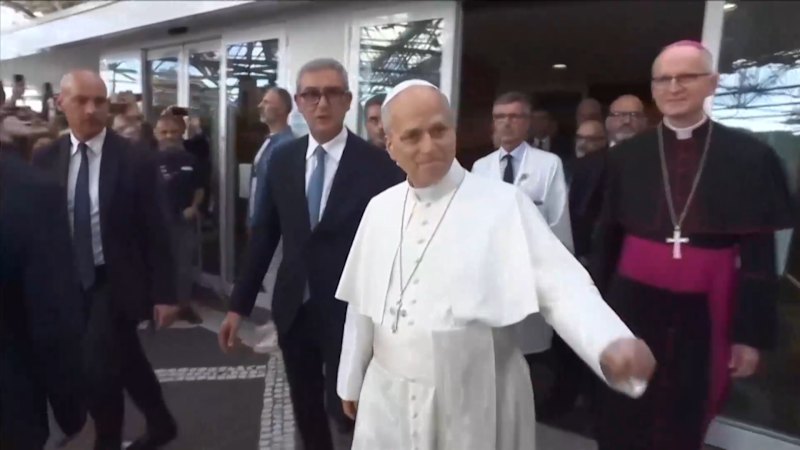
Pope Leo XIV walked out of Rome's Agostino Gemelli University Hospital on October 17, 2026, just four days after surgeons removed the lower lobe of his right lung to treat a cancerous tumor. He smiled, shook hands with well-wishers outside the main entrance, waved from his car, and headed back to the Vatican.
For a 71-year-old who had just undergone thoracic cancer surgery, that quick exit turned heads. Especially given how his predecessor, Pope Francis, spent over five weeks hospitalized before dying in April 2025.
Yet the biggest takeaway from Pope Leo's hospital stay isn't Vatican palace intrigue. It's how the cancer was caught in the first place. There were no warning signs. No chronic cough, no chest pain, no shortness of breath. A routine checkup turned up a shadow on his lung, leading to swift confirmation and surgery. A few days later, on October 21, his surgical and medical team—lead surgeon Dr. Stefano Margaritora and personal physician Dr. Luigi Carbone—announced that follow-up oncological evaluation showed he needed no further cancer therapy.
How a Routine Checkup Caught a Silent Lung Tumor
Most people still picture lung cancer as a disease that announces itself with dramatic symptoms or strikes only heavy smokers. Medicine doesn't work that cleanly. Early-stage lung nodules and tumors frequently cause zero symptoms, which is why incidental discovery during unrelated or routine medical evaluations happens all the time.
Pope Leo put it plainly during remarks aboard the papal plane after his South America trip in November: he felt fine, had no symptoms, and was surprised when the initial finding came back. Once doctors confirmed the tumor was cancerous, he moved fast to have it removed.
"The first news was a surprise. There were no symptoms. I felt fine." — Pope Leo XIV, speaking aboard the papal plane in November 2026
That speed matters clinically. When a localized lung tumor is caught early and resected cleanly—here, via removal of the lower lobe of the right lung—patients sometimes avoid follow-up chemotherapy or radiation entirely. Notice I said sometimes. Pathology results, tumor size, lymph node status, and molecular markers dictate whether extra treatment is needed. Still, catching a suspicious spot before symptoms show up shifts the odds dramatically in the patient's favor.
People make a classic mistake here: waiting until they feel "off" to book a physical or ask their doctor about screening. Symptoms in the lungs often appear only after a mass has grown larger or irritated nearby airways. By the time a cough lingers for months or weight drops unexplained, the window for simpler interventions can narrow.
Why Surgical Recovery Looked Fast Without Erasing Caution
A four-day hospital discharge after lung surgery sounds almost breezy if you read a quick headline. Honestly, that impression can mislead anyone facing thoracic surgery.
Leaving the hospital four days post-op doesn't mean you're back to running marathons or playing hard sets of tennis on day five. Hospitals today discharge carefully selected patients earlier once pain is manageable, drains are out or handled safely, and oxygen levels and mobility look steady. The real healing—rebuilding lung capacity, managing chest wall soreness, pacing fatigue—happens at home over weeks.
Pope Leo was candid about that nuance himself. Asked about his recovery weeks after leaving Gemelli Hospital, he noted he wasn't at 100%, though he felt "pretty good" and leaned on endurance, doctors, and prayer. Within days of discharge, he started easing back into duties, appearing at St. Peter's Square for his weekly general audience on October 21, and then pressed ahead with a demanding November 6–17 itinerary across Uruguay, Argentina, and Peru that involved a dozen flights, helicopter hops, and high-altitude stops.
His doctors cleared him for that travel after determining there was no clinical reason to hold him back. That's a great reminder of how modern surgical protocols work: early mobilization and gradual return to activity are standard, not reckless, when a specialist signs off. Still, every body heals on its own timeline, and comparing your recovery day-for-day to a high-profile public figure is a trap.
Misconceptions Around Lung Cancer and Incidental Findings
Whenever a public figure is diagnosed with lung cancer, three myths tend to flare up immediately.
Myth 1. Only Smokers Get Lung Cancer
Smoking remains a major risk factor, no doubt. Yet never-smokers get lung cancer every year, and incidental nodules show up in people with zero tobacco history. Air pollution, radon exposure, prior lung scarring, family history, and random cellular mutations all play roles. Treating a non-smoker's chest scan as "nothing to worry about" without proper follow-up is a mistake I see far too often.
Myth 2. A "Spot" or "Shadow" Always Means Terminal Cancer
Far from it. A lung nodule or shadow on imaging is a finding, not a final verdict. Many small nodules are benign—leftovers from old infections, inflammation, or harmless scar tissue. Even when a nodule turns out to be malignant, early detection gives surgeons and oncologists far better options than late detection.
Myth 3. One Clean Scan Means You Never Need Follow-Up
Even when doctors say no additional therapy is needed right after surgery, survivorship involves ongoing surveillance. Imaging schedules, pulmonary checkups, and listening to new symptoms remain part of smart long-term care.
How This Health Scare Shaped Church Expectations
Beyond medicine, Pope Leo's surgery prompted immediate questions inside and outside the Vatican about continuity, leadership, and papal endurance. After Pope Francis's lengthy hospitalization and death in 2025, observers naturally wondered whether a cancer diagnosis would slow Leo down or push him to tie up loose ends quickly.
His answer was remarkably steady. He said the surgery hadn't changed his agenda, outlook, or sense of mortality, and he saw no need to draft a provisional letter of resignation ahead of the operation—noting he might eventually do so, just not then. Nor did he rush out a wave of new cardinal appointments. Instead, he reiterated that unity and healing across a polarized Church sit at the top of his list, declining to reopen divisive debates like ordaining married men or overturning restrictions on the traditional Latin Mass right now.
Whether you follow Catholic governance closely or just watch global news, that reaction highlights a human truth. A serious diagnosis doesn't always trigger a sudden personality or policy pivot. Sometimes it simply reinforces what someone already believes matters most—in Leo's case, staying the course and encouraging others not to dodge routine medical care.
Practical Steps You Can Take After Reading This
You don't need a Vatican medical team to apply the most practical lesson from Pope Leo's experience. A few grounded steps can help you handle checkups and lung health smarter:
- Keep up with routine primary care visits. Don't skip annual checkups just because you feel healthy today. Bring up any lingering respiratory changes, family history of cancer, or environmental exposures like radon or secondhand smoke.
- Ask if you qualify for formal lung cancer screening. Organizations such as the American Cancer Society outline low-dose CT screening criteria based on age and smoking history, which can catch cancer earlier in eligible adults.
- Track any incidental imaging findings carefully. If a chest X-ray or CT scan ever mentions a nodule, shadow, or spot, ask your doctor directly: What size is it, what does it look like, and when should we re-check it? Never let a follow-up scan slip through the cracks.
- Plan realistic recovery buffers after any procedure. Even when hospital stays are short and doctors clear you for normal life, build in extra rest, light walking, and breathing exercises rather than snapping straight back to full speed.