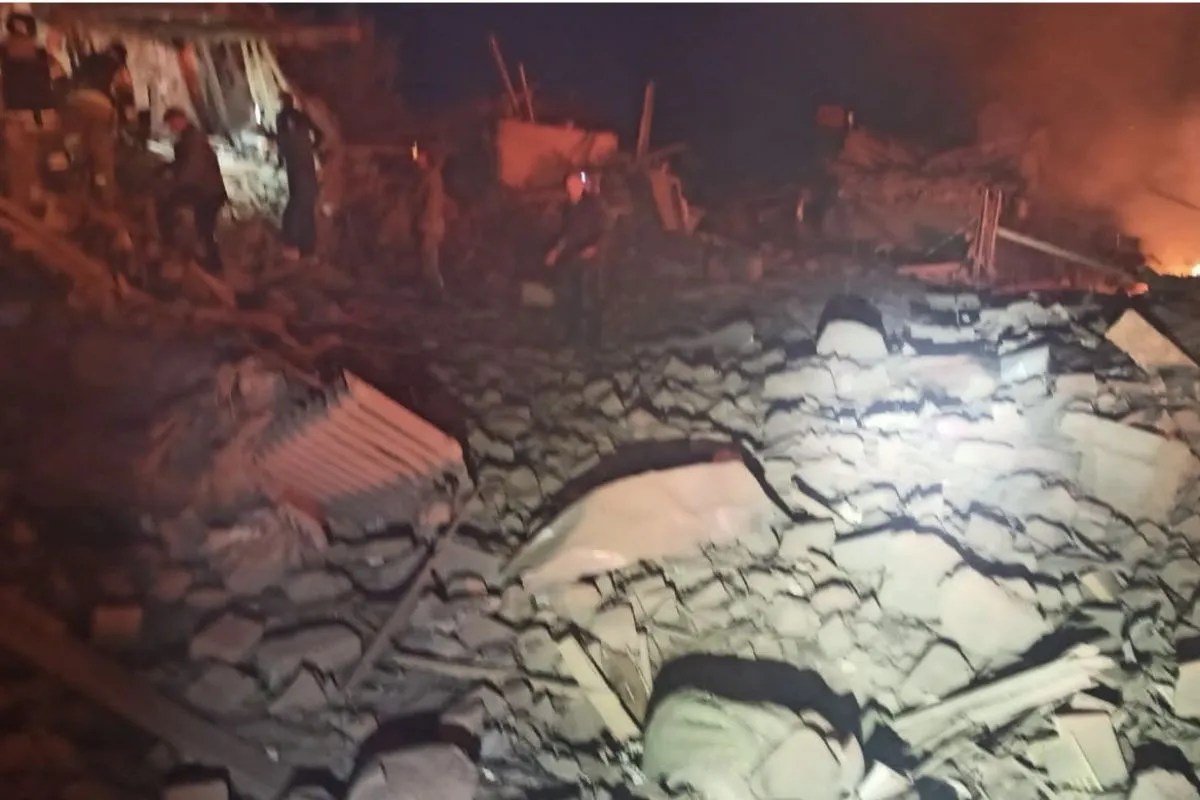
A loud blast shattered the quiet evening in a small farming village near the Ukrainian border. Minutes later, investigators found a crater, shattered machinery, and a chilling geopolitical reality. The missile that left a deep crater inside Poland wasn't just an errant piece of shrapnel. According to Polish Prime Minister Donald Tusk and intelligence updates, the projectile was likely Russian.
You're looking at a flashpoint that could rewrite the rules of European defense overnight.
When debris falls within the borders of a NATO member state, the alarm bells ring immediately. This wasn't some minor border skirmish. This was heavy military hardware crossing an invisible line that millions of people assumed was bulletproof. If you think this is just another routine news blip that will fade by tomorrow morning, you're missing the entire point.
The Reality of Modern Air Defense Gaps
Defense analysts love to talk about iron domes and sophisticated radar shields. They draw neat lines on tactical maps and promise total protection. Reality is messier.
When missiles fly at supersonic speeds, tracking software has fractions of a second to make life-or-death calculations. Was the projectile locked onto a civilian target inside Ukraine and merely drifted off course due to electronic jamming? Did a guidance system fail mid-flight? These aren't just academic questions. They are the exact puzzles intelligence agencies have to solve before leaders decide how to respond.
Let's be honest about what happened in that Polish field. Air defense systems failed to intercept the threat before impact. That is a terrifying truth for anyone living within a five-hundred-mile radius of the eastern front.
European capitals spent months reassuring citizens that their borders were secure. They pointed to billions spent on radar installations and Patriot battery deployments. Yet, a crater deep inside Polish territory proves that gaps still exist.
What Actually Caused the Trajectory Shift
Electronic warfare changes the physics of modern combat. Both sides use powerful signal-jamming equipment to blind incoming drones and missiles.
When a guidance system loses its GPS lock, it doesn't just stop. It flies blind. Sometimes it hits a civilian apartment block in a Ukrainian city. Sometimes it crosses an international border and digs a hole in a European pasture.
Here is what the official reports rarely emphasize enough. The technology driving these weapons is remarkably fragile when exposed to high-density electromagnetic interference. When you jam a signal, you lose control of the payload. Every time military commanders flip the switch on a massive jamming operation, they roll the dice on where the stray hardware will land.
- Radar screens light up with hundreds of conflicting signatures daily.
- Operators must prioritize threats in real-time, often ignoring low-altitude drift.
- Electronic countermeasures blind both sides equally, creating systemic unpredictability.
The Political Fallout Inside Warsaw and Brussels
Donald Tusk didn't mince words when addressing the public. Leaders can't afford to play down security breaches when public trust is hanging by a thread.
When a foreign military projectile lands on sovereign European soil, the domestic political pressure becomes unbearable. Opposition parties demand immediate retaliation. Citizens demand better shelters. Diplomats scramble to avoid a wider escalation while looking tough enough to deter future violations.
NATO's Article 5 is the ultimate diplomatic safety net, but invoking it over every stray piece of metal is a dangerous game. Nobody wants a full-scale continental war over a single misdirected munition. At the same time, normalizing cross-border impacts invites bolder incursions.
You have to look at the psychological impact. People living in rural towns near the border used to feel insulated from the war raging just a few miles away. That illusion is gone. Every strange sound in the night now carries the weight of potential catastrophe.
The Danger of Escalation Management
Military escalation isn't a straight line. It's a slippery slope greased by miscommunication and split-second assumptions.
If anti-air batteries in Poland had fired automatically at the incoming signature, they might have shot down a Russian jet or triggered an exchange that nobody planned for. Restraint is necessary, but restraint looks like weakness to the aggressor.
Governments are walking a razor-thin tightrope. They need to show strength without lighting the match. That means upgrading surveillance networks, moving more intercept batteries closer to the frontier, and communicating clearly with Moscow through backchannels that the public never sees.
How Border Communities Are Adapting
Life doesn't stop just because a missile crater is fresh. Farmers still need to harvest their crops. Schools still need to open on Monday morning.
Yet, the local atmosphere has changed fundamentally. Sirens that used to be tested once a month are now treated with urgent, nervous attention. Local authorities are distributing iodine tablets and updating civil defense guidelines that haven't been touched since the Cold War.
If you visit these towns, you notice the quiet tension. People aren't panicking, but they aren't complacent either. They know that geography has put them on the front line of a conflict they never asked to join.
- Emergency response drills are now a weekly occurrence for municipal workers.
- Insurance companies are rewriting policies for properties within striking distance of the border.
- Local infrastructure projects are shifting focus toward underground bunker maintenance and communications redundancy.
Why This Matters Beyond Eastern Europe
Think this is just a regional European problem? Think again.
Global supply chains run through these exact corridors. A major escalation that locks down Polish airspace or disrupts transport hubs in Central Europe sends shockwaves through global markets within hours. Manufacturing plants, tech supply chains, and energy pipelines all depend on stability in this exact region.
When safety margins shrink in Europe, the cost of doing business spikes everywhere else. Investors pull back. Shipping costs rise to account for insurance risk in contested airspaces.
The crater left inside Poland is a physical reminder that local conflicts in the modern era rarely stay local for long. Everything is connected.
Take a close look at how defense budgets are shifting right now. Governments that trimmed military spending for decades are frantically placing orders for next-generation interceptors and counter-drone systems. They aren't doing it out of paranoia. They are doing it because the math of modern warfare has changed permanently.
Keep your eyes on the border sensors, because the next stray projectile might not miss inhabited areas. The margin for error has officially run out.