The Mechanics of Strategic Deterrence Breakdown
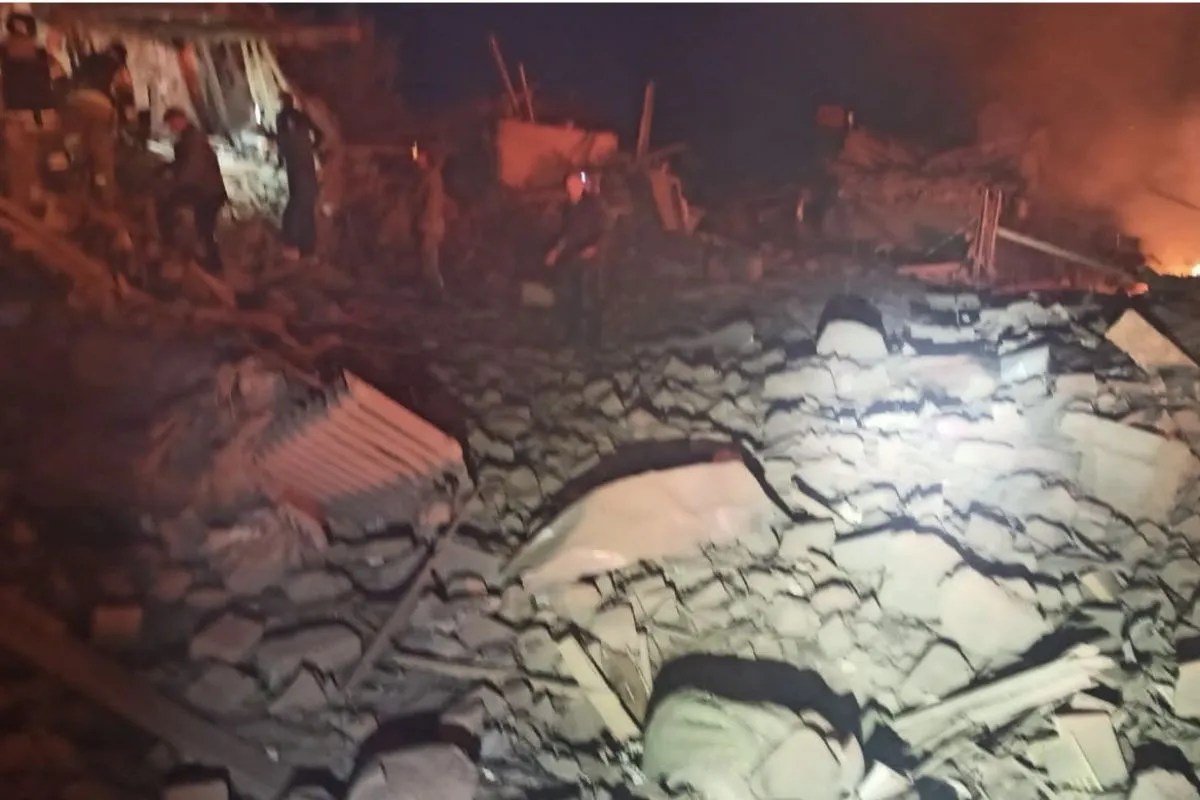
Recent ballistic missile deployments targeting Ukrainian municipal infrastructure demonstrate a systemic shift from tactical frontline attrition to strategic economic and population suppression. When seven civilian fatalities occur within a single urban bombardment cycle alongside immediate airspace activation by neighboring states like Poland, the analytical focus must pivot away from isolated casualty counts. Instead, the operational objective requires examining how structural missile saturation tests air defense degradation curves and triggers automated cross-border defense protocols.
The core vulnerability in contemporary European security architectures stems from the speed-to-payload ratio of intermediate and short-range ballistic systems. Unlike cruise missiles or uncrewed aerial vehicles, modern ballistic platforms operate within high-supersonic to hypersonic terminal phases. This operational velocity strips defensive command nodes of standard reaction margins, forcing an over-reliance on automated engagement matrices. When interceptor density drops below a critical threshold within specific regional sectors, the risk surface expands exponentially, creating cascading failures that force NATO-adjacent states into reactive defense postures.
The Tripartite Matrix of Urban Vulnerability
Analyzing the impact of precision-guided and ballistic saturation campaigns requires breaking down municipal resilience into three discrete operational pillars: physical infrastructure integrity, medical triage capacity, and civil-military communication redundancy.
The physical pillar absorbs the initial kinetic shock. Standard urban centers possess localized structural load limits that are optimized for environmental stressors rather than explosive concussions generated by high-yield warheads. When ballistic impacts occur within densely populated residential zones, the damage radius exceeds normal engineering redundancy. This results in the immediate failure of municipal utility grids, severing water mains and electrical substations simultaneously.
The medical triage pillar experiences immediate operational strain following an urban strike. Mass casualty events create a surge demand that far outstrips peacetime emergency medical service allocations. Field units and urban hospitals face concurrent disruptions in power and communication lines, forcing medical personnel to operate under degraded conditions where triage efficiency plummets. The secondary and tertiary effects—such as untreated chronic conditions and systemic psychological trauma—compound the immediate mortality statistics over a rolling thirty-day window.
The communication redundancy pillar dictates the speed of recovery. Modern civil defense depends on digital infrastructure to coordinate rescue assets, clear debris, and distribute public safety directives. When kinetic strikes target nodes near transport hubs or administrative centers, electromagnetic interference and physical fiber cuts degrade command-and-control visibility. Consequently, municipal response shifts from managed recovery to localized, ad-hoc survival operations.
Cross-Border Escalation Dynamics and Regional Air Defense Activation
The secondary dimension of these strikes involves the spatial spillover into NATO airspace, specifically illustrated by Poland placing its air defense and air force assets on high operational alert. This operational response is not merely a precautionary measure; it is a calculated risk-management protocol driven by the physics of missile flight profiles.
Modern ballistic trajectories, even those intended for targets deep within western or central Ukraine, operate close to international borders. Guidance drift, telemetry errors, or mid-course corrections can position a warhead perilously close to alliance territory within seconds. NATO air defense systems—such as the Patriot and NASAMS configurations—operate under strict engagement rules that prioritize automated threat evaluation. When a high-speed radar return approaches sovereign airspace, command protocols mandate immediate radar illumination, scrambling of interceptor aircraft, and the preparation of ground-based batteries.
This operational reality introduces a high-stakes friction point. The time window to distinguish between an errant flight path, a guidance system malfunction, and a deliberate boundary violation is measured in seconds. If an interceptor battery misinterprets trajectory data, or if a defensive counter-missile crosses the border during an engagement, the risk of rapid geopolitical escalation increases. Therefore, the strategic calculus of deploying ballistic assets near western Ukrainian logistics hubs functions as a pressure test on alliance response thresholds, designed to measure reaction times and probe radar blind spots.
The Economic Cost Function of Air Defense Attrition
A rigorous evaluation of the current conflict phase must account for the asymmetric economics of missile warfare. The financial differential between manufacturing a tactical ballistic missile and producing a specialized interceptor creates a distinct cost-imposition strategy.
Defending urban centers and critical logistics nodes requires high-value interceptor inventories that possess long supply chains and complex material inputs. Conversely, mass-produced ballistic and loitering munitions utilize commercially available components and scaled industrial output. When state actors deploy mixed salvos consisting of decoys, low-cost drones, and high-speed ballistic missiles, they force defenders into a resource allocation dilemma. Expending premium interceptors on low-value targets depletes strategic reserves, leaving critical infrastructure exposed during subsequent bombardment cycles.
This economic attrition model operates on a timeline distinct from ground operations. While infantry engagements measure progress in square kilometers, air defense attrition measures capacity in inventory depletion rates. As interceptor stocks decline, the defensive umbrella thins, allowing a higher percentage of incoming payloads to achieve terminal impact. This dynamic explains why municipal casualty rates can spike even when raw missile launch volumes remain constant or decrease.
Operational Assessment and Strategic Outlook
Mitigating the vulnerabilities exposed by recent ballistic strikes requires a shift from reactive interception to preemptive industrial and technological adaptation. Relying solely on surface-to-air missile batteries is mathematically unsustainable against a sustained production base.
Future resilience depends on three structural adjustments. First, decentralizing municipal power and water grids into micro-grids reduces the systemic impact of single-point ballistic strikes. Second, integrating directed-energy or high-powered microwave systems into air defense networks offers a lower cost-per-engagement metric for neutralizing low-end saturation threats, preserving kinetic interceptors for ballistic targets. Third, enhancing real-time radar data sharing across allied borders shortens decision loops, reducing the ambiguity that forces neighboring states into reactive, high-alert postures.
The strategic trajectory indicates that missile campaigns will continue to serve as the primary instrument for inflicting systemic friction on civilian and logistical networks. Understanding this paradigm requires looking past the immediate casualty reports and evaluating the structural stress placed on industrial supply chains, regional defense inventories, and the fragile threshold of cross-border stability.