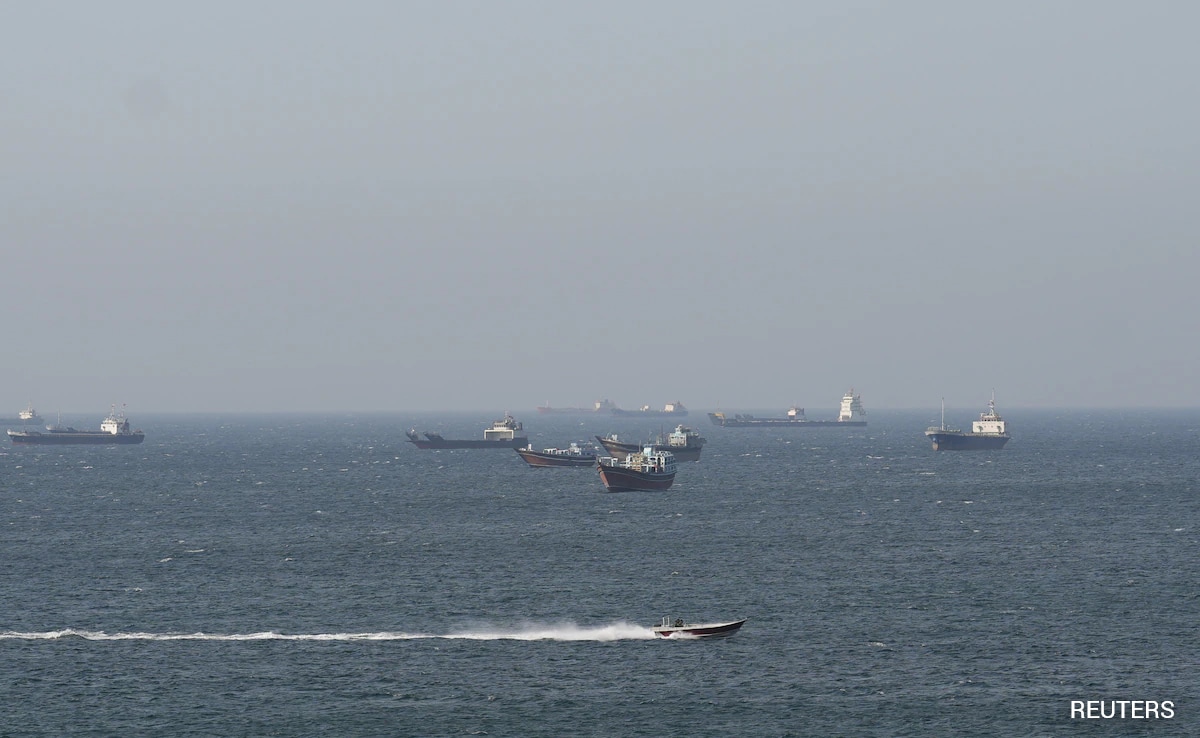
The modern "World in Pictures" gallery is a graveyard of critical thinking. Every week, major outlets curate a sanitized, high-contrast carousel of suffering, celebration, and scenic vistas, claiming to provide a "window into the soul of the week." It’s a fraud. These galleries don't capture the world; they capture the specific aesthetic that editors think you want to see while scrolling past ads for luxury watches.
May 7, 2026, is no different. You’ve seen the "best" shots: a high-res drone photo of a protest, a saturated sunset over a recovering ecosystem, and perhaps a candid of a world leader looking weary. This isn't journalism. It’s visual sedation.
The Myth of the Objective Lens
The "lazy consensus" in photojournalism suggests that a powerful image is a neutral messenger. This is patently false. Every frame is an act of exclusion. By choosing to highlight a specific tear on a specific face, the photographer isn't showing you the "truth" of a conflict—they are conforming to a narrative arc that has been stale since the 1990s.
We are addicted to the Spectacle of the Moment. Editors hunt for "pivotal" imagery that fits a predetermined emotional slot. If a war doesn't look like a war movie, it doesn't make the cut. If a breakthrough doesn't have a "hero" shot, it’s buried. This creates a feedback loop where reality is forced to mimic its own cinematic parody.
I’ve spent fifteen years in the guts of digital media, watching as the "human interest" angle became a commodity traded like oil futures. We don't look at photos to learn anymore; we look at them to confirm our existing anxieties or to indulge in a brief flash of manufactured empathy before moving to the next tab.
The Resolution Trap
Notice how every image in this week’s "best of" list is hyper-sharp? We’ve reached a point where technical perfection is being used to mask a lack of substance.
- Detail vs. Data: A 100-megapixel shot of a drought-stricken field tells you less about climate change than a grainy, ugly spreadsheet of water table levels.
- Aestheticized Pain: When we apply high-end color grading to photos of human suffering, we turn victims into art. We strip them of their agency to satisfy a visual standard.
- The Drone Bias: The obsession with overhead shots has detached us from the ground. We see the world as a map, not a place. This "God view" creates a psychological distance that makes us feel powerful while making our actual understanding of the situation incredibly shallow.
AI Hallucination is the New Reality
By May 2026, the line between "captured" and "rendered" has basically evaporated. The industry likes to pretend that strict metadata and digital signatures are saving the day. They aren't. Even the "authentic" photos are now processed through AI-driven denoising, object sharpening, and lighting adjustments that happen inside the camera before the shutter even finishes closing.
When you look at a "Photo of the Week," you aren't looking at light hitting a sensor. You are looking at a mathematical approximation of what a computer thinks light should look like. We are celebrating the hardware's imagination, not the photographer's eye.
Imagine a scenario where a photojournalist sits at a protest for six hours but misses the "decisive moment." Five years ago, they had no photo. Today, generative fill and temporal alignment tools allow for the "reconstruction" of the shot. The industry calls it "enhancement." I call it the death of the witness.
The Cost of the "Golden Hour"
Why is every important event in these galleries seemingly happening at sunrise or sunset? Because the "World in Pictures" isn't about the world—it’s about lighting.
We have sacrificed the Boring Truth for the Beautiful Lie. The most important events of the first week of May didn't happen in 4k with perfect backlighting. They happened in windowless basements where policy was written, in fluorescent-lit labs where pathogens were sequenced, and in the grey, dismal cubicles where the next financial collapse is being coded.
But you won't see those. They don't "pop." They don't drive engagement.
What People Also Ask (And Why They're Wrong)
"How can I tell if a news photo is real?"
You're asking the wrong question. You should be asking why you are being shown this specific photo. Authenticity is a technical metric; intent is a journalistic one. A 100% "real" photo can be used to tell a 100% fake story through framing and lack of context.
"What makes a photo 'iconic'?"
Usually, it’s the fact that it reinforces a stereotype we already hold. We label images "iconic" when they successfully simplify a complex geopolitical mess into a single, digestible emotion. Iconography is the enemy of nuance.
"Is citizen journalism better than professional photography?"
No. It’s just differently biased. Professionals hunt for the "artistic" shot; citizens hunt for the "viral" shot. Both are chasing a ghost.
Stop Looking and Start Reading
The visual medium is currently the most effective tool for misinformation because it bypasses the analytical brain and goes straight for the amygdala. If you want to understand what happened this week, close the gallery.
The most "moving" image of the week is usually the one that teaches you the least. It’s a dopamine hit masquerading as global awareness. We use these pictures to feel like we’re connected to the global "tapestry"—there's that word everyone loves—without having to do the hard work of understanding the economics or history behind the frame.
The "nuance" that the competitor missed is that beauty is often a distraction from the truth. A beautiful photo of a tragedy is a failure of the medium. It invites the viewer to admire the composition rather than demand a solution.
The Actionable Pivot
If you actually want to be an informed citizen in 2026, you need to develop a radical skepticism of "The Image."
- Ignore the "Best of" Lists: These are curated for maximum aesthetic appeal, not maximum information density.
- Look for the Ugly: The most important photos of the year are likely poorly lit, badly framed, and incredibly boring. They are the ones that capture the systemic reality, not the emotional outburst.
- Check the Edges: Look at what is not in the center of the frame. The truth is usually hiding in the background, out of focus.
- Demand the Data: If a photo is claiming to show a "crisis," look for the raw numbers that support it. If the numbers don't match the drama of the photo, trust the numbers.
The downside to this approach? You’ll be bored. You won't get that warm glow of "staying informed" while scrolling through your phone at lunch. You’ll realize that the world is messy, dull, and remarkably un-cinematic.
But at least you won't be a spectator in a theater of ghosts.
Stop letting editors curate your reality through a lens of "visual storytelling." Storytelling is for fiction. The world deserves better than a filtered gallery.
Burn the "World in Pictures." Look at the world instead.